Category Archives: H. Whispering & random thoughts

wasawis and khatrat

Concern for Muslim benefit


Jeddah airport

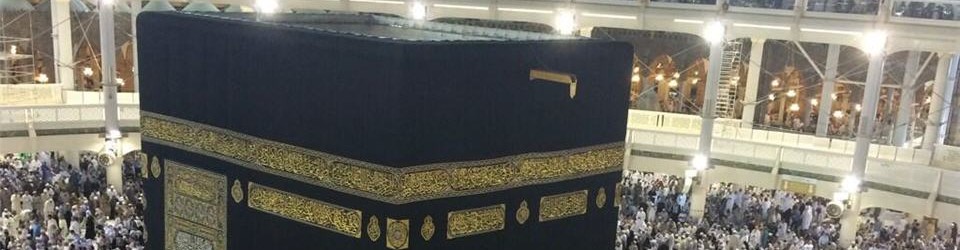
Shaikh Dr Hafizullah mohajir Madani (Allah have mercy on him) was sitting in the blessed Masjid al Haram in Makkah. It was the Hajj season. Seeing the massive crowd struggling to perform an essential rite of their faith, he commented that I have been contemplating that how can steps be taken to accommodate the increasing number of pilgrims and ease this process.

Clarifying it to the perplexed disciples sitting around worshiping diligently he added, contemplation about things that will benefit Muslims is also a form of worship.

Shaikh was in touch with an individual who would convey to senior officials in charge at Masjid al Haram about possible things for improvement.

 (The picture shows the new Jeddah airport. It is under construction.)

Things that soften the hard-heart

20130420-201848.jpg

Imam al Qurtubi (Allah have mercy on him) said,

Understand it very clearly that following things soften the worst hardened hearts,
1. Visiting the graves
2. Listening to the discourses of pious scholars
3. Reading about the past obedient ascetics and scholars
4. Remembrance of that which will uproot all pleasures, ward off all desires, separate one from others, make existence detestable, and orphan the children who were adored by their parents. That is, death.’

Ebrat ka saman, page 27-8, Urdu translation of Imam Sha’rani (Allah have mercy on him)’s Mukhtaser Tazkirah al Qurtubi,

Remembrance of death

20130420-195647.jpg

Shaikh Mohammed al Daqqaq (Allah have mercy on him) said,

‘A person who reminds himself of death often is honored with three gifts,
1. Early facilitation of repentance
2. Being content with one’s provision
3. Having the desire to and delight in worship’

Ebrat ka saman, page 25, Urdu translation of Imam Sha’rani (Allah have mercy on him)’s Mukhtaser Tazkirah al Qurtubi,

Wishful desires

20130409-172059.jpg

Our master Shaikh Abdul Qadir Raipuri (Allah have mercy on him) repeatedly mentioned this warid from his Hajj journey,

I saw individuals clinging to the house of Allah, holding it’s cover and crying profusely. They were supplicating for things for which they had done nothing at all in this world of taking means to achieve objectives (that is from the possible means within their reach).

Seeing their state it bolted out of my heart that these supplications (that are without taking the necessary means of achieving a goal within one’s reach) can not make a car run without fuel or a driver than how can they bring a drastic change in the affairs of our world.’

Sawanih, page 18

These are wishful desires (tamanna). They have to be differentiated from aspirations that are accompanied by effort within one’s means.

Persistence in daily wird

20130409-165413.jpg

Shaikh al Hadith Mawlana Mohammed Zakariya Kandehlawi mohajir Madani (Allah have mercy on him) instructed a seeker,
‘Persistence in daily routine of good works (wird) is the way to spiritual progress.

Be vigilant in completing the daily wird!

Do not pay attention (to the thoughts) that my condition is not changing with remembrance (dhikr).

It is an established principle according to the pious preceding masters of this path that blessed remembrance of Allah even if done with extreme heedfulness does not remain without a (spiritual) affect.’

Monthly Ihsan o sulook, Safar 1410, page 63

The stages of nafs: Nafs e mulhimah / part 3

20130327-222018.jpg

20130327-222157.jpg

The Inspired Nafs

Allah Almighty says,

(9)ونفس وما سواها ( 7 ) فألهمها فجورها وتقواها ( 8 ) قد أفلح من زكاها

[91:7]
and by the soul, and the One who made it well,

[91:8]
then inspired it with its (instincts of) evil and piety,

[91:9]
success is really attained by him who purifies it,

In this stage of development the nafs is gifted with the ability to distinguish between good and evil. Moreover,the performance of good actions and abstinence from evil is facilitated for him by the Grace of Allah.

This Grace is manifested as immense desire to please Allah. And at this stage nafs remains drowned in intense love of Allah (‘ishq illahi).

This is possible by following the recommendations of the Shaikh and excessive remembrance of Allah as instructed by him. In fact it is mandatory (wajib) to follow the recommendations of the Shaikh at this stage to be successful.

This is both a phenomenal and a challenging stage.

Any heedlessness here will pull the nafs to its initial stage. (May Allah protect us all from this disaster. Amin!)

Its characteristics include; self restraint (hilm), philanthropy, contentment, humility, repentance, patience, forbearance, forgiveness, maintaining a good opinion about others, acceptance of others’ excuses, etc.

In addition to the excessive remembrance of Allah and following the instructions of Shaikh meticulously one has to repeatedly remind himself of meeting Allah and His perfections. He has to be vigilant in following the Shariah and be compliant to his daily wird. He must efface his ego by purposefully doing permissible humble actions.

Here the individual observes that everything is from Allah (tawhid e afa’li). He abandons all criticism. He cries often and is deeply effected by the crying of others. He withdraws from all the creation and finds solace with Allah. He is attracted to beautiful audition.

In short this stage is marked by intense love, lofty desires and high aspirations to please Allah.

Daily recitations

20130320-154150.jpg

A seeker inquired about some of his daily recitations (authentic recommendations of pious masters) he started on his own and has been persistently doing them for years now. He was having doubts about them being beneficial for him on the path.

The Shaikh replied,
‘The authentic recitations that a seeker has been able to be persistent on observing for a considerable period of time are blessed (mubarak) and certainly spiritually beneficial,

If you are not going to replace them with something equally or more beneficial than consider this thought to be a distraction from nafs and Shaytan.
May Allah protect us all from their deception. Amin!’

Waridaat, page 9
——————
Dover, DE

Change

20130318-090917.jpg

Being unsatisfied with our present condition we contemplate about a change, for example in career, environment or relationships, etc. We assume that the change will be better for us.

Shaikh Abdullah Gangohi (Allah have mercy on him) explained,

Whoever desired for a condition other than the condition in which Allah has created him at any given time, has left no stone unturned in the demonstration of his ignorance and imbecility.

It is imperative for the Believer to confront every situation which is not in conflict with the Shariah, with acceptance (radha) and submission (tasleem), whether the situation is a calamity pertaining to life and property or whether it is a state (emotional or spiritual) of the heart. The attitude of radha and tasleem is the demand of Allah’s esteemed status, comprehensive knowledge, Gnosis and being The Lord.

If a person wishes that the condition which Allah has imposed on him be substituted with another condition, e.g., adversity with prosperity or despondency with elation, then he displays complete ignorance and imbecility of the mind. The basis of such wishes and regrets is the ignorance of his nafs. If he had truly possessed the ma’rifat of Allah, he would have understood that these predestined conditions can never be displaced, hence regret and wish would not have occurred to him. He would have been contented with every circumstance and have observed respect. Now by these wishes he is clashing with the pre-ordained Divine Decree.

Ikmal us Shiyam
———————-
Kissimmee, Florida

The stages of the nafs: Nafs al Lawwamah / part 2

lauqsemu

The Self-reproaching nafs

لا أقسم بيوم القيامة ولا أقسم بالنفس اللوامة 

[75:1]
I swear by the Day of Resurrection,

[75:2]
and I swear by the self-reproaching conscience, (that Resurrection is a reality.)

This is the stage where the conscience is awakened and the self reproaches one for listening to one’s ego. That is, in committing the evil acts or omitting the virtuous or doing them in a sloppy manner.

Its characteristics include; reproaching, greed, coveting, self praise, show-off, cruelty, back-bitting, lying and heedlessness, love of fame and status. In sharing many characteristics of nafs al ammarah it maintains the ability to differentiate between the good and evil. However, it is not proficient, as yet, to fully follow the good commands and abstain from sinful. Moreover, if it does do some good acts  it develops desires of self-praise (ujub) or showing-off or expecting praise from others. In this stage it is imperative that he acknowledges and exposes these blame worthy desires to his fellow-brethren (as per the instruction of his Shaikh). Otherwise these blame-worthy morals will cut-off his journey on this path.

It is essential that in this phase he makes excessive remembrance of Allah and exerts in the struggle (to do good and abstain from evil).

Here he is inflicted will excessive abstract, useless ideas, and random, bizarre  thoughts. He has to fight them off with assistance of excessive remembrance of Allah and supplications, asking Allah for assistance in doing so effectively.

If he does so, he passes to the third stage.

Procedure for selecting a shaikh

IMAG0262

Hakim al Umma Mawlana Ashraf Ali Thanawi (Allah have mercy on him) said,

‘Often visit the friends of Allah (darwaish) who are speculated to be perfect (kamil).

Do not rush to criticize or deny anyone of them. (1)

However, do not hasten to make bayiah.

First thing to evaluate (in a potential Shaikh) is his steadfastness on Shariah. If this is not case then one should leave him even if he performs extraordinary feats. (2)

Allah orders us: And do not obey the one whose heart We have made heedless of Our remembrance, and who has followed his desire and whose behavior has exceeded the limits. [18:28]

And if he is steadfast on Shariah then his piety and being a friend of Allah (wali) is established. However, the seeker is in need of training (tarbiyah) to reach  perfection (takmeel) (at the hands of a qualified mentor who can effectively do this). Therefore, (it is best to wait more) do not commit for bayiah even now. In addition, ascertain that there is (spiritual beneficial) effect in his company (suhba). That is, (manifested as) development of love of Allah, abhorrence of worldly and sinful activities.

It has been mentioned in the hadith that a sign of friends of Allah is,

إذا رؤوا ذكر الل: When one sees them he is reminded of Allah.

 It is difficult for most of the common folk to assess this effect in brief periods of company (available with the Shaikh). At this juncture it is essential to approach an intelligent and truthful disciple of the Shaikh and ask him about the effect of his company. ٓAllah says,

فَاسْلوا أَھْلَ الذِّكْرِ إِنْ كُنْـتُمْ ال تَعْلَمُـونَ: So, ask the people (having the knowledge) of the Message, if you do not know. [21:7]

And Prophetic saying is إنما شفاء العيّ السؤال: the cure for ignorance is in asking for clarification.

If a reliable individual testifies then trust him (and proceed for a commitment). And if many people testify similarly then it is more reassuring. However, these testifiers must appear to be truthful and not from the category of مریداں ھمی پراند. That is, disciples that exaggerate and make boastful claims for their Shaikh.

The alternative method to select a Shaikh for those who can not visit the Shaikh in person due to unavoidable engagements or lack of physical or financial resources is to establish long term correspondence with the Shaikh. That is, in writing ask for instruction about the path and follow them practically. Then write back his/her condition and do as instructed. This has to be done for a considerable period of time. Then if (there has been genuine spiritual benefit and improvement in one’s religious state) a desire to commit then ask for bayiah and accept whatever the Shaikh replies.

(2)

Shariat wa Tariqat, page 65-66

(1) Background culture, ethnic origin, socio-economic status, educational level, depth of experience and many other factors mold an individual’s personality and how he deals with others. Until and unless it is blatantly haram activity it is best to make an excuse.

(2) In our era three areas in particular should be looked into, being lax in sins of speech, unrestricted intermingling of sexes and dubious financial dealings.

(2) One should make sincere dua for facilitation of this process.

IMG_0556

Abdiyet

20130302-182314.jpg

Imam Abdul Wahab al Sha’rani (Allah have mercy on him) quoted,

‘No level of servant hood (abdiyet) can be applied to an individual who does not consider all his good deeds to be ostentatious and all his states and conditions to be pretentious.’

Adurar al mandhood, (Hum say ‘ahd liyay giya) page 58

The curriculum of Tasawwuf

20130226-213812.jpg

.

Hakim al Ummah Mawlana Ashraf Ali Thanawi (Allah have mercy on him) recommended a curriculum for the seekers to develop a clear understanding of the path of Tasawwuf.

The text included are arranged in particular order. They start with the simple basic books of Hakim al Ummah and move to Imam Ghazali’s Arbaeen and then to more advanced text such as Mathnawi of Mawlana Rumi, Adaab al Uboodiyah of Imam Sharani and Akmal ush Sheyam explanation of Al Hikam of Shaikh Ibn e AtaAllah al Iskanderi (Allah have mercy on them).

In addition to clearing concepts, the reading of these texts motivates the seeker to be firm on the path and to progress further.

Senior Shuyuk of our path used to complete the reading and explanation of this curriculum in special sessions reserved only for the serious seekers.

Individual seekers must read these books diligently like textbooks. They should mark the outstanding passages and take notes for later review.

Nisab e Tasawwuf