Category Archives: D. Acts of Worship

Various acts of devotion to show our servitude

Refuge from calamities 


Shaykh MansurAli Khansb Ali Khan (Allah protect & preserve him) said,

‘In this day and age where there are colossal calamities even in religious affairs around us we should ask Allah excessively for refuge. 

Now I appreciate Arif billah Dr Abdul Hayy’s (Allah have mercy on him) inclusion of asking refuge (istea’za) in the four priceless spiritual actions (char beshbaha mahasen) he so often recommended. This is something outstanding. 

Hakim al Umma Maulana Ashraf Ali Thanvi (Allah have mercy on him) included a section of Prophetic supplications of asking refuge in every day recitation of Munajat e Maqbool

Once Mufti Mohammed Shafi (Allah have mercy on him) instructed me that if you are unable to ask Allah by reciting all the supplications in Munajat e Maqbool in lail al-qadr (the night of Power) then select the sections of asking Allah’s refuge. ‘

Jeddah 28 Sha’baan 1437/4 June 2016

Knowledge & action 


“Our Lord, give us good in this world and good in the Hereafter, and save us from the punishment of Fire..” 2:201

Imam Hasan Basri (Allah have mercy on him) said regarding this Quranic invocation, 

‘The ‘حسنہ’ of this world is (beneficial religious) knowledge and acts of worship. And the  ‘حسنہ’ of hereafter is the heaven (jannah).’

Ahya al Uloom ad Deen, volume 1, page 41

Nafl: pray at home

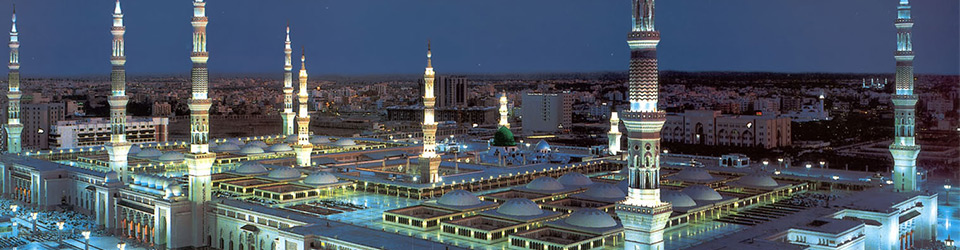
makkah_madinah

Mufti Rashid Ahmad al-Ludhyanwi (Allah have mercy on him) said,

—————-it is more meritorious and rewarding to perform nafl salat (supererogatory prayers) and recitation of Holy Quran (tilawah) at home.

In fact, there is even more reward to perform these acts of worship at home than in the Masjid Haram (Makkah Mukarramah) and in the Masjid Nabawi (upon him blessings and peace).

In this regard, it is stated in a hadith from Zayd bin Thabit (may Allah be pleased with him) that the Prophet (upon him blessings and peace) said, ‘The (nafl) salat of a person in his home is more rewarding than his salat in my (this) masjid, except the obligatory prayers.’” (Abu Dawud)

Gathering in the Masjids on Auspicious Nights (A Hanafi Viewpoint)

Spiritual progress is not by listening & reading about Tasawwuf

  
It is very common phenomenon these days that many of us are ravenously in search of material about Tasawwuf, both audio lectures and written information. We devour whatever we find. However, this is not accompanied by initiation or substantial increase in actions (a’amaal), both physical (zahiri) and internal morals (ikhlaq e batini).

The path to progress in Tasawwuf is performance of actions (a’amaal). 

Knowledge (ilm) alone is not sufficient for salvation. Acting on the knowledge with sincerity in accordance with the Sunnah in persistent manner is required. 

This is not possible practically without selecting an individual spiritual mentor.  Seeking advice from him in all religious matters, trying to act on it and if there is difficulty in doing so letting him know is essential for islah. 

May Allah facilitate this for us. Amin!

Medinah al munawwarah 

Tasawwuf

Tasawwuf1

Maulana Professor Sayyid Suleman Ashraf Bihari (Allah have mercy on him) said,

Tasawwuf has two sections,

  1. Knowledge of spiritual endeavor (ilm e ma’amlah)
  2. Knowledge of revelation (of spiritual secrets) (ilm e mkashafa)

The  knowledge of spiritual endeavor fulfills the purpose of scared law (Shariah). It entails that an individual develops within his soul a faculty that if he commits something sinful or is lax in performing a pious deed he feels a subjective pain similar to the one he experiences in physical sickness or with monetary loss.  It is like the extreme (mental) suffering a noble, respectable and well known person feels if he has to beg for money.

After developing this ability even the thought of committing something inappropriate is spiritually distressing to this individual.

The second section, knowledge of revelations, consists of performance of specific pious actions and bearing hardships on one’s self (nafs) to develop in one’s spirituality special (malakuti) powers . This is to become worthy of receiving the hidden secrets of the sacred law (Shariah).

Al Sabeel 33-4


It is the first section that is the most important for novices like me and you.

The way to develop it is the islah (betterment) training done under the supervision of a spiritual mentor.


Tasawwur e Shaikh: Ashrafiya Approach 1

Tasawwur001

Mufti of Kazakhstan  inquired, ‘The inclination towards purification (tazkiya) of soul and moral characteristics (ikhlaq) is arising in our youth. However, the mentors they approach (for this) instruct them  ‘tasawwur e Shaikh‘ with much emphasis. This is to the extent that they are told to contemplate all the time that I am seeing the Shaikh. Please, guide us on this. Isn’t this  an  overstatement (gulu)?’

Sayyidi wa sanadi Mufti Mohammad Taqi Usmani (Allah protect & preserve him) replied,

‘Tasawwur e Shaikh’ was a form of (spiritual) treatment used by some of the ancient master of Tasawwuf. Its was for the the individual’s who found it difficult to keep the contemplation of Allah (‘s presence, especially) initially. For them some masters prescribed as a form of treatment (of this difficulty) to contemplate about their mentor (Shaikh). This is because the relationship, love and reverence for Shaikh is solely to gain Allah’s pleasure and it easier to imagine an entity one has seen than what he has not seen. Then gradually the masters will guide him to the real objective, that is, contemplation of Allah. Hence, tasawwur e shaikh is not an objective in itself. (It is a stepping stone to the real objective.)

The pious righteously-guided masters (ahle-haqq) who did use this did not make it an integral part of their path. They instructed it individually as needed for a disciple for whom it was suitable paying due considerations to its  conditions and limitations.

Even so, the masters of our path, the pious-predecessors of Deoband did not encourage ‘tasawwur e Shaikh’. This is because sometimes its limits are not maintained and it leads to shirk (associating partners with Allah). However, at the same time they do not castigate the rightly guided masters who did instruct it with its conditions and limitations.

Once Sayyid Ahmed shaheed prescribed ‘tasawwur e shaikh’ for Shah Ismaeel shaheed (Allah have mercy on them).  Shah Ismaeel apologized saying that if I was ordered to do something  even inappropriate (sinful) I would have done it and then repented. But in ‘tasawwur e shaikh‘ I smell shirk. Therefore, I will not do this.

The way of our pious predecessors of Deoband (akabir e Deoband) was that the contemplation of Allah that develops by observing the Sunna practices is sufficient (for a seeker). This is because following the Sunna is the most effective way of gaining Allah’s proximity (acceptance & pleasure).

These days the problem has developed that some mentors consider ‘tasawwur e shaikh’ an essential part of their path (tareeq). They instruct this to all the disciples uniformly even if there is no need for it.  Similar is the story in all of the Tasawwuf. In some quarters the method of treatment (of spiritual maladies) has  been made a goal in itself.

This is the case of gathering of remembrance (ijtemai majalis e dhikr bil jaher)………..’

to be continued

Albalagh,Urdu, volume 51, publication 6-7, (April 2017) page 70-1
Salah in car

 A seeker inquired, I seek guidance regarding praying supererogatory (nafil) salah while driving or riding in a car. Is it a valid option? 

Sayyidi wa sanadi Mufti Mohammad Taqi Usmani (Allah protect & preserve him) replied, 

‘You may pray nafl while riding a car but not while driving. It is better not to pray nafl of mamool (routine) in a car except when it is apprehended that the mamool will be missed if not prayed in the car. But no restriction in nafl outside the mamool. ‘

Islahi whatsapp messages 

Truthfulness & sincerity

  
“Do not be very strict on yourselves for then Allah will be strict upon you. Verily, a group of people were strict upon themselves so Allah was strict upon them. Their remnants are the (ascetic) people living in the hermitages and monasteries. [Then he quoted the verse,] ‘But the monasticism which they invented for themselves, We did not prescribe for them.”‘ Abu Dawud

In explaining this Prophetic saying Shaykh Abdul Haqq Muhadith Dehlawi (Allah have mercy on him) mentioned that Shaykh Ahmed bin Abilhawari approached his teacher Shaykh Suleman Darani (Allah have mercy on them) and inquired that the people of Bani Israel strived with such (physical) endeavors and struggles that their skin became like old worn out leather whereas we eat, drink, clothe ourselves and live with comforts and luxuries. My heart is burdened by this luxurious lifestyle and I worry what will be its end result. 

Shaykh Suleman Darani (Allah have mercy on him) replied,

‘O Ahmed! What is demanded from us (by Allah) is truthfulness (sidiq) and sincerity (ikhlas) (in our intentions and actions)

Burning and melting (with strenuous endeavors and struggles) is not demanded from us. 

Good deeds performed with sincerity for ten days are better than 10 years of (physical) struggle that burns and melts (the skin). 

The real objective and goal is the pleasure of and acceptance by (radha) Allah. (This can only be achieved with sidiq and ikhlaas.)

As the poet says

من لم یکن للوصال اہلا فکل احسانہ ذنوب ‘

Ashaat alelmaat volume 1, page 473 via Basariyet ki rah say taraqqi 

Sunna: Criterion for Allah’s proximity 

cg3b1

Quoting 29 verses of Holy Quran Arif-billah Dr. Abdul-Hayy Arifi (Allah have mercy on him) said,

‘It is distinctly evident from these specifications of Allah that an individual who is closest to the Prophet (Allah’s blessings and peace be upon him) (by emulating his actions and orders) will come closest to Allah and will be from His beloved servant (abd).

Evidently following the Sunna (etiba e sunnat) is the soul of worshiping and climax of absolute servant-hood (abdiyet).   

An action in opposition to Sunna is not an act of worship, but it is pure deviation.’

Uswa-e-Rasool-e-akram sallallaho alehey wa alihi wa salam, page 38

Sunna: Don’t disregard it

It was a very sad occasion.

 A Veteran of Deen was informing us of his tablighi efforts. Since the previous 42 years he was  actively involved in betterment of Muslim Ummah. However, when he stood to offer his salah it was like an ordinary lay individual. There was no following of the Sunna in the actions performed (like how to raise the hands in takbeer e ihram, how and where to place them in qiyam, sujud, etc.).

Similarly, on another occasion a khalifa of a prominent Shaykh was offering salah exactly like this.

The decades of tablighi effort and all the khilafet & Ijazat are useless if an individual has not realized the importance of following the Sunna and rectified at least his own salah.

Cognizance that I am seeing Allah or I am in front of Allah and He is observing my salah is a later level where salah improves to the stage of perfection.

Each and everyone of us has to make an effort in this regards.

Urdu readers can benefit quickly with ‘Namazain Sunnat kay mutabeq parhain’ online.

Quran recitation: Mobile vs mushaf

In the Prophet’s mosque (Allah’s peace and blessings be upon him) Sayyidi wa sanadi Mufti Mohammed Taqi Usmani (Allah preserve & protect him) instructed a murid who was reciting the blessed Quran  from his mobile phone,
‘In a place where a mushaf (printed text of Quran) is available it is best to read from it.

Reading Quran from a mobile application is permissible. However, the blessings of reading from a mushaf are more. The Quranic picture in mobile are the reflection of the text (not the original text).

Moreover, in reading from the mushaf an individual is more cautious and observant of the proper etiquettes (adaab). He should try to do this even when he is  reading from mobile (when mushaf is not available).

Qari Rahim Baksh (Allah have mercy on him) was a great haafiz and teacher of Quranic recitations (qiraat). He tutored thousands of students. However,  in spite of memorizing the whole Quran he use to do his regular daily recitation by reading from a mushaf and placing his finger on each single word. This was to get the maximum blessings possible. ‘

Masjid e Nabaawi, behind Riyadhul jannah, after maghrib/awaabeen, Friday 19  February 2016

Hadith


The greatest Imam our master Abu Hanifa (Allah have mercy on him) wrote in his bequest (wasiyet) to his son Hammad that I have chosen five traditions (Hadith) from all the sayings of Prophet (Allah bless him and give him peace). These are enough for a person to practice the religion.

Our master Prophet Muhammed (Allah bless him and give him peace) said:

1. Actions are according to intentions

2. It is from the excellence of a person’s Islam to abandon what does not concern him

3. A believer is not a believer until he is pleased for his brother with what he is pleased for himself

4. The lawful is clear and the forbidden is clear, but between the two are ambiguous matters. Whoever guards himself against ambivalent matters has gone to the utmost limit in seeking to be clear in his religion and honour.

5. The Muslim is one whom others are safe from their tongue and hands.    

(Reference 1,3,4&5 are in Bukhari & Muslim, 2 is in Tirmidhi)

Suhbat e ba awliya, malfuzaat of Sheikh al Hadith ( Allah have mercy on him)

Shariah & tariqat

  
Sayyidi wa sanadi Mufti Mohammed Taqi Usmani (Allah protect & preserve him) said, 

‘The correction of the method a deed is  (supposed to be) done (appropriately as per Sunna) is (the primary objective of) Shariah. 

The correction of the intention (that is, it is done exclusively to please Allah) is (the sole purpose of) Tariqat.

Combination of these two, Shariah and Tariqat is the goal of  (real) religion (Deen).’

Waaz 7 February 2016, masjid Darul Uloom