Category Archives: D. Acts of Worship

Various acts of devotion to show our servitude

Two rakat prior to maghrib salah

20130506-083308.jpg

Sayyidi wa sanadi Mufti Mohammad Taqi Usmani (Allah preserve him with ‘afiyet) said in discussion regarding the permissibility of praying two rakah prior to the fardh salah of maghrib,

The correct and just thing is that there is no proof (daleel) of two rakah prior to maghrib being disliked (karahiyet). And there are many proofs of its permissibility.

However, it must be taken into account that at places where there is time interval prior to congregational salah (jamah), like in the blessed Haramain, then being stubborn that I am a Hanafi and whatever happens I am not going to pray is not the proper attitude. In these situation it should be offered.

One thing that has to be always avoided is: creating fitnah.

Praying these two rakah are permissible and wherever there is time available (between adhan and jama’h) they should be offered. However, it should not be offered at places where none has even heard about this issue. Initiating these prayer in this situation will create a fitnah resulting in useless discussions.
However, mention the permissibility of this issue at an appropriate opportunity.

Inman al Bari, volume 3, pages383-5

Concern for Muslim benefit


Jeddah airport

Shaikh Dr Hafizullah mohajir Madani (Allah have mercy on him) was sitting in the blessed Masjid al Haram in Makkah. It was the Hajj season. Seeing the massive crowd struggling to perform an essential rite of their faith, he commented that I have been contemplating that how can steps be taken to accommodate the increasing number of pilgrims and ease this process.

Clarifying it to the perplexed disciples sitting around worshiping diligently he added, contemplation about things that will benefit Muslims is also a form of worship.

Shaikh was in touch with an individual who would convey to senior officials in charge at Masjid al Haram about possible things for improvement.

 (The picture shows the new Jeddah airport. It is under construction.)

Things that soften the hard-heart

20130420-201848.jpg

Imam al Qurtubi (Allah have mercy on him) said,

Understand it very clearly that following things soften the worst hardened hearts,
1. Visiting the graves
2. Listening to the discourses of pious scholars
3. Reading about the past obedient ascetics and scholars
4. Remembrance of that which will uproot all pleasures, ward off all desires, separate one from others, make existence detestable, and orphan the children who were adored by their parents. That is, death.’

Ebrat ka saman, page 27-8, Urdu translation of Imam Sha’rani (Allah have mercy on him)’s Mukhtaser Tazkirah al Qurtubi,

Remembrance of death

20130420-195647.jpg

Shaikh Mohammed al Daqqaq (Allah have mercy on him) said,

‘A person who reminds himself of death often is honored with three gifts,
1. Early facilitation of repentance
2. Being content with one’s provision
3. Having the desire to and delight in worship’

Ebrat ka saman, page 25, Urdu translation of Imam Sha’rani (Allah have mercy on him)’s Mukhtaser Tazkirah al Qurtubi,

Steadfastness

20130417-173407.jpg

Sayyidi wa sanadi Shaikh Mufti Mohammed Taqi Usmani (Allah have mercy on him) said,

‘In summary the steadfastness (isteqamet) on Deen consists of,

1. Performing all the essential (faraidh) and recommended (wajibaat) actions
2. Following the Sunna
3. Abstaining from all that is sinful
4. Repenting immediately if a sinful act is committed.

Waaz 15th Feb 1991

Tip: Repentance from disobedience

20130410-130218.jpg

Shaikh Muhammad ibn Ahmed al Mawahib al Tunisi (Allah have mercy on him) said,

‘The prerequisite for repentance according to the masters of this path (sulook) is to break from the company of the disobedient.’

‘Warning: Take care not to return to the place you deserted and to the spot where you parted (with disobedience), for there you might immediately suffer a relapse.’

Qawanin Hikam al Ishraq, page 38

This company, place or spot may include individuals, specific venues and materials that are heard, read or seen. This is, especially so for the indiscriminate use of Internet in our days.

Wishful desires

20130409-172059.jpg

Our master Shaikh Abdul Qadir Raipuri (Allah have mercy on him) repeatedly mentioned this warid from his Hajj journey,

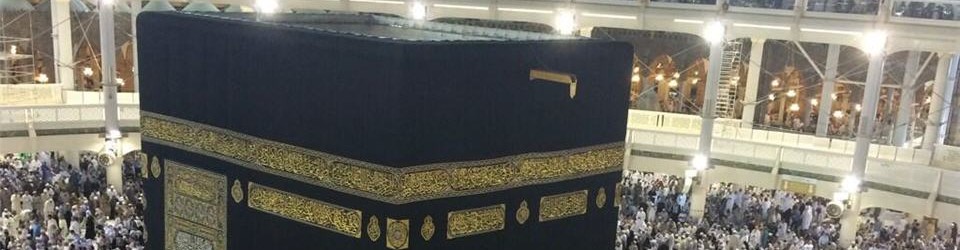
I saw individuals clinging to the house of Allah, holding it’s cover and crying profusely. They were supplicating for things for which they had done nothing at all in this world of taking means to achieve objectives (that is from the possible means within their reach).

Seeing their state it bolted out of my heart that these supplications (that are without taking the necessary means of achieving a goal within one’s reach) can not make a car run without fuel or a driver than how can they bring a drastic change in the affairs of our world.’

Sawanih, page 18

These are wishful desires (tamanna). They have to be differentiated from aspirations that are accompanied by effort within one’s means.

Persistence in daily wird

20130409-165413.jpg

Shaikh al Hadith Mawlana Mohammed Zakariya Kandehlawi mohajir Madani (Allah have mercy on him) instructed a seeker,
‘Persistence in daily routine of good works (wird) is the way to spiritual progress.

Be vigilant in completing the daily wird!

Do not pay attention (to the thoughts) that my condition is not changing with remembrance (dhikr).

It is an established principle according to the pious preceding masters of this path that blessed remembrance of Allah even if done with extreme heedfulness does not remain without a (spiritual) affect.’

Monthly Ihsan o sulook, Safar 1410, page 63