Category Archives: B. Praise worthy morals

The good moral characteristics that are to be developed within one’s self

Supplications

Sayyidi wa sanadi Hadhrat Mawlana Mohammad Taqi Usmani (may Allah preserve him) said,

“For any issue if you get an opportunity to make supplications (dua) in detail, then be content. Whatever happens next will be the best thing for you. You may call this tawakul or tafweez.”

Tuesday, 15th April 1991, Eid al-Fitr 1411. Hadhrat’s residence. Meeting with Drs. Sayyid Abdul Qadir Ahmer and Sayyid Usman Abdul-Nasir Moin( may Allah preserve them).

Do not be angry!

In a special gathering where several senior deputies (khulafa) of  Masih al-quloob Hadhrat Mawlana Masihullah Khan (may Allah have mercy on him) were present an individual asked Hadhrat to name some of his special deputies.

In a powerful spiritual state Hadhrat replied, “I do not have any khulafa! Only those (of whom I have given ijaza) who do not become angry are my deputies.”

As reported by qutub e Makkah e mukarramah, Shaykh Dr. Hasan Imam (may Allah preserve him)

Be humble ……… but not ungrateful!

Hakim al-Umma Hadhrat Mawlana Ashraf ‘Ali Thanawi (may Allah have mercy on him) said,

‘And now there is this malady which many people are falling into – perceiving themselves as very pious and saintly but I say who would think such a thing when they have no way of knowing what state they will find themselves in when they die? On what virtuousness do they take pride in? Allah protect us from such thinking.

What is there to be arrogant about when in all likelihood we cannot pick out one ra’kaat from our entire life that can be said to match up to the standards expected by Allah and then these paltry offerings themselves are also by dint of His favour and His blessing otherwise we could not even execute this’

(Malfooz 211, pg 169, Malfoozhat Hakeem-ul-Ummat, [Al-ifhadhat al yawmia…], Published Idara Taaleefat-e-Ashrafia)

 Source: The excellent blog, Beneath the Shade

Suhba to avoid

Shaykh Sayyid Raziuddin Ahmad Fakhri (may Allah have mercy on him) instructed the travelers on the path (salikeen),

” The four imperatives for treating a medical illness are,

1. Correct diagnosis

2. Appropriate consultation and treatment

3. Healthy diet

4. Avoidance of harmful things

Similarly in treatment of the diseases of the soul (batin) these all are essential. However, most crucial in them is the fourth item. That is, avoidance of harmful things. This means to avoid inappropriate companionship (suhba).

What is inappropriate suhba?

Anything, be it an individual person, a thought, a voice, a visual scene, a speech, a written material, a sign, a statement, in summary any entity that is not compatible with the actions, thoughts, mode and method of the traveler on this path is deleterious companionship that has to be avoided.”

Ahl e sulook per achi buri sohbet kay aseraat, page 6 &14

Wird vs clear dealings vs good morals

‘Arif billah Dr. Abdul Hayy ‘Arifi (may Allah have mercy on him) instructed the seekers,

“The daily routine recitations  (wird) can be increased or decreased based on the time available, determination and health status. But it is essential to have clarity in dealing with others, purity of social demeanor and rectitude of morals at all the times.”

Ma’moolat e yoomiya, page 14 

Guard eyes, ears and tongue

‘Arif billah Hadhrat Dr. Abdul Hayy ‘arifi (may Allah have mercy on him) instructed the seekers,

“Do not be slack in your effort of self-reformation (islah) till you die, as some of the ailments of self (nafs) take many years to be recognized.

Strictly guard your eyes, ears and tongue (from unlawful). These three organs are the source of all worships and transgressions, including the inner praise worthy and blame worthy moral traits. It is of utmost importance to take appropriate care of them by using them in lawful and abstaining from prohibited. 

However, (God forbid) when you slip (do not despair), repent immediately.”

Ma’moolat e yoomiya, page 13

No one loves me!

Hakim al-Umma Hadhrat Mawlana Ashraf Ali Thanawi (may Allah have mercy on him) said,

“If family members, close friends and other acquaintances do not love you anymore then be content that Allah, Most High made this a means for your heart to turn away from everything other-than-Him (ghair-Allah).”

Ma-sir Hakim al-Umma ra, pa 387

رضا بالقضا‏ء

رضا بالقضاء کی حقیقت ترک اعتراض علی القضاء ہے۔

 اگر الم کا احساس ہی نہ ہو تو رضا طبعی ہے اور اگر الم کا احساس باقی رہے تو رضا عقلی ہے۔

 اور اول حال ہے جس کا بندہ مکلف نہیں اور ثانی مقام ہے جس کا عبد مکلف ہے۔

 تدبیر اس کی تحصیل کی استحضار رحمت و حکمت الہیہ کا واقعات خلاف طبع میں۔ 

مآثر حکیم الامت رح، ص 279

O Allah, please, save us from Your wrath!

mirrage.jpgHadhrat Khawaja Aziz ul-Hassan majoob narates that while discussing the absurd beliefs of astray Islamic sects Hakim al-Umma Mawlana Ashraf ‘Ali Thanawi (may Allah have mercy on them) would spontaneously hold his hands together and beg with very extreme humility and servitude, “O Allah, please, save us from Your wrath (qahar)!” 

And he use to tell us that, “In case of Allah’s wrath falsehood (batil) appears to be the truth (haq) and erroneous thoughts take the form of realities (haqaiq).”

Hakim al-Umma kay heratangayz waqiyat, page 76-7

May Allah save us all from His wrath. Ameen!

Marital love and fear of Allah

Hakim al-Umma Mawlana Ashraf ‘Ali Thanawi (may Allah have mercy on him) said,

“Once I asked my first wife that even though I am never neglectful of your rights then what is the reason that you always remain saddened. She replied that whatever I did was not out of love but due to the fear of accountability infront of Allah.

I told her that if I had fulfilled all these rights merely due to love it was possible that at some point due to decreasing love (which always remain a possiblity) I become neglectful in executing my obligations. But if I do these things due to fear of accountability to Allah then remain reassured that I will never ever be neglectful in fulfilling these rights. This is because once this fear of Allah enters a heart it never leaves. You should be happy at this (state of mine).”

Hakim al Umma kay heyratangayz waqiyat, page 39

Allah’s proximity explained

In the exegesis of the verse,

نحن اقرب اليه من حبل الوريد 50-29

Shaykh Mufti Mohammad Shafi’ (may Allah have mercy on him) said,

“According to the Honorable Sufis, here the term qurb (closeness) goes beyond the concept of nearness  in terms of knowledge. It is a special type of ittisal (contact or bond or relationship between Allah and His creation, including man who is placed at the center of this wonderful universe), the reality and nature of which is not known to anyone but it does necessarily exists  bila kaif, ‘without how’ or ‘indescribably’.

Various Quranic verses and authentic Prophetic Traditions bear ample testimony to this fact.  For example,  Quran commands, وسجدو اقترب  (bow down in sijdah and come closer…Al-‘Alaq:18).  This is just like what Prophet (Allah bless him and give him peace) is reported to have said: “The closest that a servat can be to his Lord is when he in prostration. Therefore, make abundant supplication (i.e. while in prostration).” Another Tradition reports the Holy Prophet (Allah bless him and give him peace) said: “When My servant performs  supererogatory prayers, he attains proximity to Me.” On the occassion of migration to Madinah, the Holy Prophet (Allah bless him and give him peace) told Sayyidina Abu Bakr Siddiq (may Allah be pleased with him),ان الله معنا, “Allah is with us.” (9:40) Holy Prophet Musa (peace be upon him) told the children of Israel, ان معى ربى, “My Lord is with me”. (26:62)

This qurb (nearness or proximity to Allah), which a man attains though the observance of obligatory and supererogatory works and through his effort is reserved exclusively for a believer. Such believer are called awliya’ullah (the friends of Allah: they are those whom Allah has chosen to be His friends). This special bond with Allah is different from general relationship with Allah and man,whether believer or non-believer.

In brief ,the above verses and narrations bear testimony to the fact that man has a special type of proximity to his Creator and Master though its reality and nature cannot be perceived. Maulana Rumi (may Allah have mercy on him) has versified this concept thus,

اتصالے بے مثال و بے قیاس

 ہست رب الناس را با جان ناس

The Lord of the people has a special contact with the people,

which is beyond one’s perception and has no other example.

This nearness and proximity can not be perceived by the ordinay sensation of physical sight but is recognized through farasah of iman (perspicacity through faith).”

Ma’arif ul Quran (English), volume 8, page 157
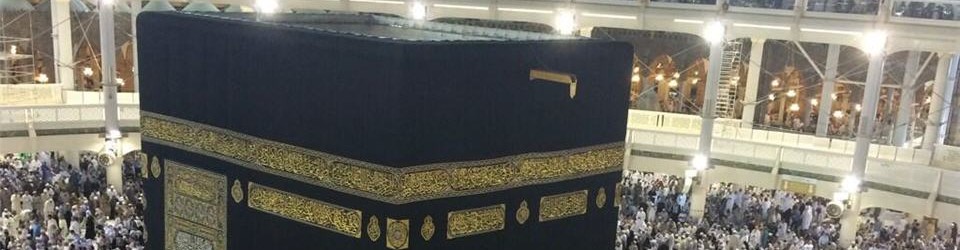
Loving Allah is by having mercy on His creation

Sayyidi Mawlana Mohammad Taqi Usmani said,

My Shaykh Dr. ‘Arifi (may Allah have mercy on him) used to tell us that anyone claiming to love Allah can not be truthful is his claim unless he loves His creation also.

It is as if Allah says that how is it possible for you to love Me? If you really do so then love my creation. Be merciful, caring and kind to them. This will declare that you love Me.

You heard Mr. President (of Darul Uloom, Mufti Rafi’i Usmani )[may Allah preserve him] last week at the commencement of Hadith study session narrating the hadith – also known as musalsal bil awaliya, that is the first hadith conveyed by a scholar to their students. The Prophet (Allah bless and give him peace) said, “The merciful are shown mercy by the All-Merciful, تبارك و تعالى. Be merciful to those on earth and the Lord of the Heavens will be merciful to you.”

This was the very first lesson given to a student of religion. The lesson of mercy, kindness and care to all the creation.

ِAnd remember (if you can not be of benefit to them then)the most miniscule display of this mercy, kindness and care is by not harming them in any form.”

Weekly bayan, 3rd November 2007