Category Archives: C. Blame worthy Morals

The bad moral characteristics that have to be removed from within ourselves

Balancing the practices of Deen


Sayyidi wa sandi Shaikh Mufti Mohammad Taqi Usmani(Allah preserve him) mentioned,

There is growing trend of Islamic awareness and practicing in younger generation. This often leads to clash with their non practicing parents. Sometimes the situation becomes ugly. It is imperative to be firm on the religious commandments. This is because there is no obedience of anyone in things that displease Allah. However, in doing so full respect of the parents has to be maintained. There should be no anger, rudeness or harsh language used. This is also an Islamic injunction. The fine balance between the practices of Deen has to be maintained in order to gain pleasure of Allah.

Ramadan waaz1433: sabr series

Prepare for Ramadhan

1. Ask Allah for facilitation (tawfeeq) to benefit from the blessings of Ramadan daily, from now onwards.

2. Make a firm determination to abstain from all sins. Especially those committed by the eyes, ears and tongue.

3. Try to free as much time as possible from work and other commitments for pure worship (ibadah).

4. Reschedule non essential appointments till after or before Ramadan. Finish all Ramadan and Eid shopping prior to the sighting of the crescent.

5. Make special effort to follow as many as possible Sunna in daily activities.
Learn these and memorize the adiya e masnoon (dua) for particular occasions before hand. The book “Alaikum bi sunnati”by Mawlana Abdul Hakim Sukharwi ra is a good, practical and handy resource for this.

6. Review the essential fiqh (rulings) relating to fasting, taraweeh and other Ramadan related issues from “Behishti Zewar” (Heavenly Ornaments) of Hakim al-Umma Mawlana Ashraf Ali Thanawi (may Allah have mercy on him).

7. To get motivated and organized, read the discourses of Hakeem al -Umma regarding Ramadan (Mawaiz-e-Ashrafiya volume : Barakat e Ramadan) and listen to the talks of Sayyidi wa sandi db on how to prepare for the holy month.

8. Practice the actions of the Heart. Do not do any action without a proper intention.Abstain from all the blame worthy morals. No anger, arrogance, belittling caustic remarks, etc. It is strange to abstain from otherwise halal (lawful food) and commit an act which is always haram (forbidden). Try to do most of the praise worthy moral actions. Having patience, humility, gratitude, sincerity, etc. Keep a tight grip. Do not slip here.

9. Make a practical and doable time table for daily activities.

The point to remember is that in Ramadan acts of primary form of worships (i.e. salah, dhikr, tilawat, etc.) are to be increased. These lead to an increasing direct relationship with Allah  (i.e. ta’luq ma’Allah).

The tawfiq is from Allah!

Nafs

A spiritual aspirant wrote,

‘The similitude of my nafs is that of of slime covered slithery pig. Restraining it from indulging in sinful is extremely challenging. It wiggles violently and fights ferociously if I try to control it. Getting hold of this slippery, powerful and agile brute is extremely difficult.

Please, make supplication (dua) that Allah gives me the determination and courage to rein this beast. And facilitates this process effectively for me.’

Shaikh Dr Hafeezullah Madani (Allah have mercy on him) replied,

‘Amin!

An explicit and vivid similitude indeed.’

Makkah e mukarramah, 1424

Dealing with criticism constructively

Back biting (ghiba) is a major sin (gunah e kabira). In Qur’an it is described as eating the flesh of ones’ dead brother.

It is mentioning in front of others something (true) about an absent fellow Muslim that would be unpleasant to him if he were to be aware of it.

It is from the category of rights of the fellow Muslims (huquq al ibad). Repentance from it requires asking forgiveness from the aggrieved individual.

It was a habit of Hakim al-Umma Mawlana Ashraf Ali Thanawi (Allah have mercy on him) to ask the individual who approached him to apologize for back biting him,

‘I forgive you but, please, let me know what did you say about me.’

To his disciples he explained that I do so to find out that if he had criticized me genuinely. If it was the case then I will make effort to amend those mistakes.

Hakim al-Umma had a permanent feature in the monthly publication of his Khanqah, al Noor, regarding this issue. It was to acknowledge his errors and slips. He even hired scholars to vet his works.

One who is seeking Allah’s pleasure and acceptance is never hesitant to acknowledge his own mistakes and repent. Each and every criticism, however acrid it maybe provides an opportunity to do so. It is a blessing in disguise.

wa ma tawfiqi illa billah


Those at loss in middle Night of Sha’ban

Our master Prophet Muhammad, (Allah’s blessings and peace be upon him) said,

“This is the middle Night of Sha’ban. Allah frees in it a large number of the people from (Hell) Fire, more than the number of the hairs growing on the sheep of the tribe, Kalb. But He does not even look at an individual who

– associates partners with Allah, or

– who nourishes malice in his heart (against someone), or

– who cuts off the ties of kinship (qata’ rehmi), or

– who leaves his clothes extending beyond his ankles (as a sign of pride), or

– who disobeys his parents, or

– who has a habit of drinking wine.”

Allah save us from being among these individuals. Amin!

Warning regarding Sufism

Speaking in United Kingdom sayyidi wa sanadi Shaikh Mufti Mohammad Taqi Usmani (Allah preserve him) said,

I would warn the younger Muslim generation about the wrong interpretation of Sufism.

It has been widely propagated in the Western world by non-Muslims. They coined the term Sufism. They praise Sufism. They preach sufism. They propagate Sufism. One may think that they do this in service to Islam. However, the reality is that the Sufism propagated by Western writers is quite contradictory to the Shariah. It is quite contradictory to the real essence of Tasawwuf and tariqat.

A high ranking western offical visited the Darul Uloom, Karachi. After having a detailed tour observing the teaching activities he commented that he did not see anything about Sufism being taught.

It was inquired that what did he mean by Sufism.

He replied that Sufism is something related to one’s soul and what pleases one’s soul. For example, playing music, dancing, having ectasy (wajd) and qawwali,etc..

The poor individual restricted Sufism to these kinds of activities.

The real problem is that when Western world speaks of soul as against the physical life they assume that they are speaking of the spirit or spiritual things. There is a big difference between soul and spirit.
In fact soul is what is called the nafs in Tasawwuf. That is the (lower) desires of the heart. Tasawwuf does not have realtion to soul in that meaning.

Tasawwuf realtes to the spiritual qualities- the human instincts (reforma tion of the moral characteristics – thus becoming a better human being & Real Muslim).

Turath lecture, 23rd June 2012

Dubai, UAE

The pleasure of intimate conversation

Haji Shakeel Ahmad (Allah preserve him) mentioned a very important thing in his talks that affects us all. A summary of it is posted here,

The pious said that the first and foremost sign of displeasure of Allah is that the afflicted individual lose interest in supplication (dua) and presence of mind in worship.

This is because of his disobedience. And it is the displeasure and turning away of Allah’s attention from him that he does not find pleasure in the intimate conversation of dua, salah, etc.

We should check ourselves and find out if we are from the afflicted one’s. If so, then we should be vigilant in correcting our mistake, repenting and pleasing our Lord.

Wa ma tawfiqi ila billah

Abu Dhabi,UAE

الم يعلم بان الله يري

Sense of self grandeur

Sayyid wa sanadi Shaikh Mufti Mohammad Taqi Usmani (Allah preserve him) said,

‘Haji Imdadullah mohajir Makki (Allah have mercy on him) used to say that an individual who maintains a sense of grandeur and hype about his personality has not even scented the smell of this path (Tasawwuf).

Hakim al-Ummah Mawlana Ashraf Ali Thanawi (Allah have mercy on him) used to say repeatedly that the very first and the final steps in Tasawwuf are (increasing levels of) self effacement (fana).’

Suanday waaz 17th June 2012, Dar ul Uloom, Karachi

How to gauge spitirual progress?

Imam ‘Abdallah ibn ‘Alawi al-Haddad (Allah have mercy on him) said,

Should a man wish to know whether he is rising or falling in religious terms, he should look at how his state and conduct had been a month or a year ago.

If he finds that they were better than his present state and conduct, he should know that he is descending into degradation; whereas if he finds that his present state and conduct are better, he should know that he is rising and improving.

It has been handed down that “he who finds that his (present) day resembles the previous day has been cheated, and he who finds that his (present) day is worse that the previous day is accursed. Accursed here means remote from a particular and specially accorded to mercy.

He who is not increasing is diminishing.

To explain, if when thinking about previous days, you feel that you then had no desire for the world, were eager for the Hereafter, scrupulously avoided doubtful things, were quick to good actions, quick to obedience, remote from transgressions, and by comparison are now no better or are to any extent worse, then know that you are going down, deteriorating in religion, in your aspiration for God, and in striving for the Hereafter.”

Knowledge and Wisdom

Tazkiyah & Tabligh

In the Name of Allah, the Most Gracious, the Most Merciful.

As-salāmu `alaykum wa-rahmatullāhi wa-barakātuh.

Muhtaram,

Tabligh is an Arabic word literally meaning “to convey”.

Contextually it refers to conveying the message of Islam. The word Tableegh is commonly used to refer to the Tableegh Jamaat movement in which people spend 3 days or 40 days or 4 months or 1 year in Tableegh.

Alhamdulillah, the Tabligh effort has been proven to be beneficial in conscientising people about their religious duties and reforming the lives of many people.

I fully support the noble effort of Tableegh.

However, it is important to note that the specific form and way of the Tabligh effort is not specifically mentioned in the Shariah. It is recommended. The actual mission of Rasullullah (Sallallahu Alayhi Wa Sallam) was Da’wah with Ta’leem (educating) and Tazkiyah (purification of the soul). The present form of Tableegh is one form of Da’wah. It is not the only way of Da’wah. To confine the obligation of Da’wah to the Tableegh movement is erroneous.

There are innumerable ways of Da’wah and all forms of Da’wah practiced within the confines of Shariah should be supported and complimented. It is therefore incorrect for some ardent supporters of Tabligh to claim an absolute right of Da’wah through Tabligh. Such an attitude is a great injustice to the broader concept of Da’wah and is an extremist attitude.

It is even worse to claim that Tabligh is more important than Tazkiyah. Tazkiyah is Fardh. The specific form and way of Tabligh is not Fardh. It is merely recommended. How can a recommended form of Da’wah be preferred over a Fardh act?

To reform oneself and cleanse oneself from the evil instincts within ourselves is Fardh.

It is also very unfortunate that we hear of reports from some elders of Tabligh Jamaat referring to Tazkiyah as a secondary issue, not so important, e.t.c.

How can a Fardh act not be of any importance at all? Such statements are incorrect and misleading. It is expected of the Ulama engaged in Tabligh and Tazkiyah to encourage people to do both, Tazkiyah and Tabligh.

If one does not go out for 3 days, 40 days or 4 months in Jamaat, he is not sinful and will not be answerable in the court of Allah (Subhanahu Wa Ta’ala). However, if one does not reform himself from pride, jealousy, ostentation, e.t.c, he will be sinful and answerable to Allah (Subhanahu Wa Ta’ala).

People actively engaged in Tabligh should realize this and adjust accordingly. One can never attain the Maqam (position) of Ihsaan by merely going out in Tabligh without reforming oneself. The singular approach of Tabligh whilst sidestepping the importance of Tazkiyah is an incorrect view and erroneous. It is misleading.

Tazkiyah is Fardh. The specific form of Tabligh is not Fardh. It is recommended. It is an effort we too support.

And Allah knows best.

Mufti Ebrahim Desai

Dar al- Mahmood

Source : http://tasawwuf.daralmahmood.org/muf…tabligh-jamaat
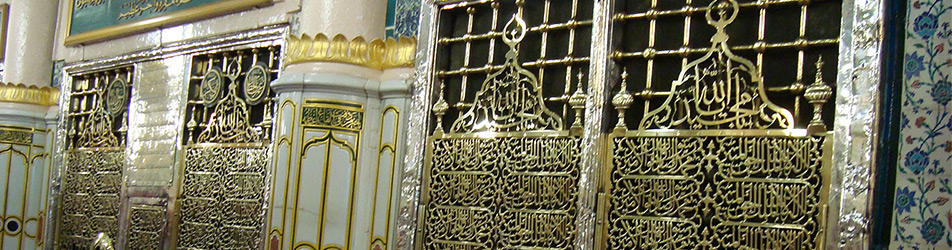
Advice to the graduating scholars: Necessity of moral discipline

Addressing the final session of the Hadith text Sahih al Bukhari sayyidi wa sanadi Shaikh Mufti Mohammad Taqi Usmani (Allah preserve him) emphasized on the necessity of moral discipline. This is essential to make our actions worthy of reward as Imam Bukhari (Allah have mercy on him) has alluded to in the closing chapter on his book. He said,

‘The acquistion of the fine equilibrium required for moral characteristics of an individual as recommended by the standards of Quran and Sunna is possible (only) by being in the company of the pious (ahlul Allah) (for this specific purpose) and effacing one’s self (nafs, eccentric ideas, impermissible desires, boastful expectations, etc.)  in front of them.’

Khatam e Bukhari sharif 1433, Darul Uloom Karachi approx 43mins onwards

The obstacles to ta’aluq ma’Allah

Shaikh Haji Shakeel Ahmed (Allah preserve him) said,

‘The two most common reasons for not being able to develop a strong personal relationship with Allah for those who are apparently trying to do this are;

1. Inadvertent consumption of impermissible (haram) food, and

2. Persistence in sinful activities.  That are not followed by sincere repentance.

Special care has to be taken regarding meat. It must be assured that it is properly slaughtered (dhabiha).’

Maderasa Sayyidena Maaz bin Jabal, Jeddah, 07 June 2012,  after maghrib

Alive or dead?

Shaikh Haji Shakeel Ahmed (Allah preserve him) said,

‘Alive person feels the pain of a pinprick and reacts.  Whereas a dead body will never feel or react even if a nail is driven into it.

Similarly, a faithful individual feels the undesirable effects of sinful activity. It makes him uncomfortable. If this does not happen than one should worry about the presence of faith (eman). It is the (spiritual) life/soul of an individual.’

Jeddah, 30th May 2012, bayan after maghrib

Shrewd & peaceful

Enumerating the qualities required for a mureed Shaikh Najamuddin Kubra (Allah have mercy on him) said,

‘He must be shrewd. Traversing this path requires cleverness and dexterity. This is to deal with perils that he will face in this journey.

He must keep peace with all the creation of Allah and only battle with his own lower self (nafs).’

Mirsad al-Abad, page 169