Category Archives: D. Acts of Worship

Various acts of devotion to show our servitude

Fulfilling the rights of others and spiritual states!

Shah Wasiullah Allahabadi (Allah have mercy on him) said,

‘Once after offering the duhar salah Hakim al-Ummat (Allah have mercy on him) went inside his home, whereas, the usual routine was to write replies to the letters at this time.

When he returned back he told us,

Listen! I had spiritual constriction (qabdh) for the past six months. My wife was sick having nausea and vomiting. I assisted her and cared for her (during this illness). Because of this my spitirual constriction vanished and a spiritual lucidity (insharah) came into my heart.’

Hakim al-Umma (Allah have mercy on him) used to tell us such incidents frankly so that we take heed and realize the importance of fulfilling these rights and acknowledge the effect they have on one’s spiritual matters.

It is the biggest innovation (bidah) of our times that the rules of Shariah that are related to the rights of fellow human beings (huqooq al-ibad) are  not considered to have any role in spirituality and piety. ‘

Halaat-e-Mulish-alUmmat ra, volume 1, page 90.

Watching Television

Sayyidi wa sanadi Shaykh Mufti Mohammad Taqi Usmani (Allah preserve him) said in reply to a question about watching television,

‘Contemporary television (programs) are a composite of multiple sins. Almost all of the programs are such that by watching them one indulges in any of these sins. Therefore, it is impermissible to keep a television set at home. I consider it (watching TV) to be inappropriate’

Ulema bayan, Q & A, Chennai, India, 2010

Lover’s share

Hakim al-Umma Mawlana Ashraf Ali Thanawi (Allah have mercy on him) replied to Mawlana Abdul Majid Daryabadi’s complain about his dissatisfaction on Hajj he performed,

‘The only share of the lover (‘aashiq) is despair, misery, failure and loss.

The lover is never satisfied completely.

Anguish and remorse never leave him.

After performance of Hajj if he considered that the obligation was executed properly, it would tantamount to self-praise (ujub). Whereas, on the other hand lover contemplates on how poorly it was done. This is the slave-hood (abdiyet) and annihilation (fana) desired. If by the way there were short comings they can be easily overcome by repentance.

Hakim-ul-Ummat ra, by Mawlana Abdul Majid Daryabadi ra, page 67

The three essentials

Shaykh Ahmad Ali Lahori (Allah have mercy on him) said,

‘The spiritual benefit (from a Sahykh) is received via having reverence (aqidet) for him, observing proper etiquette (adab) with him and following his instructions (thoroughly).

Even if a single wire of this (three wire-cable) is broken the circuit breaks (hence, no benefit is achieved). 

Mard-e-momin, page 208

Wazifa!

Shaykh Shah Wasiullah Allahabadi (Allah have mercy on him) said,

‘People ask me to tell them something to perform and recite (wazifa/wadhifa).

I tell them do not tell lie, talk behind another’s back (ghibah) and be angry.

They do not consider this to be a wazifa.

Whereas, in reality these things are magnanimous wazifa. If they adopt them they will be successful. Moreover, if all people adopt them this world will become like heavens.’

Tazkirah-e-Muslih-al-Ummat ra, page 153,54

Agnozing parents after death!

My respected father Cdr. (retd,) Shaukat Kamal (Allah have mercy on him) requested his children in his wasiyet-nama,

‘In the world of Barzakh (the transitional place between this world and here-after) the actions of children are presented to their parents for review every week. Please, save me from agony there (by reviewing your bad actions).’

Wasiyet-nama (qalami), page 3

Developing willpower!


Sayyidi wa sanadi Shaykh Mufti Taqi Usmani (Allah preserve him) said,

‘Hakim al-Umma (Allah have mercy on him) stated that the essence of all the actions (of Shariah) are sincerity (ikhlas) and willpower (himmat). Further on he said that from these two the main is willpower. This is because willpower is needed to develop sincerity. (1)

There are various methods of developing willpower.

One of them is being in the company of individuals who have (already developed) this willpower. Socialize with them. Gradually their willpower will be transferred to you.

Second method is to read about the people of (developed) willpower. This will also transfer their willpower to you.

The third mode is being vigilant about willpower. This is by setting a penalty for being negligent in omission of a good action or commission of a sin. For example, if I fail to use my willpower to abstain from a sin I will offer x units (rakat) of salah or pay y amount of money in charity. (2)

However, the method  of developing and utilizing the willpower is different for each individual.  A standard prescription can not be given to all. It is the Shaykh who decides what method is most appropriate for a specific individual. You will often stumble  if you select and act on your own suggestion. (3)’

Islahi majalis, volume 2, pages 261 (1), 268 (2), 269 (3)

Breaking the chains of addiction!

Some sins are embedded deep within one’s heart and mind.

There is a strong carving to indulge in them.

Frequent review of admonition from Quran, Hadith, sayings of pious (mashaikh) and even optional acts of deterrence like extra fasting, praying additional salah, recitations of specific litanies, payment of monetary penalties fail to have effect in giving up these sins.

In short, it is what we call an addiction.

How to deal with this addiction?

Shah Wasiullah (Allah have mercy on him) has an answer,

‘A sin once embedded in a heart (& mind) is not given up easily. It requires serious spiritual struggle (mujahidah). It means that the intensity of the treatment depends on the degree of dissemination of the disease. If it has involved the deepest extents of heart and mind the medication has to be delivered to those locations. (1)

For the effective treatment the place darkened by this affliction (heart & mind) has to be illuminated. This illumination is acheived by excessive remembrance of Allah (kasret-e-zikr), vigilance in maintaining ritual purity (taharat),  and meticulous following of the Prophet (Allah bless him and give him peace) in all the matters (itiba-e-Sunna).’ (2)

Taharet e qalb, pages (1) 160, (2) 161.

A mentor or Shaykh is required to decide what is excessive remembrance, how is it to be done, for how long and if in between this treatment there is a problem how to deal with it.

Advice to students

Sayyidi wa sanadi Shaykh Mufti Mohammad Taqi Uthmani (Allah preserve him) gave the following advice to a group of students,

1) Sacred knowledge is of no use or benefit to the aspiring students unless they act upon their knowledge and base their works upon it. And the most beneficial of works is that which brings one closer to the obedience of Allah Most High.

2) The students must purify their intention as to why they are seeking knowledge. Their intention must be purely and sincerely for the sake of Allah Most High.

3) The students should firmly adhere to the Sunnah (life-example) of the Prophet Muhammad (peace and blessings be upon him) in every aspect and circumstance of their life.

4) The  students must be constantly turning back to Allah Most High (ruju’ ilal-Allah) through their life journey, in all situations. Returning means to seek help from Allah against all difficulties and challenges, to seek to please Him, to seek protection and forgiveness from Him, and to be grateful and humble to Him.

5) The student of knowledge must  make lots of supplication (dua’) to Allah Most High, for every single one of his needs, whether they be needs of this world or the next.

Source: Seekers Guidance (with minor changes)

Nisbet

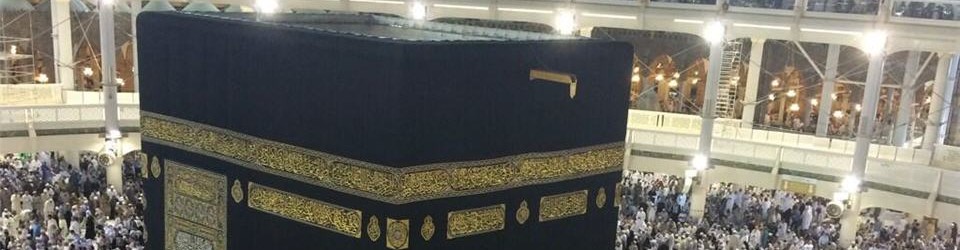
In Holy Mosque, sitting in front of the Yemeni corner (rukune yamani) of the blessed Ka’aba Hadhrat Mawlana Mohammad Taqi Usmani (may Allah preserve him) was asked by an individual,

“How can a person develop nisbet (perpetual, strong and mutually friendly relationship with Allah most high)?”

Hadhrat replied,

“Hakeem al-Umma (may Allah have mercy on him) has succinctly said regarding it
کسی اللہ والے کی جوتیوں میں جا پڑے

Another individual asked for further explanation of the above statement.  

Hadhrat explained that,
“It means to efface one’s desires, suggestions and expectations in front of a Sheikh. To do as he is told to do. Not to be independent and to have complete submission.”

 Makkah e mukaramah, 5th Safar 1428/2007-02-22

Goal of the the tariq!

Hakim al-Umma Mawlana Ashraf Ali Thanawi (Allah have mercy on him) said,

‘I tell you* what I have learnt in my whole life to be the end result of this path (tariqat).

It is annihilation (fana)and servant-hood (abdiyet).

Therefore, one must annihilate himself as much as possible.

All the spiritual exercises (riyadath) and struggles (mujahida) are done to achieve this.

One should spend his whole life trying to attain this annihilation and servant-hood. ‘

Basair e Hakim al Ummat ra, page 208

* This was stated on request of Allamah Sayyid Suleman Nadwi (Allah have mercy on him) on his first visit to Thana-Bhawan.

The Rights of fellow humans!

Shaykh Mufti Ashiq Illahi Bulandshahri mohajir Madani (Allah have mercy on him) said,

‘The issue of the rights of the fellow human beings (huqooq al-‘ibad) is of great enormity.  Commonly people are negligent about them. For them religiosity is limited to salah, (long) shirt and beard.

Shaykh Sufyan Thawri (Allah have mercy on him) used to say,

‘If an individual comes on the day of Judgment with seventy disobediences of Allah it is lighter sin than arriving there with a single obligation pending for a fellow human being.’

This is because Allah is self-sufficient (as-Samad) one can expect forgiveness from Him, whereas humans are needy. Therefore, it is essential to be vigilant about these rights. It is of immense importance that one clears these dues before death. It is a stupid idea to expect forgiveness from fellow humans on that day (of Judgment). They will be in need there in a a very tight situation. They will be looking for minute gains and all will try to claim their pending dues in full.

The situation in distribution of inheritance (merath) is sinful for almost all religious individuals, self-proclaimed pirs, scholars, and  lay public. The wealth (and property) of the deceased person is not distributed as per the Shariah rulings among the inheritors. The share of the widow and orphans is engulfed by others.’

Yadgar e Saliheen, Halaat e zindagi, page 104-5

Before Going to Eid Prayer

The following acts are prescribed as Sunnah at the beginning of the day of ‘Eid-ul-Fitr before proceeding to the Eid prayer:

1. To wake up early in the morning.

2. To clean one’s teeth with a Miswaak or a brush.

3. To take a bath.

4. To put on one’s best available clothes.

5. To wear perfume.

6. To eat a sweet food, preferably dates, before the Eid prayer.

7. To recite the following Takbir in the low voice while going to the ‘Eid prayer:

Allahu Akbar Allahu Akbar La Ilaha Ila Allah Wa Allahu Akbar Allahu Akbar Wa Lillahi Alhamd

Source: Islamic Months by sayyidi wa sanadi db