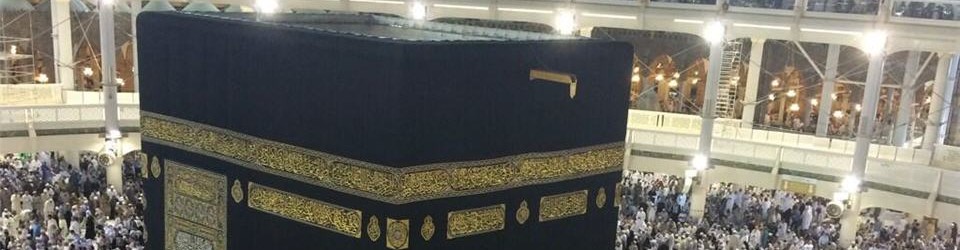
Category Archives: D. Acts of Worship

Various acts of devotion to show our servitude

Levels of Negligence

Hakim al-Umma Hadhrat Mawlana Shah Ashraf Ali Thanawi (may Allah have mercy on him) said,

“It is in “Fawaidul fawad” (malfuzatof Hazrat Mehboob e Ilahi Khawajah Nizamuddin Awliya Chishti ra) that, salik is he who travels on the path (of sulook). Waqef واقف is the one who is stuck in the middle

If a salik is negligent in his worship but quickly repents, ask (Allah’s) forgiveness and resumes his duties actively he becomes a salik again. However, God-forbid, if he continues to be negligent chance are that he may be turned off راجع

There are seven levels of negligence in this path (sulook).

First is اعراض dodging Allah’s commands

If one does not repent humbly he proceeds to حجاب the creation of a barrier between him & Allah

If he persists this leads to تفاصل increasing separation between him & Allah

If he does not repent even now, the additional state of enthusiasm ذوق و شوق)) in acts of devotion is taken away. This is سلب مزید removal of additional states

If he continues in his foolish ways the comfort and pleasure that were present even before the additional state of enthusiasm are also taken away. This is called سلب قدیم removal of original states

Not repenting and correcting his behavior at this stages leads to an agreement of heart on separation (from Allah). This is called تسلی agreement on separation between him & Allah

If the same negligence continues the love (of Allah) is replaced by عداوت hatred

We seek Allah’s refuge from them all.”

Taleem ud Deen, page 113-4, Taj Co. edition. (An essential reading in Nisab e Tasawwuf)

Strongest Impediment in Sulook

Hakim al-Umma Hadhrat Mawlana Shah Ashraf Ali Thanawi (may Allah have mercy on him) said;

‘Although, all the sins and attachments to other-than Allah are an obstacle in this path (sulook). Few indispensable ones are explained here.

First and foremost is opposition of the Sunna of Prophet, Allah’s blessings and peace be upon him (in beliefs, acts of worship, especially ikhlaq/morals, mutual dealings, financial transactions and all other activities).

Taleem ud Deen, page 131, Taj Co. edition. (An essential reading in Nisab e Tasawwuf)

Three things to do on hearing something beneficial

‘Arifbillah Hadhrat Dr. Abdul Hayy ‘Arifi (may Allah have mercy on him) told those gathered to hear him speak;

“To reap maximum benefit from something heard that is spiritually beneficial do these three things;

1. Make dua immediately. Asking Allah for the assistance (tawfeeq) to act according to it.

2. Pass it on to others.  That is, repeat it to someone else, later.

3. Act on it as soon as possible. Even if it were to be a single occurrence.”

Khutbat e Arifi ra, mp3, 10 CD set

Secret of Repetition

‘Arif-billah Hadhrat Dr Abdul Hayy ‘Arifi (may Allah have mercy on him) said,

“Reading or discussing something repeatedly usually results in recalling it when its need arises.

At that moment one needs spiritual determination to act according to it.

Doing such for some time eventually leads to the creation of an instinctive inclination for acting so without effort.”

Malfoozar e Arifi 167

Best book for a salik preparing for Hajj


Sayyidi wa sanadi Hadhrat Mawlana Mohammad Taqi Usmani (may Allah preserve him) said,

“Hadhrat Makhdoom Mohammad Hashim Tathtawi’s (may Allah have mercy on him) book, ‘Hayat al-qalub fi ziyarat al-mahbub‘ is the most authentic text regarding the Hanafi fiqh rulings on Hajj. My respected father, Hadhrat Mawlana Mufti Mohammad Shafi’i (may Allah have mercy on him) used to praise it a lot. It was because of this that he obtained its manuscript with much effort and had it published by Maktaba Darul Uloom, Karachi. He used to say that the methodical study (tehqiq) of some of the Hajj rulings (masail) in it is superior to most of the the other established text.”

Hayat al-qalub fi ziyarat al-mahbub, page 3

The original book is in Persian. It was translated in to Urdu by Mawlana Khalilur Rehman Nomani al-Mazaheri (may Allah have mercy on him).

Hajj is a unique act of worship (‘ibada). 

As per Sayyidi wa sanadi Hadhrat Mawlana Mohammad Taqi Usmani (may Allah preserve him) it is a worship of an ardent lover (‘ashiq) .

It is done only once in lifetime. That is, the fardh Hajj.

In other worships that are repeated daily or yearly there are chances to reach the zentih of sincerity, devotion and perfection (sidiq) eventually over time.  But this is not possible in Hajj. Hence, all effort has to be made to make sure that it is done as required by the Shariah in the first go.

The wealth of information given in this book is remarkable. All the faraidh, wajibat, sunna and mustehebbat are mentioned in detail.

It is a must reference to be available on Hajj journey, especially for individuals or if your group does not have qualified Hanafi scholar to guide you step by step.

May Allah help all those intending for Hajj this year, making each and every step easy. May He give them utmost sincerity, devotion and conformation to the Sunna in it. And finally accept it as a ‘perfect Hajj’. Ameen!

Prohibiting a permissible act

Hakim al-Umma Hadhrat Mawlana Ashraf ‘Ali Thanawi (may Allah ahve mercy on him) said,

“The Islamic jurist (fuqaha) and sufi masters have paid due attention to the principle, that if a permissible or desired (mustaheb) action becomes the source of a sin then that action itself will become impermissible.

For example, some intoxicants (like opium) in minute quantities that are non-intoxicating are not impermissible (haram). However, as small quantity can (inadvertently) increase and become intoxicating, they are prohibitted in meager amounts also.

Similarly, permissible speech, sleep and intermingling with others are not sinful in themselves. But (excessive & unrestricted involvement in) these activites eventually lead to indulgence in sin. It is for this reason Sufi Masters prohibit these also (i.e. the well known spiritual struggles (mujahidat) of the path).”

Fiqh e Hanafi kay usul wa zawabet, page 113

Imitating

In Sahih Muslim there is a saying of the Messenger of Allah (Allah’s blessing and peace be upon him) meaning that,

From the begining of the month of Dhul-Hijjah anyone who intends to sacrifice (on Eid al-Adha) should not cut his hair or trim nails until he has offered his sacrifice.

Commenting on it sayyidi wa sanadiHadhrat Mawlana Mohammad Taqi Usmani (may Allah preserve him) said,

‘Maybe this is to immitate the Pilgrims (hujaj) (who in the state of ihram are forbidden to do these activities) and somehow participate in the blessings of the passionate worship of Hajj.’

First ten days of Zulhijjah

Sayyidi wa sanadi Hadhrat Mawlana Mohammad Taqi Usmani (may Allah preserve him) said,

‘The first ten days of Zulhijjah are among the most magnificent days in Islamic calendar.

The Holy Prophet, Sall-Allahu alayhi wa sallam, has said, “One fast during these days is equal to the fasting of one complete year, and the worship of one night during this period is equal to the worship in the “Lailatul-Qadr”.

Every Muslim should avail of this wonderful opportunity by performing during this period as much Iba’dah (acts of worship) to Allah as he or she can.’

Islamic Months

Thanawi sulook

Outlining the strategy of spiritual path (sulook) employed by Hadhrat Mawlana Shah Mohammad Asadullah, a khalifa of Hakim al-Umma (may Allah have mercy on them) it is mentioned,

“His emphasis was more on taqwa(piety, awareness of accountability to Allah and abstaining from all that is sinful) then involvement in recitations of litanies (wird) and excessive remembrance (dhikir).  

He used to say that taqwa is easy. This is because it is a passive thing, and it is established that abstaining from a act is easier than performing any activity.

Then he stressed on the vigilance in abiding to the Prophetic ways of doing things (Sunna)

The third thing in this hierarchy were the daily recitations of litanies and excessive remembrance (wird). “

Aks-e-Jameel, the biography of Mufti Mohammad Jameel Ahmad Thanawi (may Allah have mercy on him), page 202

In general, this is the manner in which  most of our Mashaykh guide the spiritual aspirants.

Leaving the Sunna

Imam Ghazali (may Allah have mercy on him) narrates the saying of the blessed Prophet , صلى الله عليه وسلم

من ضيع سنتى حرمت عليه شفاعتى

Meaning that whoever abandons my way of doing things (sunna) will make my endorsement (i.e. shafaet on the Day of Judgement) impossible for him/herself.

Makashafat al-Quloob, page 74 /internet edition

May Allah give us the tawfiq and firm determination to follow Sunna. Amin

Benefits of tahajjud

“The seeker is steady in praying the pre-dawn (tahajjud) salah.

(In addition to being a Sunna) It is especially effective in defence against the hell-fire.

It has other benefits, such as subjugating the inner-self (nafs), creating awe (khashiyet) of Allah and bring one closer to the Truth (haq).”

Ahadith-e-sulookiya, page 32

Allah give us the tawfiq. Amin!

Related posts:

1. Tahajjud salah

2. Tahajjud prayers

3. Disregarding Shakh’s advice

4. The real task

5. Late night discussions

Sunna: Loving the Prophet صلی اللہ علیہ و الہ وسلم

قال رسول اللہ صلی اللہ علیہ و الہ وسلم

۔۔۔۔۔۔۔۔و من احیا سنتی فقد احبنی و من احبنی کان معی فی الجنۃ

سنن الترمذی، کتاب العلم، رقم الحدیث2602

Whoever brings to life my way of doing things (Sunna) (in his daily practices) he loves me.

And whoever loves me will be with me in Paradise.

Tirmizi

Ahadith e sulookiya, page 10

Visiting the Prophet صلى الله عليه وسلم

O Messenger of Allah!
“Allah said, ‘And when they having been unjust to their own selves and come to you and seek Allah’s forgiveness………..

 O Messenger! I have come to you seeking forgiveness from Allah for my sins and seeking your intercession on my behalf, and supplications that I remain steady and die on your way (Sunna) and I am raised amongst your followers on the day of Judgement. Amin!

Watchout for the demand of the moment

Sayyidi wa sanadi Hadhrat Mawlana Mohammad Taqi Usmani (may Allah preserve him) has instructed on multiple occasions,

“Do not be trapped in the dreamworld of fulfillment of your own desires even in the sphere of religion.

Be the son of the moment (ibn al-waqt). That is, do as each and every moment demands from you. For example, if there is a blessing be thankful to Allah, if there is a mistake repent, if there is hardship be patient and if there is fear ask refuge, etc.

This is servitude (abudiyet).”

IDSA, Washington DC