Category Archives: D. Acts of Worship

Various acts of devotion to show our servitude

Tahajjud Salah

Tahajjud (predawn/late night) salah is most virtuous and extremely important for those traveling the tareeq (path).

A mureed wrote: These days tahajjud salah prior to fajar is often missed.

Sayyidi wa sanadi Hazrat Mawlana Mohammad Taqi Usmani sahib db replied:

“Between the sunnah salah of Esha’ and witir offer four rak‘ah nafil with intention of tahajjud (every day).

Then if you wake up at predawn offer tahajjud salah again.”

“Be always steadfast with this practice (of offering nawafil at esha’). If by chance you are not able to wake up at the appointed tahajjud time this will, inshaAllah, compensate for it.”

Islahi khatoot

(Please, note: Individuals with qaza salah should focus on completing the pending salah as soon as possible. For them it is best to offer qaza at these times (e.g. tahajjud, ishraq, awabeen, etc.) also).

The Accepted Whispers/Munajat-e-Maqbul

Du’a (supplication) is the essence of worship. It is the weapon of the believer. With it we can never fail; without it we can never succeed. It is a whispering conversation with Allah, the most uplifting, liberating, empowering, and transforming conversation one can ever have.

This book contains more than 200 du’as from the Qur’an and Hadith in Arabic for daily reading, along with their transliteration, translation, and commentary in English. The commentary explains historic background, meanings, merits, and special significance of the du’a in question.

This selection was originally compiled by Mawlana Ashraf Ali Thanawi under the title Munajaat-e-Maqbul. Like his Bihishti Zewar (Heavenly Ornaments), it has been very popular in the countries of the Indian subcontinent, where it has become a household name. This edition aims at making it accessible to the English-speaking world.

The Compiler

Mawlana Ashraf Ali Thanawi (1280-1362 AH/1863-1943 CE), commonly referred to as Hakim al-Ummat (“Sage of the Ummah”), was a giant among the Islamic scholars of the twentieth century. He was a master in all branches of Islamic scholarship including Qur’an, Hadith, Fiqh and Tasawwuf. A prolific writer, he had more than a thousand publications to his credit. He wrote for the minimally literate as effectively as he did for scholars. Nearly a century later some of his books remain as popular as they were when originally published. Mufti Muhammad Taqi Usmani writes, “The likeness of his accomplishments is not found in many preceding centuries.”

The Translator

Khalid Baig is a writer on Islam and contemporary issues.

Albalagh

Excellent, indeed!

Mujahidah plus wird

After all this about the imporatnce of daily wird and mustehebbat it is essential to remind ourselves of the advise of Sayyidi wa sanadi Hazrat Mawlana Mohammad Taqi Usmani sahib db,
“Remember! The similitude of all these awrad and wazaif is like tonic and health supplements.
They boost your overall spiritual well being. But for this healthy spiritual state it is essential to abstain from whatever displeases Allah SWT.
Sins are fatal diseases.
You require firm determination and resolve to avoid them.
The strength and energy obtained by the daily wird should be used for this purpose.
Without this mujahidah (spiritual struggle) wird alone is not effective in curing the diseased soul.”

Prescription for lustful glances

An aspirant wrote:

These days I am having these overwhelming urges to look at the na mahram (prohibited). That is to cast lustful glances.

I try my best not to do so.

Also, I make dua abundantly seeking Allah SWT’s assistance to be steadfast.

If God-forbid I commit this sin, I repent immediately.

In addition I offer 8 rakah salah as a fine on the nafs.

Are these measures sufficient or some thing additional needs to be done?


Sayyidi wa sanadi Hazrat Mawlana Mohammad Taqi Usmani sahib (Allah SWT preserve him and allow us to benefit from him abundantly.Ameen!) replied:

Arousal of such urges happen occasionally to all.

However, this is the time to reaffirm one’s determination of not doing anything that may displease Allah SWT.

Measures you are taking (i.e. renewal of determination, dua, repentance and fine on nafs) are quite adequate.

May Allah SWT protect you.


Deadly Prevalent Sins

Sayyidi wa sanadi hazrat Mawlana Mohammad Taqi Usmani sahib db told us;
There are two extremely deadly sins very much prevalent in our days.
Even the seemingly religious individuals pay little attention to avoid these.
They are:
1. Sins committed by tongue. That is, engaging is lying, back-biting, vulgar or useless speech.
1. Inappropriate use of eyes. That is, seeing the prohibited (na mahram): lustful glances.
Special effort has to be made to abstain from them completely.”
Ramadan 1426 discourses

Presence of heart while reciting Quran

Hakeemul Ummat Hazrat Mawlana Ashraf Ali Thanawi ra adviced:

“The easiest way to achieve this is to contemplate prior to recitation that;

Allah SWT has requested me to recite for Him some verses of Holy Quran.

Obliging to this request I am reciting and Allah SWT is listening.

By actively doing this muraqaba (contemplation) all etiquettes necessary for recitation of Holy Quran will be fulfilled easily.”

Faroo’alEmaan page 51

Qurbani: Increases the love of Prophet

Hazrat Hakeemul Ummat Mawlana Ashraf Ali Thanawi ra said:

“It is excellent to perform qurbani (ritual of slaughtering) on behalf of holy Prophet salallaho alehey wa aalehi waslam. This increases his love.”

Taleemuddeen, Taj Co. page 32.

PS. This qurbani is in addition to one’s own wajib qurbani.

Etiquettes of being a Civilized Individual

The rulings of Shariah have been broadly classified into five categories. They are:
1. those related to the beliefs (‘aqaid)
2. those pertaining to the forms of worship (‘ibadaat)
3. those related to the mutual financial transactions (ma’amlaat)
4. those associated with manners of civilized living (ma’ashrat) and
5. finally, those dealing with the inner morals (ikhlaq)

It is sad to see that most of us, Muslims, only consider a’qaid and ‘ibadaat to be the components of deen and are completely ignorant of the rest.

Few select practicing ones include ma’amlaat to be deen also.

Ikhlaq, all praise to Allah SWT is practiced by those involved in tasawwuf.

The Shariah ruling regarding how to live a civilized life is abandoned by most of us.
However, it is ironic that we brothers/sister who are involved in discussions of higher & lofty realities of Tasawwuf are disregarding the rights of fellow individuals. The fact remains true that the rights of fellow human beings (haqqul ‘abd) can not be forgiven by repentance alone. It require asking forgiveness from the aggrieved individual. Most of us are totally unaware of the rulings of Shariah pertaining to the etiquettes of civilized living. The extent of this ignorance is so great that enemies of Muslims regard Islam to be incompatible with the civilized world life. Post 9/11 western strategy is to modify Islam to make it civilized.Hakeem ul Ummat Mawlana Ashraf Ali Thanawi ra being the mujaddid high lighted the importance of these rulings in most of his discourses and writings. The most beneficial of these is a concise treatise “Aadab ul Ma’ashrat” (Etiquettes of Civilized living).
The importance of this book is evident by the fact that it is the first reading in the nisab e Tasawwuf (curriculum for salikeen) recommended by Hakeemul Ummat ra.
The basic principle underlying the rulings of civilized living is,
“My words, actions and attitude should not be the source of any discomfort or annoyance for fellow human beings at all.”
InshaAllah, quotes from this book regarding some important and common lapses in our every day (uncivilized) life will be posted here.
Allah SWT give us the tawfeeq. Ameen!

Involvement in Useless & Neglecting Essentails

Hazrat Hakeemul Ummat Mawlana Ashraf Ali Thanawi ra told the following incident in one of his discourses: 

“An individual approached a religious scholar (‘alim) with the question regarding the status of emaan (faith/belief) of our master Prophet sallalaho alehey wa alehi wasalam’s parents. That is if they were Muslim or not?

The alim saheb asked the inquirer do you know the faraiz (essentials) of namaz (salah)?
He replied that he did not know them.
Disapproving of this attitude, the scholar rebuked him. Salah will be the first thing to be evaluated on the Day of Judgment. It is grossly erroneous not to be aware of the faraiz of namaz, which one has to perform five times daily. There is a great chance that by not having knowledge of them one will ruin his salah.
However, (being so neglectful of essentails) one is doing research regarding the emaan of our master Prophet sallalaho alehey wa alehi wasalam’s parents. This is for sure a matter neither will we be questioned on the Day of Judgment about nor any of our worldly affairs depends on.”
(Ar rafiq fi sawa etareeq 22)

As has be reported by the truthful & trustworthy our master Prophet sallalaho alehey wa alehi wasalam’s : The beauty of one’s Islam is to leave what does not concern him.

For us, who are on tareeq and trying to develop a relationship with our Lord SWT, daily reading from Bashiti Zewar and mawaiz/malfoozat of Mawlana Ashraf Ali Thanawi ra is necessary to develop the essental understanding of our deen.
Wa ma taufiqi ila billah

درود تنجينا

اللهم صل على سيدنا محمد وعلى آله وصحبه
صلاة تنجينا بها من جميع الأهوال والآفات
-وتقضي بها جميع الحاجات
وتطهرنا بها من جميع السيئات
وترفعنا بها عندك أعلى الدرجات
وتبلغنا بها أقصى الغايات من جميع الخيرات
في الحياة وبعد الممات
انك على كل شى قدير

It was a routine of Hazrat Arifbillah Dr Abdul Hayy Arifi ra to recite this durood 3 times every day with his ma’moolat (wird) at fajar.

The Noor

Hakeemul Ummat Hazrat Moulana Shah Ashraf Ali Thanvi ra said:

“There is a special blessing (barakh) in virtuous deeds. They produce a noor (illumination) in the heart. This is the same noor (illumination) for which the Prophet of Allah salallaho alehey wa alehi wasalam requested and prayed for at the time of tahajjud (referring to the famous dua recited at that time).

The characteristic of the noor (illumination) is that it is self evident and makes other realities also evident. It is itself manifest and makes possible the recognition of other facts.

Development of this noor in a heart causes all darkness (zulmat) to run away.

What kinds of darkness?

The darkness of laziness.

The darkness of being happy on enemy’s misfortune (keynah) and envy (hasad).

The darkness of arrogance (kibir).

The darkness of anger.

(In summary every) all darkness that are result of sins/transgressions.

And it (the noor) nurtures freshness, brilliance, radiance and comfort in one’s heart.”

Discourse:As Sharia pg 10/taken from: Islahul Muslimeen 39


It is time of introspection after Ramadhan.

Where do I stand?

Concentration in Prayers

Many of us are disheartened by the inability to concentrate while praying.

Hakeemul Ummat Mawlana Ashraf Ali Thanwi quddus sirrahu explains:

“Reality of khushoo (Concentration/Serenity) is not to have any intentional and purposeful thoughts of any thing in the heart other than Allah swt while performing a good deed.

Literally it means absolute stillness/calmness. In the parlance of Shariah it means stillness of the body parts, (which is self explanatory) and also stillness and calmness of the heart. That is, to end all other thinking activities (and focus on Allah SWT).

What is the method to achieve this?
(i.e. end all other thinking activities and focus on Allah SWT)

It is not possible to stop all other thinking activities at once immediately.
The method is to intentionally focus the attention of the heart towards something desirable. Provided that it does not clash with nature of worship being performed.
For example, in salah (in descending order):
Focus the attention on Allah SWT (e.g. I am in front of Him and He watches me), if that is difficult then
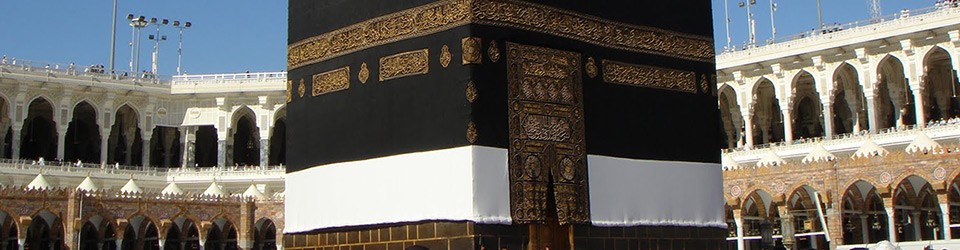
– Contemplate that one is facing the holy Ka’ba, or
– Concentrate on the words of Quran and other azkar being read or
– Focus on the meaning of Quran and other azkar being read

This is effective because one can not be attentive towards two things at a single moment. By intentionally and purposefully adopting any of these methods other thinking activities can be halted effectively.”

(Basair-e-Hakeemul-Ummat ra 306-7)

However, the guidance from the Sheikh is required in selecting the most effective method for oneself. Also, success or failure in accomplishing it has to be reported to him and based on his feedback one has to achieve the true khushoo required.

Also, nothing is achieved overnight.
It requires constant practice and effort to excel in it.

The tips are to
1. To understand & acknowledge that the required concentration is intentional and achievable. It is not an over whelming rapture or deep coma like condition beyond one’s grasp.

2. To be steadfast, and not to be disappointed by frequent failures initially,

3. To return to the original thinking/focusing process prescribed as soon as one recognizes the derailment (ghaflah).

wa ma taufiqi illa billah
Ending Ramadan with Shukur & Istigfar

Arif billah Hazrat Dr Abdul Hayy ra said;
Once I led a prayer jamah. After finishing I said aloud, “Alhumdulillah“.
A person from the audience enquired, “is it appropriate to be thankful on a worship filled with deficiencies?”

“Yes! Indeed”, I told him. “Look at the tawfeeq from Allah SWT and thank for it. It is a special favor and gift. There are many Muslim among us who even lack this.
As far as deficiencies are concerned I acknowledge their existence and make istagfar(repentance) for them but being a ‘abd (slave) whatever I do and how much I try to excel in it, they will remain full of defects and deficiencies.
It is the perfection of slavehood (‘abdiyat) to be aware of your deficient state.

Utilizing these precious moments of life then why shouldn’t I contemplate on Allah SWT’s benevolence and be thankful?”

Just a reminder for all of us to be thankful to Allah SWT for the gift of Ramadan, ability to fast, pray, make dua and charity etc.. Also a reminder for istigfar/repentance for all our short comings.

Sayyidi’s Ramadhan Advice from Haram

While in Haram shariff (Makkah e mukarramah) this Ramadhan Sayyidi wa sanadi Hazrat Mawlana Mohammad Taqi Usmani sahib db gave the following advice to a small group of mureedeen.

1. Recognize the importance of time and use it appropriately.

2. In addition to your regular ma’moolat recite سبحان الله و الحمدالله و لا اله الا الله و الله اكبر abundantly.

3. Make dua excessively, especially اللهم جعلنا من لاعتقاء رمضان

4. Give sadaqa (charity) as much as possible.

5. Recite Quran e kareem a lot.

6th Ramadhan 1426