
درود شريف
Leave a reply
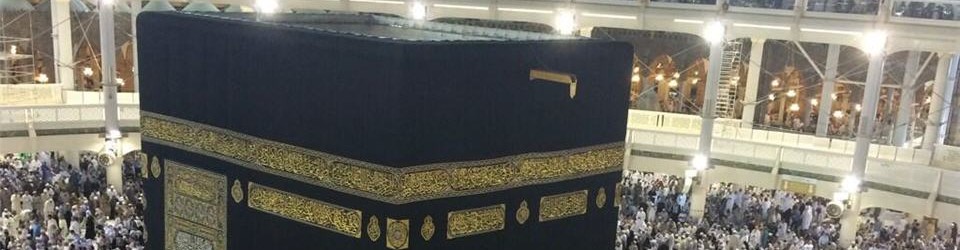

Shaikh Abu Saeed Gangohi (Allah have mercy on him) came to realize his spiritual loss after the death of his Shaikh. He had not completed his spiritual training as yet. He inquired about the senior spiritual inheritors of his Shaikh. It was mentioned that Shaikh Nizamuddin Balkhi (Allah have mercy on him) was the most distinguished deputies (khulafa).
For his islah Shaikh Abu Saeed travelled from Gangoh, India to Balkh, northern Afghanistan. A distance of approximately 1700 km (1050 miles). This was by horse or camel caravans and took many months to cover.
This was reflective of his yearning (talab) for islah and spiritual betterment to gain pleasure of Allah.
Compare this to our yearning!
Today we search for a Shaikh in the immediate vicinity of our residence, province or city. We want someone who will change his schedule to accommodate our convenience.
This is is NOT talab!
This only proves that we are not true seekers and do not realize the importance of islah.
If we were seriously sick and came to know of a expert physician we would seek his consultation irrespective of the location of his clinic, timings and charges. This is because we realize the potential danger of our illness if left untreated.
However, we are content with our spiritual maladies, the anger, arrogance, impatience, love of wealth & fame, ostentatiousness, insincerity, pretentiousness, the sins of speech and eyes, etc.
May Allah open our eyes and make us aware of our mistakes. May He facilitate this for us, the undeserving servants’, by His infinite mercy, kindness and philanthropy. Amin!


It is an essential for the seeker to curtail his/her social connections in order to establish and develop a real, strong and ever-growing relationship with Allah.
Hakim al Umma Mawlana Ashraf Ali Thanawi (Allah have mercy on him) said,
‘Solitude (khalwa) protects from involvement in sinful activities. Provided this solitude is accompanied with the safeguard of eyes, ears and heart (from seeing, hearing or thinking about anything impermissible).
(In solitude) Purposefully one should not think about anything other than Allah. If random thoughts come then busy yourself in remembrance of Allah and cast them away. This type of solitude will indeed save one from involvement in sinful activities.’
“Individuals who do not have (daily) scheduled time for solitude gradually lose the spiritual luminosity of their hearts.’
On how to achieve this in one’s daily life practically, he added,
‘Do everything on its scheduled time.
The (permissible) worldly affairs on their time and the daily spiritual recitations and activities (wird) on the time allotted for them.
Even occasionally involve yourself in appropriate and succinct humor to entertain and please a fellow Muslim’s heart.
In this way all things will move together, otherwise, in complete solitude sometimes the enthusiasm and aspiration becomes weak. And without them it is difficult to proceed.’
Shariat wa tariqat, page 257

Sayyidi wa sanadi Shaikh Mufti Mohammad Taqi Usmani (Allah preserve him) said in regards to the popular practice of complaining about the deteriorating religious conditions in the society,
‘The most dangerous aspect of criticism of the prevalent corrupt cultural trends and how people act (these days) is that we make them an excuse for our wrong doings.
Therefore, it is frequently quoted, ‘in itself this action is inappropriate, however, in light of the prevalent circumstances we have to do it’.’
Jawahirat Shaikhul Islam, page 34

Hakim al Ummah Mawlana Ashraf Ali Thanawi (Allah have mercy on him) said,
‘Until and unless the public connections are significantly curtailed the serenity (yak-sui) of heart (qalb) is not achieved. The acquisition of nisbet is dependent on having this serenity.’
Shariat wa Tariqat, page 252

Shaikh Mansur Ali Khan (Allah preserve him) said,
‘All praise is for Allah.
Some of the things that my Shaikh Arif billah Dr Abdul Hayy Arifi (Allah have mercy on him) instructed me to do have become an essential part of my every day routine (that is for more than 35 or 40 years now).
This includes reading from the book Nashru-Teyb.
Shaikh Arifi instructed me that after the daily recitation of Holy Quran read a page or two from this book.’
Ar-Rehab district, Jeddah, 11/1/2013, after asr

This book is about our master Prophet Mohammed (Allah bless him and grant him peace). Hakim al Ummah Mawlana Ashraf Ali Thanawi (Allah have mercy on him) compiled it in special state of Prophet’s love and yearning. A sincere reader benefits immensely from it spiritually.

Shaikh Abdul Ghani Tarablusi al Khalwati (Allah have mercy on him) said,
‘It is from the etiquette (adab) of a murid to be cautious in observing and speaking about the useless issues.
The significance of this may be understood clearly with this incident report. A Shaikh dismissed one of his murid when he came to know that he had destroyed a wine keg he saw in the marketplace. Explaining this dismissal the Shaikh said that the reason was not his action to prevent a vile thing (nahi anil munkar) but his careless use of sight in observing the useless. This would have never occurred if his sight was at his feet (as is recommended, to abstain from seeing useless).’
Tarsih al Jawahir al Makkiyah fi Tazkiya tul Aklaq al mardhiyah, (Urdu), page 125
Similarly, a seeker while in the sacred masjid al Haram Makkah commented on the extravagant use of electric lights, especially to illuminate the minarets, etc.
Shaikh Dr Hafeezullah (Allah have mercy on him) replied,
‘Observing these sorts of things is superfluous and inappropriate use of sight.’
All of us, who aspire to be spiritual seekers, must take a moment and reflect on this.
Furthermore we should ponder, this is in regards to observing the useless. How severe the consequences would be on seeing the sinful things?

Shaikh Abdul Ghani Tarablusi al Khalwati (Allah have mercy on him) said,
‘It is imperative to ward off Shaytan from one’s heart (qalb) with simultaneous use of weapons of determined awareness of Allah (taqwa) and His remembrance (dhikr).
It must be clear that remembrance alone without taqwa is not effective at all in this effort.’
Tarsih al Jawahir al Makkiyah fi Tazkiya tul Aklaq al mardhiyah, (Urdu), page 00

Shaikh Abdul Ghani Tarablusi al Khalwati (Allah have mercy on him) writes in the initial instruction for a seeker,
‘There are various categories of good deeds. They include the essentials (faraidh), the highly recommended (wajib), Sunna and desirable (mustahib). It is a must for the seeker to start with what is most important. That is, to follow the hierarchy of these actions.
The one who does not follow this hierarchy is ignorant and misguided.
For example, if an individual has fardh salah that has to be expiated and instead of doing that he is involved in offering supererogatory (nafil) salah. Similarly, an individual has to pay back his loan or fardh zakah but he is donating in supererogatory charity. Also, an individual’s parents are in need of his service but he abandons them for a desirable (mustahib) action. All of these are examples of misguided and sinful activities. They darken the heart (qalb).
However, following this hierarchy of deeds is not possible effectively without the guidance of a qualified (kamil) Shaikh or acquisition of knowledge of Shariah laws (fiqh).
It is for this reasons it is said ‘a sufi is a scholar who acts on his knowledge’.
Tarsih al Jawahir al Makkiyah fi Tazkiya tul Aklaq al mardhiyah, (Urdu), page 98-9

A mureed wrote to Hazrat Hakeemul Ummat Mawlana Ashraf Ali Thanawi ra,
“My mawlana and murshid, as salam o ‘alik,
A great misfortune has struck me now. My heart can not bear its severity. My beloved son, who was 19 years old, died being afflicted with cholera. He had completed high school by virtue of his own capabilities. Now was the time for him to flourish and progress further. He was my only son, so with his death my share in the future of this world ended.
انا للہ واناالیہ راجعون
زمیں چمن گل کھلاتی ہے کیا کیا
بدلتا ہےرنگ آسمان کیسے کیسے
Please, for the sake of Allah SWT, make dua regarding patience for me. I am about to have extreme despair. Tell me something to recite (if it may be beneficial in gaining patience).
Hazrat Hakeemul Ummat Mawlana Ashraf Ali Thanawi ra replied:
Epitome of good morals and gentleness, may your calmness prevail,
as salam o alaikum wa rehmatullah,
I was aggrieved by passing away of your son. Allah SWT make his magfirah and give you saber e jameel (outstanding patience).
You should read the chapter of patience in (Imam Ghazali ra’s) Kemiya e Sa’adet repeatedly.
Recite لا حول و لا قوۃ الا باللہ excessively all the time.
Keep excessively the image of the living person with whom you have excessive ‘aqidet (reverence) in your thoughts.*
InshaAllah, with these measures tranquility will be achieved. I am also making dua for the best for you.
However, since you have a relationship with me for the betterment of your religious state and this can not withstand any formalities, it is essential to mention with all sincerity that I was aggrieved more by the reasons of your grief than the actual incident of his passing away. You overstepped the natural grief by mentioning the intellectual reasons for it, such as, he had completed high school, now was the time for him to flourish and progress, my share in this world ended.
This means that the major grief is on loss of these worldly pleasures. All of this concludes that one’s primary goal and objective is this dunya (world).
Utterance of such things from mouth or pen of seeker of truth is like proclamation of shirk (associating partners with Allah SWT) from a monotheist.
This is a bigger calamity than the other tragedy. That is, why one’s qalb (heart) is like this, with such desire? This definitely needs amendment.
Jamadi aula, 1322 H
At-Takashuf an muhimatit tasawwuf, page 22-3/Tarbiyatus Salik,
*This is most probably to distract the afflicted from being engrossed in imagination of the deceased, resulting in more sorrow. Allah SWT knows best!

Narrated by our master Jabir ibn Abdullah (Allah be pleased with him),
Allah’s Messenger (blessings and peace of Allah be upon him) said,
“On the Day of Resurrection, when people who have suffered affliction are given their reward, those who are healthy will wish their skins had been cut to pieces with scissors when they were in the world.”
Tirmidhi Hadith #1570

Shaikh Mansur Ali Khan (Allah preserve him) said.
Once I was in the company of Arif billah Dr Abdul Hayy Arifi (Allah have mercy on him). There was no one else. Hazrat Dr Arifi read aloud a letter send to him for spiritual advice.
It was from a young girl. She had been on vacation with her father in the northern areas of Pakistan. One day while traveling by bus it was fajar time and his father requested the bus driver to stop for salah. He agreed. Her father while disembarking the bus was run over by the speeding car coming from behind. The family rushed to help him. However, he was badly injured and died in front of them. They were devastated.
The daughter was now requesting for dua and words of consolation.
Dr Arifi looked at me and asked,
What should I write her?
I had no clue at all.
Dr Arifi closed his eyes and contemplated for few seconds. Then he said,
أنا لله و أنا اليه راجعون
Recitation of this is the soothing treatment for a bereaved heart. It is prescribed by Allah and established by practice of our master Prophet Mohammad (blessings and peace of Allah be upon him).
Recite this repeatedly in abundance.’
Turning to this lowly writer Shaikh Mansur said,
‘Please, convey this to your brother. I am making dua that Allah makes magfirah of his son and give sabr e jameel to the parents.’
Amin!
Masjid Nabawawi (ala sahibeha alf alf salawat o Salam) close to extreme right front corner of the original masjid.
After fajar 26/12/2012CE 13/2/1434H

Our master AbuMusa al-Ash’ari (Allah be pleased with him) narrates,
Allah’s Messenger (blessings and peace of Allah be upon him) said,
When a man’s child dies,
Allah Most High asks His angels whether they have taken His servant’s child and they reply that they have.
He then asks whether they have taken the fruit of his heart, and when they reply that they have, He asks what His servant said.
On their replying that he praised Allah and said,
“We belong to Allah and to Him do we return,”
Allah says, “Build a house in Paradise for my servant and call it the house of praise.”
Ahmad and Tirmidhi (#1736)

Shaikh Mohammad Kaleem (Allah preserve him) a senior khalifa of Arif billah Dr Abdul Hayy Arifi (Allah have mercy on him) said to a brother who lost his twenty three year old son suddenly,
‘Excessive intentional discussion of the deceased is to be avoided. This is because of the remote possibility of development of a thought questioning the Divine decree. That is, why did this happen?
This will be against the patience required.
Therefore, be careful.
Every time his discussion comes up recite,
أنا لله و أنا اليه راجعون
contemplating the meanings discussed earlier.’
Shaikh Mohammad Kaleem sahib db’s residence. Darul Uloom Karachi, Sunday, noon, 18th December 2012.