Category Archives: S. Sunna

Istikhara

Hakim al-Umma Hadhrat Maulana Asharaf Ali Thanwi رحمه الله تعالى explains that Istikhara is not a means of coming to the unseen. By doing Istikhara one is asking Allah Ta’ala to protect him from harm and determine a good fate for him.

(Ahsanul Fatawa with reference to Bawadir).

Source: Ask Imam

Adherence to the Sunnah and the Mashayikh Chisht

Some people brand the chishtiyya as being ahl-e-bid`ah (innovators in deen). In relation to this Hakimul-Ummah, Hazrat Maulana Ashraf Ali Thanwi (rahimahullah) comments:

“The reality of the matter is that the chistiyya have been very staunch adherents to the blessed sunnah. One of the incidents which demonstrates this fact is the incident of Hazrat Kabirul-Auliya Jalalud-Deen Panipati (rahimahullah). When Hazrat Jalalud-Deen became sick, he was bed-ridden and even sitting up was extremely difficult for him.

In this state, when his medicine was brought for him to take, he sat straight up (in spite of the hardship) and told his khadims to bring him down to the ground from the bed. The khuddam had no choice but to fulfil the Shaikh’s orders and they laid him down to the floor. Sitting on the floor, he took his medicine and then remarked: “As far as my knowledge is concerned, it is not established from the sunnah that Nabi (sallallahu alaihi wa sallam) partook of any food, or medicine, on a bed.”

SubhanAllah, in spite of the fact, that this is permissible (for a sick and excused person) he still underwent extreme difficulty in order to fulfil the sunnah, and even abstain from doing such an act which has the possibility of not being a sunnah.

Can such personalities (who abstain from even the possibility of opposing the sunnah) be branded as innovators in deen? Unfortunately, the reality of the matter nowadays is that it has become the habit of people, that anyone who is not in accordance to “our” specific style and methodology, then he must be a bid`ati… This is absolutely wrong.”

(Malfuzat Hakimul-Ummah; 9:216)

Source: at-Talib
Reality of Tasawwuf: Sunna

The reality of Tasawwuf has been described as,

“Sincerity in turning to Allah, exalted is He, with that which pleases Him and in the way it pleases Him.”

The Adab of the True Seeker, page 22-3

In addition to sincerity, special attention is to be paid to the phrase, “in the way it pleases Him“.  All actions done as per the Prophet’s manner (Sunna) are for sure guaranteed this pleasure. While, none of the innovated ways carry this assurance.

Beard: No big deal?

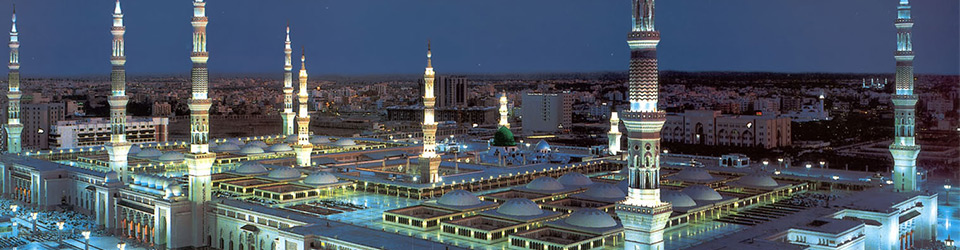
muwajjah-sharif.JPG 

Hadhrat Mawlana Faqir Mohammad was one of the senior khulafa of Hakim al-Ummah (may Allah have mercy on them). He was blessed with extreme piety, meticulous adherance to Sunna and lucid unveiling (khashaf).  In the later part of his life he used to stay in Medinah e munawwara for prolonged periods of time and occasionally visited Pakistan. 

On one of such visits to Pakistan a top ranking clean shaved official greeted and reminded him that they had met in front of the blessed rau’dha (muwajjah sharif:shown in the picture above) in Medinah e munawwara.

Hadhrat replied that he remembered the incident quite vividly because the Blessed Prophet (may Allah’s blessing and peace be on him) after replying to his salutations (salat o salam) had immediately turned away his noble face in displeasure from this  clean-shaved official.

Allah, Most High, save us from this. Amin!

Source: Iqra digest’s special issue on Hahdrat ra

Celebrating the Prophet صلی اللہ علیہ وسلم


Hakim al-Umma Hadhrat Mawlana Ashraf ‘Ali Thanawi (may Allah bless him) said,

In our path (tareeq) the goal is achieved comparatively quickly. The reason being the extraordinary emphasis laid on following the Sunna of Allah’s beloved prophet (may Allah bless and grant him peace). This makes the achievement of goal by Divine attraction (jazb) rather than personal effort and toil (sulook).
And this is as per holy Quran; (O Prophet!) Tell (them) that if you want to love Allah, then you should follow me. (By this) Allah will love you and forgive all your sins. Indeed! Allah  is all forgiving and merciful. (3:31)

More…………

Deobandi Shaykh are qalander

Following was written in response to a brother’s comment. He felt a rigidity in the maslak of Deobandi Shuyukh in regards to the following of Sunna and avoidance of innovation (bidah).

“You may not be aware that in general Deobandis mashaykhs are qalanders*. Their spirituality is hidden beneath their apparent scholarly demeanor (‘ilmiyet). People see them as molvi, mulla and mufti. Seldom do they conform to the prevalent sufi facade.

I am not aware that any of the senior Shuyukh discuss these controversial issues per se. However, if these topics do come up in their discussion they clarify their stance. In general, their talks are usually free from these issues.

Other unique thing you will notice is their emphasis on Sunna. People nowadays do whatever is permissible (jaiz/mubah). Our mashaykh still insist on Sunna. This is more reflective of their being really the true sufis. Sufis do not look for dispensation. They go the best method possible. Steadfastness (‘azimat) on Sunna is their way.

*In sufi terminology qalander is a person who’s outward appearance does not display his inner spirituality.

Sunna & fardh


Hadhrat Abdullah ibn Mubarak (may Allah have mercy on him) said,

 The one who always leaves his sunnas will eventually be deprived of his fardh, such a person can never taste of the Divine beauty. 

Essentials for a salik

 Hadhrat Mawlana Abdul Ghani Phulpuri  a very senior khalifa of Hakim al-Umma (may Allah have mercy on them) mentions the following first and foremost in the list of essentials for a salik,

“Following the Sunna, both in exoteric (dhahiri) and esoteric (batini) matters. ”

Usool e tasawwuf, page 15

Signs of nisba

Hadhrat Shaykh Masihullah Khan (may Allah have mercy on him) said,

“The sign of existence of the servant’s relationship with Allah is his zeal to engage in obedience and worship as well as total abhorence for all forms of sin and disobedience -both outward and inward. In addition to this is the servant’s continuous determination to follow the Sunna.”

The Path to Perfection, page 112

Following Sunna & Visiting Medinah

Grand Mufti of Pakistan, Hadhrat Mufti Mohammad Shafi’i (may Allah have mercy on him) said,

In the presence of Prophet (may Allah bless him and grant him peace) while visiting the Holy mosque at Medinah e munawwara, I felt as though the Prophet (may Allah bless him and grant him peace) is saying,

“Being nearer to me is in following my sunna.

It is not in coming here.

As much you follow me the nearer you come (to me).”

Ahsan us Sawanih, page 157

Sunna 36

Sunna of tilwa: when reciting the Quran’s chapters 93 to 114:

It is a sunna to say takbir with recitation of each chapter from surah 93 till the end of Quran al-kareem. Shaykh Ahmad Salih al-Misri has narrated the wordings of this takbir as,

لا اله الا الله و الله اكبر

Ibn Khathir said that it a sunna to recite it at the end of every chapter and Bagwi said at the beginning. Acting on either of these will be according to sunna.

Ma’arif al-Quran (Urdu), volume 8, page 768