Monthly Archives: May 2005

حضرت شیخ مدظلہم العالی

اللہ – میرے شیخ – کے رتبوں – کو بڑھادے

_

سر تاج زمانہ – میرے – مرشد – کو بنا دے


توفیق – مجھے اس کی – اطاعت کی عطا ہو


اوراس کی محبت کو میرے دل میں رچا دے


ہر ایک – کو ملتا – نہیں اس شان – کا مرشد


دولت یہ وہی پاۓ – مگر جس کو خدا- دے


یہ شمع رہے نورمحمد (صلی اللہ علیہ وسلم) کی منور


امداد الہی – اسے نت – تازہ – ضیا – دے


پروانے رہیں – شمع – رخ شیخ – کے خادم


اور شیخ – کو- محبوبئ محبوب – خدا – دے

آمین
حضرت بابا نجم احسن قدس سرہ

Sijdah of every moment!

Explaining the ayah:
واسجد واقترب ة96:19
meaning: Allah SWT says;’ prostrate yourself and come nearer (to Me).’

Sidi wa sanadi Hazrat Moulana Muhammad Taqi Usmani sahib (Allah SWT preserve him & allow us to benefit from him abundantly. Ameen) said:

“This is one of the most enchanting verses of holy Quran. The recitation of this makes it obligatory for the reader and the audience to perform a sijdah (act of prostration). Remember to perform it later.

Allah SWT is informing us that when we perform the act of prostration we draw nearer to Him. And who does not want to be nearer to Him? All his life a Muslim is struggling to achieve this.

But we are in need of getting nearer to Allah SWT at each and every moment of our life.

Recognize this order to prostrate is in general and not restricted to namaz (salah) only. However, the sijdah (act of prostration) for each and every other moments of our life is different. The sijdah of salah is by kneeling down and keeping your forehead on ground worshipping Allah SWT. Similarly, answering affirmatively to the call of Shariah at a particular moment is the sijdah (act of prostration) of that moment. That is performing the act fulfilling all the commands of Allah SWT and Sunnah of our master Prophet Salallaho alehey wasalam showing our complete submission.

If we do this, then a merchant sitting in his shop trading as per the rules of Shariah, a worker performing his duties conscientiously as per Shariah, and a student acquiring knowledge as per rules of Shariah are all in a state of sijdah, getting closer and closer to Allah SWT.

Allahu Akbar!

In short, a person steadfast on Shariah in his life is constantly performing sijdah (the act of prostration) and drawing nearer to Allah SWT.

May Allah SWT make us among them! Ameen.

محبت

محبت دونوں عالم میں یہی جا کر پکار آئی

جسے خود یار نے چاہا اسی کو یاد یار آئی

بابا نجم احسن رح

Whole Deen, Not Partial Deen

Sidi wa sanadi Hazrat Moulana Mohammad Taqi Usmani sahib (Allah SWT preserve him & allow us to benefit from him abundantly. Ameen) has repeatedly told us that:

Deen has 5 major sections. They are:
Aqaid (beliefs)
Ibadaat (worship)
Ma’amlaat (mutual dealings)
Ma’ashrat (social etiquettes)
Ikhlaq (morals)

We have to follow the teachings of Shariah regarding them all simultaneously.

It is grossly erroneous to pick things that are easy and of our liking, while disregarding and discarding the others. This is especially so for the individuals involved in their islah.

Deen is not the name of following one’s desire and wishes”.

Look around! A young individual when he turns to deen he wants to become an alim (religious scholar). In his zeal and ‘seemingly religious calling’ he disregards his parents’ genuine wishes and permission to do so. This is NOT deen. This is fulfilling one’s desire. It is nafs and shaytan’s deception.

Being a good devout practicing Muslim does not call one to be a certified full-fledged scholar.

How can one gain pleasure of Allah SWT by disobeying parents?

The example of Hazrat Owais Qarni radhiAllahu anhu is there for us. Only to take care of his mother he abandoned the most prestigious honor a Muslim can imagine. That is, being a Sahabi (companion) of our master Prophet salallaho alehey wasalam. But as it was for a genuine reason, see how Allah SWT compensated for it. Our master Prophet salallaho alehey wasalam instructed Hazrat Umar Farooq radhiAllahu anhu and other companions to request for dua from Hazrat Owais Qarni radhiAllahu anhu when they meet him. Allahu akbar!

Similarly, people get involved in zikr, muraqabat and ashgals of Tasawwuf and consider them to be deen and ignore the rest of the sections of Shariah. Others get engrossed in tabligh and become so avid lovers of seh-roza/chillah and ghast that their job (a source of halal income), family and other relationships and commitments are all neglected.

Again. Deen is not the name of following one’s desires. It is the name of following the commandments of Shariah at each and every moment of one’s life.

The beauty of our pious elders and their true successors is to maintain a fine balance in all these sections of deen. Making Shariah their guide in all the matters of daily life. Not their emotional, personal desires or wishes.

wa ma taufiqi ila billah!
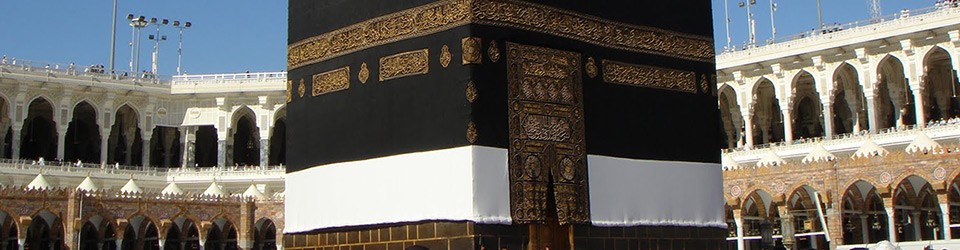
The Sacred Relics: Significance

A piece of the cover of the holy kaba (kiswa) was presented to Sidi wa sanadi Hazrat Moulana Mohammad Taqi Usmani sahib (Allah SWT preserve him & allow us to benefit from him abundantly. Ameen). One of the individual present asked Hazrat db its significance and possible uses, for example, keeping its threads in eyelids of the deceased, etc.

Hazrat db replied:

“The significance of tabarukat (blessed sacred relics) can not be denied. It is reported in authentic hadith that our lord Prophet salallaho alehey wa alehey wasalam gave his magnificent shirt for Abdullah bin Obii, the leader of hypocrites on the request of latter’s son to be used in his shroud. Also, he prayed on him the final prayers. However, Allah SWT reprimanded on this action: being not suitable, as stated in holy Quran. Abdullah bin Obii being an arch covert enemy of Muslims did not benefit from these and went to Hell.

Hadith expert have given different explanations for this act. The most prevalent is that this was the compensation for Hazrat Abbas radhiAllahu anhu’s shirt who once being a prisoner of a war was without a shirt and as he was a very well built man no one’s shirt fitted him properly. It was the shirt provided by Abdullah bin Obii that was the most suitable for his physique. And by giving him his shirt our master Prophet salallaho alehey wa alehey wasalam paid back in kind the favor he had done.

Another explanation which came to my mind as being equally valid, and later I found evidence for it in a hadith exegesis, is that our master Prophet salallaho alehey wa alehey wasalam wanted to show the Ummah the limitations of tabarukat (blessed sacred relics).
Can we bring to mind a much nobler tabaruk than the splendid shirt of Prophet salallaho alehey wa alehey wasalam itself? But be aware that without correct belief and actions it fell short to be a resource for superior rewards and salvation.

In short there is significance of tabarukat. But their level of importance has to be clear. Correct aqaid (belief) and actions are necessary to reap benefit from these tabarukat.”

The Islahi Correspondence between Mureed & Sheikh

This islahi/self-reformation correspondence is the vital cornerstone of sulook in our path.

Mureed writes about his state in regards to observance of Shariah, the wird prescribed, overwhelming thoughts and any questionable moral traits demonstrated in every day life in dealing with self and others. The Sheikh reviews it and diagnoses any ailments, if present and treats as appropriate.

To be definitely effective this has to be at regular intervals, usually once every month or fortnightly.

It is alchemy.

Recognizing its importance, nafs & shaytan try their best to put obstacles for doing it successfully. Mureed becomes lazy & slack, finding numerous excuses for not doing it. Even if he sits down to write a letter, he can not recall anything ‘significant’ to convey.

Once as similar mureed wrote to Sidi wa sandi Hazrat Moulana Mohammad Taqi Usmani sahib (Allah SWT preserve him & allow us to benefit from him a lot. Ameen!) that I can not bring to mind any thing to write in my letter.

Hazrat db replied:
“Writing even this, itself is sufficient.”

This is because; it keeps you in the habit of writing letters to the Sheikh, shows your concern and sincerity for self reformation, is an opportunity to request for dua and informs the Sheikh that at least you are not deteriorating and seeing your effort he makes special dua for you.

Hazrat db
also said;
“For mureed who do not have the opportunity to be in close direct contact with the Sheikh to discuss their states in person regularly, it is essential to have this islahi correspondence. The mureed and even the Sheikh who do not recognize this are committing a fundamental mistake in Tasawwuf (especially our tareeq/path).”

On Death of the Sheikh!

On the death of Hazrat Moulana Shah Abrarul Haq (Allah have mercy on him) (died May 17th, 2005), the last surviving khalifa of Hakeemul Ummat, an individual inquired Sidi wa sanadi Shaykh Mufti Mohammad Taqi Usmani sahib ( Allah preserve him and allow us to benefit from him a lot. Ameen!) regarding the attitude to be adopted by a mureed on the death of his/her Shaykh.

Shaykh replied,

“Regarding this mureedeen fall into two categories.
First are those who are mojaz (khalifa) (they have the permission to initiate others). For them it is not essential to take another Shaykh. However, it is very beneficial and advisable to take one and not leave one’s self independent.

Second category is the rest of mureedeen (disciples). It is absolutely essential for them to take another Shaykh as soon as possible.

In both the cases it is wise to select the next Shaykh from the same silsila (spiritual lineage) with the similar disposition/style (hum mazaq) in approach to Tasawwuf/islah as the recently deceased Shaykh, for uninterrupted spiritual progress.”

Jeddah, 18th May, 2005

ليبك اللهم ليبك

In the state of ihram proceeding towards Masjidul Haram, sidi wa sandi Hazrat Moulana Mohammad Taqi Usmani sahib db repeatedly recited;

لبيك اللهم لبيك لا شريك لك لبيك ان الحمد و نعمة لك و الملك لا شريك لك

and told us:
“In the state of ihram the most superior form of dhikr is this talbiyah. Reflecting on it, it is my opinion, and Allah SWT knows best, this repeated recitation is an exercise and training for us. That is it so remind us repeatedly that we are here, present and at service of Allah SWT. The result of this exercise has to appear when we return back to our routine daily life. There we have to say, ليبك: I am here, to obey each and every command of Allah SWT.”

Umrah with sidi wa sandi db

Influencing your Wife!


Arif billah Hazrat Dr. Abdul-Hayy Arifi ra said:

“Special effort should be made to keep a beautiful attitude towards one’s wife.
She has adopted your companionship leaving her parents, siblings and other close relatives. You have to compensate her for all these caring relationships by loving her dearly.

If you are patient on anything hurtful from her you will be rewarded (by Allah SWT). Her inappropriate attitude can not be corrected by your anger and wrath. But the best way to achieve that is to control your anger completely at that moment. And some time later (at an appropriate occasion) gently and with compassion let her know the mistake she made. (With this approach) even if she has a grain of aptitude for correction, she will accept your counsel and reform herself.”

Sukoon-e-qalb 46

Sheikh’s Style


Arif billah Hazrat Dr. Abdul-Hayy Arifi ra said:

It takes a considerable duration of time to pick up and understand the Sheikh’s style (the characteristic method, approach and its implementation in sulook). However, (once understood) one should completely adapt to it.

Sukoon-e-qalb 80

Each and every Sheikh has a unique style of his own.
It is essential to the understand and agree to it before becoming a mureed.
Only if this is present it is possible to benefit and progress.

_

Testing our Ikhlaq

Arif-billah Hazrat Dr. Abdul-Hayy Arifi ra said:

” Develop a habit of examining yourself.
How is my worship (‘ibadat)?
How are my dealings (muamlat)?
How is my ikhlaq (morals/behavioral characteristics)?

And to test the ikhlaq (morals/behavior) take a ride in one of the public buses in Karachi (notorious for being overcrowded with less educated & emotionaly frustrated people). You will find out the reality, where do you stand?.”

Sukoon-e-qalb 47

It is under stressful condition that the praise-worthy and blame worthy moral characteristic, (that are: patience, humility, giving preference to others, love & sympathy, etc. and anger, envy, arrogance, etc.) are shown in one’s behavior. Under normal circumstances most of us act and consider ourselves to be the perfect model of good morals. But the our reality will appear when others are rude and obnoxious, they do not give us the ‘status’ we deserve and ignore us.

The emotions which emerge in these circumstances show our reality. And if we act on the commands of these emotions, it shows the extent of the diseased heart we have!

These are the things to be reported to the Sheikh. He after diagnosing the problem will advice a treatment. We use the therapy and then report back to him again for the sucess or failure of treatment.
_
This is the real Tasawwuf and Peeri-mureedi.