
نتھیاگلی

نتھیاگلی

Hakim al Umma Moulana Ashraf Ali Thanwi (Allah have mercy on him) once mentioned the following:
If a person is involved in sins, then one method for him to reform himself is that together with sincerely engaging in istighfaar and towbah, he should also impose some penalty upon himself so that this becomes a cause for him to refrain from falling into the sin in the future. This penalty can either be a physical penalty (e.g. fasting for a period of time) or a monetary penalty (i.e. giving a certain amount of money in sadaqah to the poor).
Our Prophet (Allah’s blessing & peace be upon him) mentioned in the Hadith that if a person says to someone (inviting him towards gambling), “Come, let me gamble with you,” then he should give some sadaqah.
In this Hadith, we see that Prophet (Allah’s blessing & peace be upon him) looked at the cause for one wishing to enter into the sin of gambling. The cause for this is the love for wealth. Therefore, he prescribed giving some sadaqah as a penalty, as this will cause the love for wealth to leave one’s heart (and this will also prevent him from falling into the sin in the future).
(Malfoozaat Hakeemul Ummat 23/378)

1. Learning the authentic beliefs (aqaid) as per the pious predecessors.
2. Learning the Sunna methodology (fiqh) of performing worship.
3. Abandoning major sinful actions and repenting on minor ones.
4. Get rid of blameworthy moral characteristics (radhail), adopting praiseworthy moral characteristics (fadhail).
5. Earning & consuming a halal livelihood.
6. Getting married, establishing a home and raising children
7. Learning etiquette of financial dealings for everyday life.
8. Actively making a good intention in permissible actions.
9. Actively making an intention of pleasing Allah and following Sunna in all thoughts & actions.
10. Recitation of Sunna adhkar for different occasions (adiya e ma’sora)
11. Recitation of the litanies (adhkar & ashgaal) prescribed by the Sufi Shaykh.
Qutub al Irshad, vol 1, p 92-3

Proof-of-Islam Imam Ghazali (Allah have mercy on him) said,
Tasawwuf is an essential obligation (فرض عین)۔’
Shaikh Abul Hasan Al Shazli (Allah have mercy on him) said,
‘An individual who does not acquire Tasawwuf dies persisting on major sinful activities (گناہ کبیرہ) but is unaware of it.’
Eqaz Al Himam, p 35


An individual inquired that how can a person convalescing from a illness differentiate that not doing his daily ma’mulaat (wird) is because of illness or due to laziness.
Sayyidi wa sanadi Mufti Mohammed Taqi Usmani (Allah protect & preserve him) replied,
‘One should do the daily ma’mulaat (on trial basis) and see. If there is deterioration in his illness then it is from disease otherwise it is laziness.’
Office, Darul Uloom Karachi, 5/3/2022 after zohar

Hakim al Umma Maulana Ashraf Ali Thanvi (Allah have mercy on him) said,
The treatment of spiritual ailments (blameworthy moral characteristics) is not possible without disclosing information about them. Some of them are so hidden and complicated that the one who is seeking the remedy is unaware of them. This is can be seen in books about the path (Sulook) and Moral reformation.
Therefore’ an individual is needed to diagnose and discern about these spiritual ailments. He is the Perfect Spiritual mentor (Shakyh e kamil). Most of the time for a Shaykh e kamil to make a diagnosis it is required that the patient himself informs him about the illness as much as possible and does not hide any information.
This is exactly like the medical Doctor (-patient encounter). Some information for diagnosing the illness he gets from pulse, appearance (physical examination), urine (laboratory test) and for the rest it is necessary that the patient himself gives him information (history).
In this special situation sometimes the (patient’s) nafs dislikes disclosing his spiritual illness to the (spiritual doctor). ………..
However, one should not be ashamed of telling him.
In this world this disclosure is to a single individual, in Here-after everyone will know it.
Here this single disclosure is beneficial in all aspects that it will lead to a cure, whereas the public disclosure in Hereafter will be nothing but explicit humility.
Kaleed e masnavi, volume 2, page 192-3

While speaking to us, Hoca (Shaykh Mustafa Azami, Allah have mercy on him) told us that when he was student at Al-Azhar, he once went to get some milk. On the wall of the milk seller’s shop, it was written with calligraphy: “The one who cheats, he is not from one of us.” This is taken from a hadith. But the milk seller was adding water to the milk in front of this hadith on his wall.
Everyone laughed upon hearing this.
But Hoca added, “You all too, when you reach the class five minutes late, when you do not prepare well, when you waste time in empty talk during the class, you too fall to the level of the man adulterating milk with water.” Everyone was taken back upon hearing this. A pin drop silence followed.
Till today, I’ve not forgotten those words. I try to fulfill the rights of the class lesson in its true sense. I remind myself that whenever I go late to class, or if I don’t prepare myself well, I fall to the level of the man mixing milk with water.
https://www.ilmgate.org/remembering-shaykh-mustafa-azami-a-talk-by-dr-recep-senturk/

Imam Ahmed Zarruq (Allah have mercy on him) instructed,
Never belittle any talk that involves absent people, even if there is no harm in it due to the possibility of harm entering into it.
Advice regarding Repentance
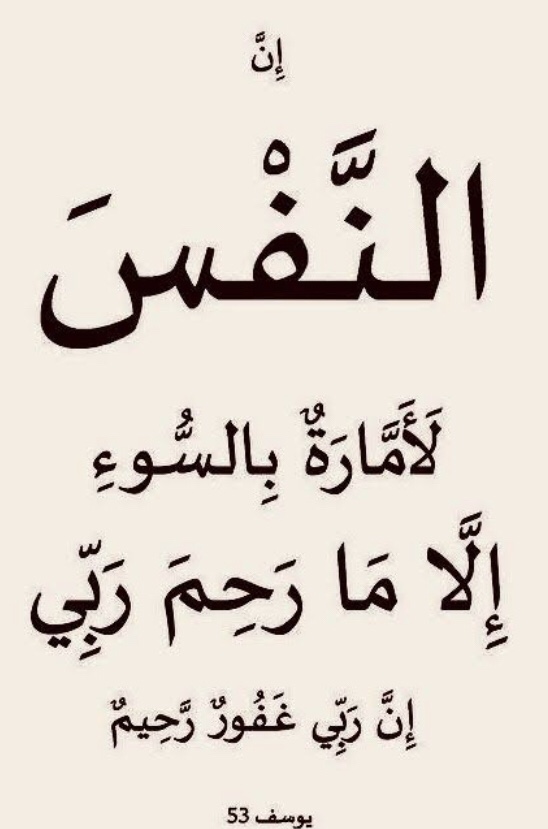
Shaikh Ahmed Arqam Balkhi (Allah have mercy on him) narrates that once my inner-self (nafs) insisted that I go and join the battle (jihad). I was surprised. In Quran Allah says that nafs commands to do evil and my nafs was telling me to do something virtuous. How can this be possible?
I confronted the nafs and said that most probably you are sick of staying in solitude and want that I go in the army where people will pay respect to me. However, I am going to fight alone (not join the army). Nafs agreed. I became more suspicious. I told him that I will fight without ammunition and die first. He agreed to it also. I told him many similar things and he agreed to all.
I was perplexed.

I prayed fervently to Allah to show me nafs’ deception.
In a vision (mukashafa) I saw my nafs.
He said that every day you kill me several times by not doing what I command, so if you go for Jihad and are killed instantaneously then it will be easier.
Moreover, no one knows about this daily struggle. It is hidden from all. But if you are killed in battlefield everyone will speak highly about you. All will say Ahmed is a martyr (shaheed).
The deception of nafs are complex and deep. They requires consultation with a mentor (murshid).
Tanveer ul Afaq: Shah Turab Ali Qalandar (Allah have mercy on him)
(Allah said)
O Musa!
Be afraid of three things.
Me!
Your nafs (carnal desires), &
Anyone who is not afraid of Me!
Futuhat e Makiya, volume 37, p 265

Qutub Alam Shaikh Abdul Qudoos Al Gangohi (d:1537CE. Allah have mercy on him) said,
O Seeker of Truth! If the path of Islam was as easy (as you think) then everyone would become Shibli and Ibrahim bin Adham (Allah have mercy on them). (In reality) Until and unless you are a (true) Muslim from within you can never be a (real) Muslim from outside.
It is grieving and mournful to see these days that world is full of spiritual mentors (pir) and seekers (mureed) but no one can find a (true) Muslim.
What is mentor-seeker (piri-mureedi) relationship nowadays?
It is all idolatry and self-worship!
May Allah save us all from it. Ameen!
This is in reality my own mournful predicament. I tell it so others can learn from it.
Maktubaat e Qudoosiya, letter #111, page 480 (from Urdu translation by Shaikh Capt. Wahid Baksh Siyal rehmatullah aleh)
It

Khawaja Azizan Ali Ramitani (Allah have mercy on him) said,
Remember any companion who makes you forget Allah (& His commandments: i.e. what is permissible and what is forbidden?) is your Devil (Shaitan) in human (or gadget etc.) form. He/it works on you openly and is therefore, worst then the (real) Devil who whispers clandestinely.
Risala Meboob Al Arifeen, p 13

Shaikh Syed Ahmed Kabeer Al Rifai said that I requested Shaikh Abdul Malik Al Herboni (Allah have mercy on them) for advice. He instructed
‘O Ahmed!
1. One who keeps looking left and right never achieves union (wisal).
2. One who has doubts seldom succeeds.
3. One who is not aware of his (spiritual) deficiencies all his time is spent in a deficient state.
Al Bayan ul mushyed, p120-1

One of the special deputies (khulafa) of Hakim al Umma Maulana Ashraf Ali Thanvi, Maulana Shah Wasiullah Allahabadi (Allah have mercy on them) said,
‘In traversing the path (tareeq e sulook) I benefited a lot from Maktubaat e Qudoosiya and Makatabeeb e Rasheediya*.’
Hayat Musleh al Ummat ra, p 134
* Recently a new edition of Makatabeeb e Rasheediya has been published.
It has additional letters, explanatory foot notes, translations of Persian and Arabic quotes, high quality paper and computerized print settings. It is one volume with 520 pages.
May Allah make it beneficial for all of us. Ameen!