Category Archives: F. Zikir & fikr

Remembrance, comtemplation and spiritual excersises

Dua to be Recited at the Approach of Ramadhaan


Hadhrat Ubaadah bin Saamit (Radi Allahu Anhu) narrates that Rasulullah (Sallallahu Alayhi Wasallam) used to teach the Sahaabah (Radi Allahu Anhum) the following Dua at the approach of the Month of Ramadhaan:

 اَللَّهُمَّ سَلِّمْنِيْ لِرَمَضَانَ وَسَلِّمْ رَمَضَانَ لِيْ وَسَلِّمْهُ لِيْ مُتَقَبَّلاً

Allahumma Sallimnee Liramadaana Wa Sallim Ramadaana Lee Wa Sallimhu li Mutaqabbila

“O Allah! Safeguard me for the Month of Ramadhaan (by making me see the Month of Ramadhaan healthy and fit so that I can take maximum benefit from it), and safeguard the Month of Ramadhaan for me (by making the conditions in it such that I can take maximum benefit from it) and accept it from me.” (Kanz-ul-ummal, Vol.8, Pg. 584 Hadith 24277)

Every Muslim should endeavor to memorize this dua and recite it in abundance in these few days before Ramadhaan.

Source: Daul Iftaa

Excessive good works

=

After ‘esha salah walking towards the hotel from Haram sharif a murid informed about a  state to use time effectively. He said that in addition to the ma’molat (daily wird) prescribed he does more stuff, like reciting Holy Quran, tasbihat, durood sharif, etc.. However, he felt uneasy about this because this was not done with your consultation.

Sayyidi wa sanadi Shaikh Mufti Mohammad Taqi Usmani (Allah grant him a long, healthy and productive life.Amin!) was obviously pleased and replied,

‘The daily ma’amolat should be those that you are able to do consistently. However, doing more is fine, especially if you have time to do so.’

Al-Ajyad, Makkah e mukarramah

Preparing for Ramadhan

vema


1. Ask Allah for facilitation (tawfeeq) to benefit from the blessings of Ramadan daily, from now onwards.

2. Make a firm determination to abstain from all sins. Especially those committed by the eyes, ears and tongue.

3. Try to free as much time as possible from work and other commitments for pure worship (ibadah).

4. Reschedule non essential appointmentstill after or before Ramadan. Finish with all Ramadan and Eid shopping prior to the sighting of the crescent.

5. Make special effort to follow as many as possible Sunna in daily activities.
Learn these and memorize the adiya e masnoon (dua) for particular occasions before hand. The book “Alaikum bi sunnati”by Mawlana Abdul Hakim Sukharwi ra is a good, practical and handy resource for this.

6. Review the essential fiqh (rulings) relating to fasting, taraweeh and other Ramadan related issues from “Behishti Zewar” (Heavenly Ornaments) of Hakim al-Umma Hazrat Mawlana Ashraf Ali Thanawi (may Allah have mercy on him).

7. To get motivated and organized, read the discourses of Hakeem al -Umma regarding Ramadan (Mawaiz-e-Ashrafiya volume : Barakat e Ramadan) and listen to the talks of Sayyidi wa sandi db on how to prepare for the holy month.

8. Practice the actions of the Heart. Do not do any action without a proper intention.Abstain from all the blame worthy morals. No anger, arrogance, belittling caustic remarks, etc. It is strange to abstain from otherwise halal (lawful food) and commit an act which is always haram (forbidden). Try to do most of the praise worthy moral actions. Having patience, humility, gratitude, sincerity, etc. Keep a tight grip. Do not slip here.

9. Make a practical and doable time table for daily activities.

The point to remember is that in Ramadan acts of primary form of worships (i.e. salah, dhikr, tilawat, etc.) are to be increased. These lead to an increasing direct relationship with Allah  (i.e. ta’luq ma’Allah).

The tawfiq is from Allah!
عبدیت/Servitude-2

Shah Mohammed Ahl al-Allah (Allah preserve him) a khalifa of Shaikh Masihullah Khan (Allah have mercy on him) explains the signs of servitude,

‘An individual having servitude diligently carries out all the esoteric and exoteric acts of worship considering that they can not be possibly done with his effort alone, unless the Divine help assists him to do so. That is, he attributes (all good works) to Allah (facilitating them for him). Whereas, for any short comings he blames himself.

He tries very diligently not to hurt any other individual, or to cause them any loss or sorrow.

An individual having servitude conscientiously carries out both the exoteric and esoteric acts of worship (especially his wird) irrespective of issues related to health, sickness, hunger, poverty, prosperity, affliction or other non-volitional conditions.

He is diligent in fulfilling the rights of others but does not keep a desire for his own rights.’

Malfozat Shah Mohammed Ahl al-Allah sahib db, page 1,2

Nikah

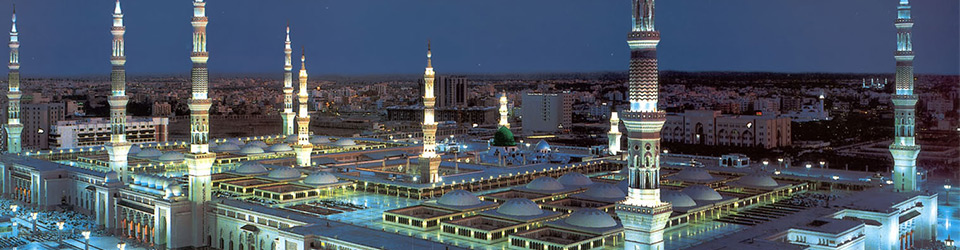
An individual who conducted a nikah (marriage contract) for a couple (the first time in his life) in the Prophet’s (Allah’s blessings and peace be upon  him) Mosque in the illuminated city of Madinah stated his feelings,

‘It is amazing how Islam has sanctified this social contract.

Reading of a simple sermon giving advice to be vigilant in fulfilling one’s obligation for Allah’s sake is from the Prophetic example (Sunna). It is not an essential (wajib) part of nikah. The acknowledgment of the bride and groom in front of at least two (adult, sane, Muslims) witnesses with a mutually fixed dowry (mehr) are the only essentials required. Any Muslim can conducted the ritual. No priest or certified individual is required.

The simplicity is awe striking.

Without nikah a similar relationship (i.e. zinna) will be punished by lashings or stoning to death (by a Islamic State), however, this unpretentious ritual works like alchemy. Making the same relationship an act of worship.

May Allah give us the wisdom to understand and appreciate the blessing of Islam. Amin!’

Friday, 1st July 2011, after asr, Bab-Fahad, Masjid e Nabawi, Medinah e munawwarah

ّ-

Rusty Heart

Noble Prophet (Allah’s blessings and peace be upon him) said,

“Listen carefully! There is a piece of flesh in man’s body, if it is healthy then the whole being is healthy and if it is corrupted then the whole being is corrupted. Beware! That piece of flesh is the heart (qalb).” (Bukhari)

He also said,

“Just as iron catches rust on contact with water, so are the hearts rusted.”

People asked, “How to remove the rust of the heart?”

The Noble Prophet (Allah’s blessings and peace be upon him) said, “By remembering death and by reciting the Qur’an.” (Baihaqi)

Living a heedless life in an un-Islamic environment makes our heart rusty. Parts of the machinery inside clank, crank and move grudgingly. Acting on Shariah laws seems extremely difficult. The heart mechanic (Shaikh) using the Prophetic medicines removes this rust by prescribing contemplation of death and here-after (muraqaba e maut) and oils it with the of remembrance of Allah. (This is in a systematic and individualized manner. The daily compliance is an essential component for the aspirant’s success.)   Once this rust is removed and the parts well lubricated the machinery of the qalb starts to function properly. Then there are no hardships in observing the laws of Shariah. Actually it becomes an innate calling.

May Allah facilitate this for us. Amin!

A good state


A spiritual aspirant wrote his condition to Hakim al-Umma Mawlana Ashraf Ali Thanawi (Allah have mercy on him),

‘These days this lowly individual recites ten thousand times ‘istegfar‘ and 24,000 times ‘ism e dhat’ daily.  Occasionally there is deficiency or excess in these amounts secondary to  impromptu demanding circumstances.

However, my condition is that after any virtuous deed I feel extreme degree of shame, similar to that felt on committing sins. The reason for this is that in all the virtuous deed performed I recognise many shortcomings and deficiencies. Moreover, I am cognizant of the multitude of blessings of Allah showering on myself all the time.

If a mistake is committed then the only respite is to cry, repent and beg.  Additionally, it leads to extreme humiliation in front of Allah.  

From few days I feel this condition of aloofness from all that is worldly in my heart. …………….

Hakim al-Umma replied,

‘It extremely delighted my heart. May Allah give multiple folds increase in blessings and progress.  Moreover, by the grace of pious associates (like yourself) may He grant a pleasant end to this invalid writer. I expect this supplication from my friends also.’

Tarbiyat us Salik, volume 1, page 761-3 

Fikr: Self-improvement

Sayyidi wa sanadi Shaikh Mufti Mohammad Taqi Usmani (Allah preserve him) said,

‘The foremost objective in this path is the concern (fikr) for self-improvement.

How can an individual who has no concern for self improvement, considers himself to be living a perfect life, does not have a desire to progress any further or correct his affairs, and is content with the regular routine of daily life traverse this path (tareeq)?’

Waaz: Rah e Sulook, May 15th, 2011

Sufi sama’

Shaikh Fakhruddin Zarradi a senior khalifa of Mehboob e Ilahi Shaikh Nizamuddin Dehlawi (Allah have mercy on them, d. 725Hijri/1325CE) writes,

‘Few of the spiritually overwhelmed (maglub) Shuyukh may have listened to the audition (sama’) accompanied with musical instruments in their state of overpowering desire (shauq). However, our mashaikh (may Allah be pleased with them) are free of this. It is an allegation. Their audition was purely vocal rendition of verses by a reciter (qawwal) describing the perfections of Allah’s creation.’

Usool e sama’, page 21-2

Guidance

The pious Gnostic (‘arif)  swear by Allah that acceptance of guidance is neither achieved by intelligent argumentation nor via thorough research. Neither can one thrust it forcefully nor passionately upon another.

It is the light of guidance itself from Allah that illuminates the heart. The doubts cease and truth is manifested. It is an act of mercy, kindness and benevolence from Almighty Allah.

Supplications play a vital role in facilitation of this. Therefore, one should not be neglectful of making excessive dua. This is asking, showing one’s need, reliance and humility to Allah.

اللَّهُمَّ إِنِّي أَسْأَلُكَ مِنْ فَضْلِكَ الْعَظِيمِ

كام بنتا ھے فضل سے اے اختر

فضل   كا  آسرا  لگا؁ے  ھیں

حضرت شاہ حكیم اختر صاحب مدظلھم العالی

۔

اللَّهُمَّ إِنِّي أَسْأَلُكَ مِنْ فَضْلِكَ الْعَظِيمِ

ٓآمین

A reality indeed!

Neither by excessive knowledge nor sincere action!

The Door is opened by His benevolence alone!


Setting priorities


The initial instruction given to the seekers by the khalifa of Hakim al-Umma Shaikh Mawlana Shah Asadullah (Allah have mercy on them) have been published in ‘Asa’ad ut-Talibeen’.  

They include;

Completion of qaza salah and fasts, performance of the fardh Hajj and emphasis on payment of zakah.

Moreover, abstaining completely from back-biting (ghiba), foul language, loose talking and purposeless interminlgling with others.

Reading the books of Hakim al-Umma Mawlana Ashraf Ali Thanawi (Allah have mercy on him).

Performing each salah meticluously in first row with the opening takbir along the Imam’s.

The following issues were especially instructed,

1. Keep the dealings (with others) very clear.

2. Do not cause any discomfort and harm to others

3. Do not interfere in the matters of others unnecessarily.

4. Take account of yourself (nafs) daily. Be thankful for the good deeds and repent on the mistakes.

5. Never ever be satisifed with yourself (nafs). Always watch over your outward and inner actions.

6. Follow the instructions given and the ma’amolaat.

7. Keep (the Shaikh) updated about your state and condition.’

Akse-Jameel ra, page 201-2