Category Archives: J. Rights

Shyness and humility

20140317-195217.jpg

A seeker wrote, ‘Is it fine not to do the acts of notoriety due to shyness (hiya)? Especially, if a senior orders, like wearing a cloak (bisht) on Eid. My father and aunt force me to do so and become upset (if I do not). Whereas, for me due to shyness this is burdensome. I can not raise my eyes (if I do this).

Hakim al Umma Maulana Ashraf Ali Thanvi (Allah have mercy on him) relied,
‘Leave them when there is constriction in the heart (qalb).
If seniors order then excuse yourself politely.
If they insist then act as they say. It will be a spiritual struggle (mujahida).

20140317-195208.jpg

Seeker continued, ‘Should the wearing of a turban, especially on Jumma and Eid be abandoned due to shyness? Now I do find the courage to give preference to shyness and abandon a Sunna.

Hakim al Umma (Allah have mercy on him) replied,
‘This is not a a intended (maqsuda) Sunna.
When on the other hand is Sunna of humility (tawadhu). Some of its (humility’s) components are obligatory (wajib). Therefore, the quality of being intended (maqsudiyet) is more in humility then in wearing a turban.’

Tarbiyet us Salik, volume 3, page 103

Dealing with absurd stuff

20140315-105556.jpg

An individual from another city had reserved an appointment to meet sayyidi wa sanadi Shaikh Mohammad Taqi Usmani ( Allah preserve him).

After the initial greetings the Shaikh inquired him regarding the purpose of the visit.
The gentlemen replied that a crucial, overwhelming and repeated thought was the reason. ‘That is, the crisis of lack of electricity in the country does not need an elaboration. I am getting this idea of creating electricity by the rotation of the Earth. You are aware that Earth is rotating approximately 1,6000 km/hr. This is not a useless movement. Allah has done this for a reason. The idea of harnessing this energy to make electricity is coming to me repeatedly. I have discussed this with many individuals. I was told to approach you in this regards. I am seeking your assistance in this.’

Without a faintest change in his demeanor, Shaikh inquired,
‘Do you have a strategy on how this can be done?’

The gentlemen replied,
‘No!
Actually it is this very reason to come to you. Please guide me. How can I do this?’

Still, without any signs of anger or frustration Shaikh replied,
‘Pray salatul hajat and make dua. It is from the teachings of the Prophet (Allah bless him and give him peace) to do so when faced with a dilemma.

Is there any things else to discuss, as I have other things to attend now?’

The gentlemen requested for dua and left.
Even after his departure Shaikh did not comment on the absurd question put to him and became busy with his work.

Office, Darul uloom Karachi, January 2014.

FYI

20140313-173011.jpg

بقية السلف شيخ المشائخ عارف بالله
Shaikh Maulana Qamaruz Zaman Allahabadi (Allah preserve him) is in Haramain sharif (Makkah mukkaramah & Medinah Munawwarah) these days.

Seekers must avail this blessed opportunity.

Treatment of arrogance in belief & practice.

20140310-194900.jpg

A seeker wrote, ‘In addition to other blameworthy moral traits I have this one also, that is, I consider, individuals who are either secularly educated, or are scholars (ulema) that are not into (Sufi ways of) remembrance (dhikr o shugal), or are associated with innovator (bidati) Shaikh, or are associated with a Sunna following Shaikh who does not know the ways of treating (spiritual diseases) and does not instruct his disciple like you, to be deficient.
I do not have any reverence for them in my heart.
This conveys in a sense an idea of my superiority and perfection and their inferiority.

However, on reflection I find this thought without any proof in my heart that what do we know about the status of anyone’s proximity to Allah? I keep in sight my own deficiencies and contemplate about the virtuous actions they perform. Moreover, (I contemplate that) they might have qualities that I am unaware and Allah is pleased with them. And I have deficiencies that I may be questioned about.

After these reflections it can not be ascertained (about myself) that I am superior or accepted (by Allah). However, even then their reverence does not develop in my heart.

Similarly, regarding tutorials and discourses, I like my own. Those delivered by others, especially of few individuals, I find them extremely deficient.

In summary, is this arrogance (kibr)?

Please, help me in getting rid of it.’

Hakim al Umma Maulana Ashraf Ali Thanwi (Allah have mercy on him) replied,
‘This is not arrogance (kibr).

The reflection of all the possibilities (as mentioned) is enough in getting rid of arrogance. However, this is the treatment of belief (‘etiqad) of arrogance. There remains a need of treatment of practice of arrogance in addition.

The practice of arrogance is to deal with them in a derogatory manner.
It’s treatment is that, from these individuals
(1) for the people of truth (ahl-e-haqq) praise them verbally and deal with them with respect.
(2) for the people of fallacy (ahl-e-batil) do not backbite them etc. (or sabotage their other rights as fellow human being) at all, as a pastime , (or) without a genuine reason.’

Tarbiyet us Salik, volume 3, page 98

Distraction

20140301-103730.jpg

Hakim al Umma Mawlana Ashraf Ali Thanawi (Allah have mercy on him) said: If a person (who can afford better) wears cheap and low quality clothing, he … will become preoccupied with his clothes by either (continuously) thinking how low and humble he is or by thinking that his nafs (lower self) is so annihilated, he doesn’t care about dignity and honor. This is also preoccupation in thoughts (which should be avoided).

Maulana Hamood Aleem sahib db

Coercion into baiyah


decision-making

 A seeker wrote: ‘Incidence of bayat: During the days when I did bayat  I was doing istikhara and going to bayanat. I wanted to connect with someone but I was not satisfied with anyone. When I first attended Hazrat Mufti sahab’s bayan I was not much attracted (I had heard positively about him from many people).

Again when I had a chance to attend his bayan till the end I had no intention of bayat. The friend with me recommended to do bayat  but still I did not want. When Hazrat said that those who want to do bayat and toba come near (he publicly takes bayat) that is when I just did bayat.

Reply: It will be considered a bayat of tabbaruk and not of sulook.
However, the message has to be conveyed that bayat  is not an ordinary thing. This is in order to make sure that your nafs does not trick you again with the next Shaikh. That is, if you find a third Shaikh than you run saying there is someone better and I will go there.
 
Also, make your own decisions do not let others force you into something you are not sure about.  Please, remember that selecting a Shaikh does not require an agent.

It is essential to know that in Tasawwuf bayiah is like marriage (nikah).
You are very careful and search in detail before making the decision. Only after complete satisfaction you make a commitment.

A check list for selecting a Shaikh

20140224-174935.jpg

Shaikh Shah Kamal ur Rehman Qasimi (Allah preserve him) said,

My father (Shah Sufi Ghulam Mohammad Hyderabadi, Allah have mercy on him) use to say that there seems to be a connection in the worldly matter of marriage and the religious issue of baiyah. They share the important issue of selection (of the right individual).

In worldly matters the criteria for selection (of a groom or bride) include piety, financial status, (physical) beauty and perfection (of manners & behavior).

Similarly, in religion the ideal criteria for selecting (a Shaikh for baiyah) must include,
1. His state (halaat)
2. His time management (awqat)
3. The blessings (barkat) (of being associated with him)

1. His state (details include)
A. What are his instructions?
B. How close are they to the teachings of Quran and Hadith?
C. What is the state of adherence to the teaching of Quran and Hadith in principle (usooli) and peripheral issues (farui)?
D. How close is he in following the morals and practices of Prophet (Allah bless him and give him peace)?
E. From what silsilah did he receive the authorization?
F. What is the state of the freshly authorized individuals of this silsilah?
G. What was the state of the recent predecessors of this silsilah?
H. Was the authorization given after formal completion of receiving instruction and training or was it inherited in family tradition?

2. Time management
A. How does he spend his day and night?
B. Has he mastered time management?
C. Is he ibnulwaqt or abulwaqt? That is, if there is time he does remembrance and reflection (zikr o fikr) or when he wants to do zikr o fikr he can find time to do so.
D. How conscientious is he of offering the faraidh on time?
E. Does he have a practical schedule for propagating the truth (in his circle of influence)?
F. What is his state in regards to (tahajjud and other) involvement at the end of night timings?

The blessings (barkaat)
This criteria is being mentioned thirdly, however, a seeker must give priority to it.
A. What are the general blessings of his silsilah?
B. What is the state of individuals attached to him?
C. What are the blessings of Shaikh in particular?
D. Is he genuinely authorized? 

E. Is the training in this silsilah quick or slow?
F. What are the particular manifestation of (Divinely) love (in those attached to this Shaikh)?

These clear criteria are presented to make the selection (correctly).

A important reminder is that the real thing that facilitates receiving spiritual benefit from Shaikh is our congeniality (munasbet) with him.

If there are two flowers with similar color and fragrance pick the one closest to you.

Moreover, never forget that main thing is to receive instruction and be trained.

To recieve this instruction and training baiyah is not an essential enrollment criteria.’

Baiyat, page 30-1

Taqwa leads to increasing love of spouse

 Red-Rose-Wallpapers

A seeker wrote, ‘Please, inform me whatever is most beneficial for myself. For a while now,  my love for my wife has increased much. Is this something detrimental for me (in my path (sulook)?

Hakim al Umma Maulana Ashraf Ali Thanvi (Allah have mercy on him) replied,

‘This is in exact accordance to the Prophet’s way (Sunna) (Allah bless him and give him peace).

May Allah bestow the blessed fruits of this on you two.

The increased awareness of accountability to Allah (taqwa) leads to increasing love of one’s wife.’

Tarbiyet us Salik, volume 1, page 552

How much dhikr?

20140215-174827.jpg

A seeker wrote,’ I have not fixed the number of times I make remembrance (dhikr) (of Allah). When I get disinterested I stop. Counting puts a pressure on my mind to complete what is remaining.’

Hakim al Umma Maulana Ashraf Ali Thanvi (Allah have mercy on him) replied,
‘This is a grave mistake.
Either fix a count or time period.
Leaving it on your own interest is opening the way for procrastination.’

Tarbiyet us Salik, volume 2, page 896

How to deal with worries?


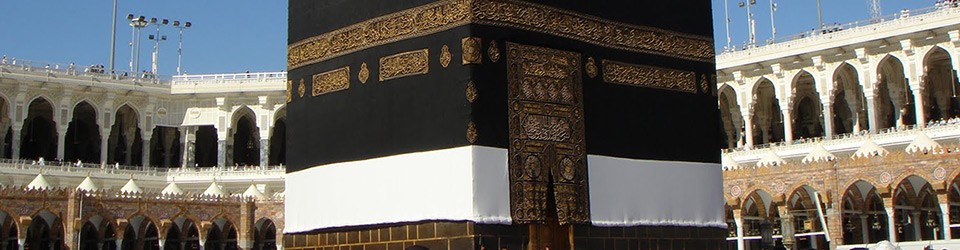
kaba-door-from-below


A seeker wrote, ‘I am very worried these days. In spite that I do not want to discuss worldly issues with you, I mention this because it is being felt that this worrying is affecting my religious activities. Neither the daily recitations (wird) are done regularly nor I am being able to get up for tahajjud on time. Often I wake up late. These are adding to my worries.’

Hakim al-Umma Mawlana Ashraf Ali Thanawi (Allah have mercy on him) replied,

‘Paying attention to the worrisome state leads to increased apprehension.

When worried instead of paying attention to it, one should become attentive of Allah. This must be with the thinking that Allah is sufficient for me in these conditions and strengthening relationship with Him is the solution to all the troubles. 

By using this strategy the effect of the worries will diminish and eventually vanish completely.

Try it and be at peace.’

Tarbiyat us Salik, volume 1, page 544

Legacy

20140208-121351.jpg

4. My legacy (wasiyyat) for myself, family members, and close associates is that every moment of one’s life should be sacrificed in pleasing Allah. One should not displease Allah for a single moment by indulging in any form of impermissible (haram) activity. If a mistake is committed, then one should please Allah by repenting, seeking forgiveness and crying in front of Allah.

5. Always remain in the company of the pious, and keep yourself under the guidance of a Sheikh with whom you have congeniality (munasbet).

6. Adopt extreme piety in financial matters. Always refer to the scholars (Muftis) in issues pertaining to the (questionable) rulings of Shariah.

Wasiyyat of Hazrat rehmatullah aleh

Pledge of allegiance

20140126-204530.jpg

Sayyedina Walid bin Abbad bin Samat (Allah be pleased with him) said,

‘I pledged allegiance to the Prophet of Allah (blessings and peace of Allah be upon him), swearing:

To pay attention to whatever he said; and to carry out whatever he commanded, whether it be difficult or easy, bearing grief or bringing comfort.

If somebody says something that should be contradicted , I will not contest against him.

In all circumstances I shall speak the truth and I will not be afraid of anyone who blames me for something.’

A Mine of Meaning, page 182

Who is a disciple?

20140121-194650.jpg

Shaikh Sharafuddin Yahya al Maneri (Allah have mercy on him) said,

‘A disciple is a person who submits himself to his guide in word, deed, heart and body.’

He went on to explain:
” ‘In words’ means that his speech is in conformity with what his guide says regarding the essential principles and derived teaching of religion.

‘In deeds’ means that he does nothing, whether in a religious or worldly matter, contrary to what has been sanctioned by his guide, even if it be an act of devotion!

‘In heart’ means keeping his heart unstained by any blameworthy quality, just as his guide does.

‘In body’ means keeping his senses and bodily members pure and without any stain of sin, just as his guide has done.

When he has conformed himself in all these ways, then he can be called a disciple.”

A Mine of Meaning (Ma’din ulMa’ani), page 165