
Our master Anas ibn Malik (Allah be pleased with him) reported:
‘The Messenger of Allah, (Allah bless him and grant him peace),would not place anyone in a situation he would consider unpleasant.’
Jawami Adab al-Sufiyya, page 9
| Definition: | compassion, generosity |
| Synonyms: | affection, altruism, amiability, beneficence, benevolence, charity, clemency, consideration, cordiality, courtesy, decency, delicacy, fellow feeling, forbearance, gentleness, good intention, good will, goodness, grace, graciousness, heart, helpfulness, hospitality, humanity, indulgence, kindliness, magnanimity, mildness, patience, philanthropy, serviceability, solicitousness, solicitude, sweetness, sympathy, tact, tenderness, thoughtfulness, tolerance, understanding, unselfishness |
| Antonyms: | cruelty, harshness, meanness |
 –
–
Our master the holy Prophet, may Allah bless him and grant him peace, said,
إن الله يحب الرفق في الأمر كله (رواه البخاری)۔
“Allah is kind and loves kindness in every matter.”
إن الرفق لا يكون في شيء إلا زانه . ولا ينزع من شيء إلا شانه ( رواه مسلم) ۔
“Whenever kindness is in a thing it adorns it, and whenever it is removed from anything, it disfigures it.” [Muslim]
——————————————
Sayyidi wa sanadi Shaikh Mufti Mohammad Taqi Usmani (Allah preserve him) often says that Arabic is a very unique and rich language. It has a huge vocabulary. Sometimes it is quite difficult to convey the meaning of a word when translating it into another language. This is specially so with the languages like English.

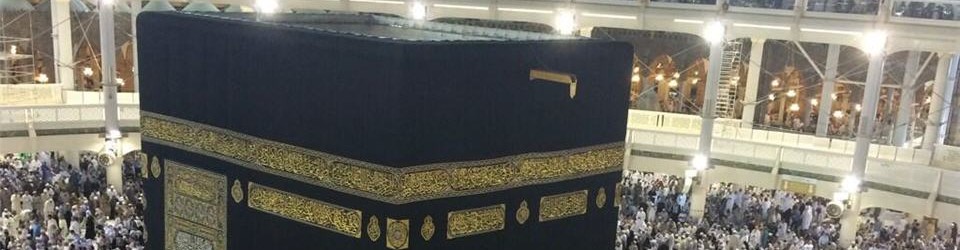
A seeker living in the holy city of Makkah wrote,
‘I feel disgusted when I see the Shia Iranian pilgrims roaming around in this holy city. Please, advice if I need to do anything about these feelings.’
Shaikh Dr. Hafeezullah Sukkharwi/Madani (Allah have mercy on him) replied,
‘Aren’t they human being?
This is grossly inappropriate.
One should abhor their deviant beliefs. However, every human being is to be respected and the best should be desired for him (this includes salvation in hereafter. That is, by making supplication (dua) and effort (as much possible within one’s means) that he may be guided to true faith and practice).’

Shaikh Wasif Manzoor (Allah have mercy on him) passed away in Karachi couple of days back. He was buried in Darul Uloom Karachi.
A khalifa of Shaikh Sayyid Raziuddin Ahmad Fakhri (Allah have mercy on him) he was extensively involved in dawa o tabligh.
May Allah forgive him, raise his status manifolds in hereafter, give patience to all those who knew him and provide them with a substitute to continue benefiting spiritually. Amin!
 –
–
Hakim al-Umma Shaikh Mawlana Ashraf Ali Thanawi (Allah have mercy on him) said,
‘I am thankful to Allah that I never developed an ill opinion in my heart about any of the pious individuals just because of the differences in the peripheral issues (faru’i ikhtelafat). This is so provided that the signs of piety overwhelmingly manifested in them.
I keep a good opinion of those who are engaged in remembrances of Allah. This is in spite of their involvement in few mistakes. It is not necessary to prove all their statements and actions to be in compliance with Shariah. I make an excuse for the pious who are in overwhelming spiritual state that they are excused because of their over powering condition. Moreover, in issues that are ijtehadi (open to genuine interpretation) the possibility of genuine difference of opinion holds me from having a bad opinion of them.’
Ashraf us Sawanih, volume, 1, pg 183
 –
–
Shaikh Shah Wasiullah Allahabadi (Allah Have mercy on him) said,
‘An individual who has established a relationship with Allah also develops a bond with the (contemporary) pious Masters and their disciples, Therefore, they are now called brethren in the Path (of Tasawwuf) (ikhwan at tareeq).
However, if (in practical life) they do not have unity and mutual compassion then how could they be brothers? They are acting like enemies.Then how could they be called ikhwan at tareeq?
(If this is happening) Then it can be deduced that these individuals are not on the Path. It is only a ritual and a symbol they are following (without any reality). This is because, if they were to be on the Path then its essential effects must have manifested in their life (i.e. bond with Allah and His creation). The absence of the desired result proves the futility of the principles involved itself.’
Halaat e Mulih al-Ummat ra, volume 3, page 419

Sayyidi wa sanadi Shaikh Mufti Mohammad Taqi Usmani (Allah preserve him) said,
‘My respected father (Mufti Mohammad Shafi’,Allah have mercy on him) used to say in context of the Quranic verse:
 [O you who believe, fear Allah, and be in the company of the truthful.]
In his tafsir Imam Razi (Allah have mercy on him) said that there is a prophecy in it for the future generation to come until the Day of Judgment.
The explanation is that it is our fundamental belief that the injunctions of Quran are to be followed in all environments and circumstances till the very last day. Then how is it possible that the Quran will order us to do something that is not possible. If the pious ceased to exist then how their company can be achieved. This proves that the truthful and pious (sadiqeen) will always exist so their company is available to achieve taqwa.
He further added that it may be possible that they are less in number and difficult to discover. However, this does not negate their existence. Just take the every day examples. These days corruption and contamination of food is rampant. It is difficult to find unadulterated common day items such as sugar and flour. In spite of this none of us have abandoned their use and settled for substandard alternatives. We actively search for places from where good quality stuff can be purchased.
Similarly, search actively for pious and inshaAllah you will find them.
However, do not set your standards very high.
For people of our caliber pious individuals like Shaikh Junaid Baghdadi or Shaikh Abdul Qadir Jilani or Shaikh Moin ud Deen Chishti (Allah have mercy on them) are not essential. Our islah (spiritual reformation) can be effectively done by the pious present in our era.
Waaz, Ramadan 1432

Our master Prophet (Allah bless him and grant him peace) said,
‘Desire for yourself what you desire for others.
If you do so, you will become a true Muslim.’
Musnad-i-Ahmed, Tirmidhi

Shaikh Wasiullah Allahabadi (Allah have mercy on him) said,
‘The predecessor pious elders have documented that there are only two methods of recognizing a pious Shaikh.
The first is that the an individual is gifted by Allah with the ability of spiritual insight to do so.
The other method is that the individual is gifted by Allah with the ability to listen and accept the words of the knowledgeable and wise person.’
Halaat e Muslih al-Ummat ra, volume 3, page 323

 –
–
Shaikh Abu ‘Amr al-Dimashiqi (Allah have mercy on him) said,
‘He who keeps to the Sunna of the Prophet (Allah’s blessings and peace be upon him) and lets himself be guided by it, he is the one who governs his nafs in the most excellent way.’
Jawami ‘Adab al-Sufiyya, page 37
 –
–
Shaikh Abu ‘Amr al-Dimashiqi (Allah have mercy on him) said, when he was asked: ‘Who is the weakest of all human beings?’
“The one who is incapable of managing his nafs.“
‘And who is the most powerful of all human beings?’
“The one who is capable of mastering his passions (desires of nafs).”
Jawami ‘Adab al-Sufiyya, page 37
 –
–
Shaikh Abdur Rehman al-Sulami (Allah have mercy on him) said,
‘The Sufi should speak little and perform actions instead.’
Jawami’ Adab al-Sufiyya, page 35

Sayyidi wa sanadi Shaikh Mufti Mohammad Taqi Usmani (Allah preserve him) said,
‘Giving up sin seems to be very difficult task. Sometimes the urges are so strong that it appears one will die if he/she does not indulge in sin. But this is not the reality.
Understand it by an analogy. Suppose an individual has a strong desire to see something inappropriate on television (or Internet). In spite of being aware that this is sinful and wrong not following the desire seems to be impossible. It feels that this is beyond his/ her capability to resist. Death may follow if he/she does not do it. Therefore, he makes all the arrangements to indulge in this sinful activity. However, when everything is ready and in place the supply of electricity (or Internet) is shut off (as it happens frequently these days in Pakistan).
What will he/she do now?
Accept the reality even though with grudge and still a strong desire to do otherwise. However, with means beyond his/her control there is no way to do it. It is not done. This denial of indulgence in sinful though involuntarily does not seems to be impossible or result in death.
All of that strong urge, impossibility and iminent doom on denial to act on it were a deception of lower self (nafs) and Satan.
Now take heed from this analogy.
Voluntarily switch off the means of indulgence in sinful activities yourself. There is reward from Allah on doing this. Whereas, if it happens involuntarily there is no such reward.
Take control of the switch in your hand.’
Ramadan 1432/August 2011
May Allah faciltitate this for all of us. Amin!

Professor Shaikh Mohammad Ashraf Sulemani (Allah have mercy on him) said,
‘In general, prevalent Tasawwuf in Muslim communities is of three types;
1. Tasawwuf that is subservient to Shariah
2. Tasawwuf that is a philosophical theory
3. Tasawwuf that revolves around innovations (bida)
The real Islamic Tasawwuf is the one that is totally subservient to Shariah.’
Mard e Darvesh, page 186

