Category Archives: J. Rights

Dua to be Recited at the Approach of Ramadhaan

Hadhrat Ubaadah bin Saamit (Radi Allahu Anhu) narrates that Rasulullah (Sallallahu Alayhi Wasallam) used to teach the Sahaabah (Radi Allahu Anhum) the following Dua at the approach of the Month of Ramadhaan:
اَللَّهُمَّ سَلِّمْنِيْ لِرَمَضَانَ وَسَلِّمْ رَمَضَانَ لِيْ وَسَلِّمْهُ لِيْ مُتَقَبَّلاً
Allahumma Sallimnee Liramadaana Wa Sallim Ramadaana Lee Wa Sallimhu li Mutaqabbila
“O Allah! Safeguard me for the Month of Ramadhaan (by making me see the Month of Ramadhaan healthy and fit so that I can take maximum benefit from it), and safeguard the Month of Ramadhaan for me (by making the conditions in it such that I can take maximum benefit from it) and accept it from me.” (Kanz-ul-ummal, Vol.8, Pg. 584 Hadith 24277)
Every Muslim should endeavor to memorize this dua and recite it in abundance in these few days before Ramadhaan.
Source: Daul Iftaa
The condition that the Beloved has placed me in is the best condition for me indeed

A high caliber scholar murid complained about his business commitments that were preventing him from teaching at a Darul Uloom. Due to the huge debt secondary to the embezzlement of the caretaker (who was also an ‘alim) and unavailability of a responsible individual to run his enterprise he did not have a choice.
Sayyidi wa sanadi Shaikh Mufti Taqi Usmani (Allah grant him long, healthy and productive life. Amin!) replied,
یار جس حال میں رکھے وہی حال اچھا ہے
The condition that the Beloved has placed me in is the best condition for me indeed!
(That is, have complete reliance (tafweez) on Allah. He selects for the moment whatever is the best for His servant.)
Ajyad, Makkah e mukarramah, Friday 22 July 2011, after esha.
Shaikh’s memoirs: Aap beeti

Sitting in mataf behind rukun-e-yamani sayyidi wa sanadi Shaikh Mufti Mohammad Taqi Usmani (Allah grant him a healthy, productive and long life. Amin!) confided to Mufti Ahmad Khanpuri (Allah preserve him),
‘After recieivng your last letter asking me to write my memoirs I have started the project. I initiated by writing ten sentences. May Allah facilitate it.’
Mufti Ahmad Khanpuri and those present around were thrilled. Mufti sahib encouraged sayyidi wa sanadi excessively and requested to take this project seriously for the immense potential of benefiting others, especially the scholars.
Sayyidi wa sanadi repeatedly mentioned about the futility of writing about an insignificant creature comparing himself to a fly or a mosquito.
Mufti Ahmad Khanpuri (the top most Mufti of India, stationed at Dhabel & khalifa of Shaikh Mufti Mehmood Hassan al-Gangohi (Allah have mercy on him) was very pleased and said,
‘Now I will make special dua that this project is completed effectively.’
Masjid al-Haraam, Makkah e mukarramah, after ‘esha salah, Friday, 22 July 2011
Be careful with loans
 –
–
Financial dealings are the real test of one’s awareness of Allah (taqwa).
The corrupt financial dealings and bad attitudes of a murid in addition to being major sin for himself lead to negative reputation of the Shaikh and Tasawwuf in public.
It is essential to educate the disciples regarding these issues. It is impossible to step on the pristine grounds of Allah’s pleasure and approval while being soiled in sins.
Taking loan is highly discouraged. However, if due to necessity loan has to be taken then one should keep an intention of paying it back as soon as possible and work for it deligently.
The following Prophetic tradition should be an eye-opener for all of us.
Sayedna Abu Hurairah (Allah be pleased with him) narrates from the Beloved Prophet (Allah’s blessing and peace be upon him),
‘The Prophet (Allah’s blessing and peace be upon him) said, ‘An individual who takes from the wealth of another (as a loan) and his intention is to repay it then Allah will (facilitate & make arrangements for its) recompense for this individual. However, if an individual takes the wealth (loan) with the intention of not returning then Allah will destroy him.’
Bukhari, Ibne Majah
Jamae ul Huqooq, page 9
–
Preparing for Ramadhan

1. Ask Allah for facilitation (tawfeeq) to benefit from the blessings of Ramadan daily, from now onwards.
2. Make a firm determination to abstain from all sins. Especially those committed by the eyes, ears and tongue.
3. Try to free as much time as possible from work and other commitments for pure worship (ibadah).
4. Reschedule non essential appointmentstill after or before Ramadan. Finish with all Ramadan and Eid shopping prior to the sighting of the crescent.
5. Make special effort to follow as many as possible Sunna in daily activities.
Learn these and memorize the adiya e masnoon (dua) for particular occasions before hand. The book “Alaikum bi sunnati”by Mawlana Abdul Hakim Sukharwi ra is a good, practical and handy resource for this.
6. Review the essential fiqh (rulings) relating to fasting, taraweeh and other Ramadan related issues from “Behishti Zewar” (Heavenly Ornaments) of Hakim al-Umma Hazrat Mawlana Ashraf Ali Thanawi (may Allah have mercy on him).
7. To get motivated and organized, read the discourses of Hakeem al -Umma regarding Ramadan (Mawaiz-e-Ashrafiya volume : Barakat e Ramadan) and listen to the talks of Sayyidi wa sandi db on how to prepare for the holy month.
8. Practice the actions of the Heart. Do not do any action without a proper intention.Abstain from all the blame worthy morals. No anger, arrogance, belittling caustic remarks, etc. It is strange to abstain from otherwise halal (lawful food) and commit an act which is always haram (forbidden). Try to do most of the praise worthy moral actions. Having patience, humility, gratitude, sincerity, etc. Keep a tight grip. Do not slip here.
9. Make a practical and doable time table for daily activities.
The point to remember is that in Ramadan acts of primary form of worships (i.e. salah, dhikr, tilawat, etc.) are to be increased. These lead to an increasing direct relationship with Allah (i.e. ta’luq ma’Allah).
The tawfiq is from Allah!
Tasawwuf is totally subservient to Quran and Sunna

–
Shaikh Mawlana Shah Wasiullah Allahabadi (Allah have mercy on him) said,
‘I have made it essential to include in my speech and writings (about the path) the sayings of the scholars of the Divine law and Prophetic traditions ( that is, fuqaha and muhaditheen). This is in order to save Tasawwuf from becoming an independent discipline in itself and to keep it totally subservient to al Quran and al Sunna.
I am observing that in this era people want to make it an independent discipline. I consider this to be the source of (religious) calamities.
Therefore, in addition to my writings I start my speeches with quotations from Quran and Sunna. Then to support them further I mention the stories of pious precedent saints and their sayings. And this is the way Hakim al Umma (Mawlana Ashraf ‘Ali Thanawi, Allah have mercy on him) did in his book ‘Masail e Sulook’.
………..
This approach has benefited me a lot and I hope that it will be beneficial for others to. The first benefit will be the awareness of knowledge of Quran and Sunna. Also, when it will be firmly established in minds that the real obedience is is that of the Prophet (Allah’s blessings and peace be upon him) the desire to traverse the path in accordance with Sunna will develop. The blessings (barakah) of this mode will be axiomatic. Finally, knowledge of those things that are against Sunna and have crept into Tasawwuf will be acquired. This will save the masses from massive misguidance.’
Halaat e Muslih al-ummat ra, volume 3, page 319
Sayyidi wa sanadi Shaikh Mufti Taqi Usmani (Allah preserve him) has this same style. In his weekly discourses for the seekers of islah he has given dars of Prophetic traditions from Riyadh us Saliheen of Imam Nawawi, Adabul Mufrad of Imam Bukhari, Kitab uz Zuhd of Imam Ibn al-Mubarak, Tasharuf of Hakim al Umma (Allah have mercy on all of them). MashaAllah!
Moulana Yunus Patel ra
 –
–
Death is an inevitable reality.
There is no escape.
The beloved of Allah, our master Prophet (Allah bless him and grant him peace) tasted it to.
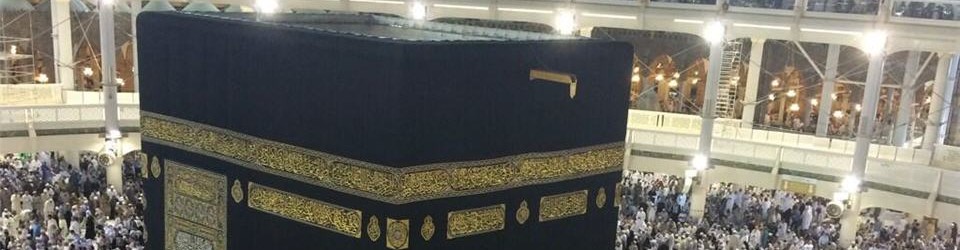
The news of the death of Shaikh Moulana Yunus Patel (Allah have mercy on him) is a big shock for all the spiritual aspirants. However, the circumstance under which it occurred would make any Muslims desirous of such death. That is, in Holy city of Makkah, facing the kaba sharif, immediately after performing tawaf, etc.
May Allah make his complete magfirah and grant him jannat al-firdaus. Amin!
On 5th July 2011 he replied to an individuals request for dua and advice as follows;
‘Bismillahir Rahmaanir Raheem
Wa alaikumus Salaam wa Rahmatullahi wa Barakatuh
Making dua for you. Download and listen to the bayans and talks on the Internet www.yunuspatel.co.za
Inshallah it will suffice for Nasihat. I am presently in Madinah Sharif and will not be able to respond immediately to emails. Nevertheless making a lot of dua that Allah Ta’ala bless me, bless you and the Ummat at large with complete reformation and change with Afiyyat and best of dunyah and akhirah.
Was Salaamu alaikum wa Rahmatullahi wa Barakatuh
Yunus Patel (Maulana)’
Please, try to make dua and esal-e-thawab for him.
JazakAllah.
Time management

– Go to sleep right after Isha salaat and wake up in tahajjud. Complete all your reading and writing tasks at that time. That has been the routine of our akaabireen.
– Never attend any gatherings after 9 pm. If there is a gathering at your place, make sure its ends before 9!
– He further said that nowadays most of the gatherings are not segregated so one can easily apologise the host beforehand for not being able to attend it. Secondly, one could very well visit earlier, give a present and politely inform the host why they needed to leave.
– The biggest ‘calamity’ that has befallen the urbanites is this day and age is that they have stopped sleeping early, and the misfortune (be-barkati) this produces in one’s life, and time, is clearly evident in our messed up daily routines.’
عبدیت/Servitude-1
 –
–
The beloved Prophet Mohammed (Allah bless him and give him peace) is the absolute personification of humanly perfections. An epitome for all pious individuals (especially the sufiyah). There can be no superior action or state than that held by him (Allah bless him and give him peace). That is, his way (sunna), both in exoteric (dhahiri) and esoteric (batini) spheres of life.
This is a basic fundamental of our tasawwuf.
The most outstanding characteristic of our beloved Prophet (Allah bless him and give him peace) is his servitude (عبدیت).
Mentioning one of the supreme gifts bestowed on him; the heavenly journey of al-Isra wal-Me’raj Allah mentions him with this characteristic (bi-‘abdhi):
Glorious is He Who made his servant travel by night from Al-Masjid-ul-Harām to Al-Masjid-ul-AqSā whose environs We have blessed, so that We let him see some of Our signs. Surely, He is the All-Hearing, the All- Seeing. [17:1]
What are the signs and symptoms of servitude?
To be contd…
Nikah
 –
–
An individual who conducted a nikah (marriage contract) for a couple (the first time in his life) in the Prophet’s (Allah’s blessings and peace be upon him) Mosque in the illuminated city of Madinah stated his feelings,
‘It is amazing how Islam has sanctified this social contract.
Reading of a simple sermon giving advice to be vigilant in fulfilling one’s obligation for Allah’s sake is from the Prophetic example (Sunna). It is not an essential (wajib) part of nikah. The acknowledgment of the bride and groom in front of at least two (adult, sane, Muslims) witnesses with a mutually fixed dowry (mehr) are the only essentials required. Any Muslim can conducted the ritual. No priest or certified individual is required.
The simplicity is awe striking.
Without nikah a similar relationship (i.e. zinna) will be punished by lashings or stoning to death (by a Islamic State), however, this unpretentious ritual works like alchemy. Making the same relationship an act of worship.
May Allah give us the wisdom to understand and appreciate the blessing of Islam. Amin!’
Friday, 1st July 2011, after asr, Bab-Fahad, Masjid e Nabawi, Medinah e munawwarah
ّ-
Inna lillah: Shaikh Riffa’t Ahmad Khan
–

–
Shaikh Riffa’t Ahmad Khan a murid of Hakim al-Umma Mawlana Ashraf Ali Thanawi and khalifa of Arif billah Dr Abdul Hayy Arifi (Allah have mercy on all of them) passed away earlier this year.
He was in his nineties. Like all our precedent pious personalities he lived a low profile life.
May Allah make complete magfirah and shower His blessings on him. Amin!
He narrated a saying of Arif billah,
‘Gratitude and seeking forgiveness are the basis and key to (the desired level of) servitude (abdiyet). Asking (Allah for) forgiveness leads to (increasing) servitude and thankfulness (of Allah) to (more) gnosis (marifah).’
Ta’mir e seerat, page 14
Madina al-munawwara
Signs of humility

Shaikh Dhul-Nun al-Misri (Allah have mercy on him) said,
‘There are three signs of humility:
1. Considering one’s self (nafs) to be the lowest of all the creatures. This is in order to find out its faults.
2. For the sanctity of Oneness of Allah (tawhid) respect and serve other people.
3. Accepting the truth and beneficial advice from any one (irrespective of his piety, faith, status, etc.)’
Awarif al-Ma’arif, page 415
Shara’iah, Makkah al-mukarramah
Beware before bay’ah!

In reply to an aspirant’s request to be accepted as a murid Hakim al-Umma Shaikh Mawalan Ashraf Ali Thanawi (Allah have mercy on him) wrote,
‘1. In this path (tariq) the demeanor of every Shaikh is unique.
2. The essential criteria to benefit is the mutual compatibility with this demeanor (i.e. between Shaikh & murid).
3. Rushing to select a Shaikh is a (major) contraindication in this path.
4. The demeanor of an individual can only be ascertained by keeping his company for a considerable duration, (…..) or by visiting him repeatedly and corresponding with him for a long period.’
Tarbiyet us Salik, volume 1, page 37
A good state

A spiritual aspirant wrote his condition to Hakim al-Umma Mawlana Ashraf Ali Thanawi (Allah have mercy on him),
‘These days this lowly individual recites ten thousand times ‘istegfar‘ and 24,000 times ‘ism e dhat’ daily. Occasionally there is deficiency or excess in these amounts secondary to impromptu demanding circumstances.
However, my condition is that after any virtuous deed I feel extreme degree of shame, similar to that felt on committing sins. The reason for this is that in all the virtuous deed performed I recognise many shortcomings and deficiencies. Moreover, I am cognizant of the multitude of blessings of Allah showering on myself all the time.
If a mistake is committed then the only respite is to cry, repent and beg. Additionally, it leads to extreme humiliation in front of Allah.
From few days I feel this condition of aloofness from all that is worldly in my heart. …………….
Hakim al-Umma replied,
‘It extremely delighted my heart. May Allah give multiple folds increase in blessings and progress. Moreover, by the grace of pious associates (like yourself) may He grant a pleasant end to this invalid writer. I expect this supplication from my friends also.’
Tarbiyat us Salik, volume 1, page 761-3