Category Archives: N. Advice

Those at loss on the night of 15th Sha’ban

20130623-181152.jpg

It was reported from our master Prophet Muhammad, (Allah’s blessings and peace be upon him),

“This is the middle Night of Sha’ban. Allah frees in it a large number of the people from (Hell) Fire, more than the number of the hairs growing on the sheep of the tribe, Kalb. But He does not even look at an individual who

– associates partners with Allah, or

– who nourishes malice in his heart (against someone), or

– who cuts off the ties of kinship (qata’ rehmi), or

– who leaves his clothes extending beyond his ankles (as a sign of pride), or

– who disobeys his parents, or

– who has a habit of drinking wine.”

Allah save us from being among these individuals. Amin!

Doubts & questions

20130621-225204.jpg

A scholar approached Hakim al Umma Mawlana Ashraf Ali Thanawi (Allah have mercy on him). He stated that he had some questions and doubts about the belief of pre-determination of affairs (taqdeer). He added that he had done extensive research about this topic and read almost all the major texts regarding this issue. However, he still remained unsatisfied.

Hakim al Umma replied that this was not the way to approach the matter of doubts and questions.

A thorough reply may for the time being provide a satisfying answer. However, this is usually for a short duration. The lower self (nafs) comes up with an antithesis or another more powerful question or doubt. Thus, it becomes a vicious cycle. Answers leading to more questions and doubts.

The need is to cease this random whispering of nafs and Satan that created this problem in the first place.

The most effective way to do so if to stay in the company of a perfect (kamil) Shaikh for some duration.

This pious company will create deep love and strong connection with Allah. This in turn will remove all doubts and questions.

Malfuz paraphrased

Saudi Arabia asks pilgrims to postpone Hajj this year

20130618-205112.jpg

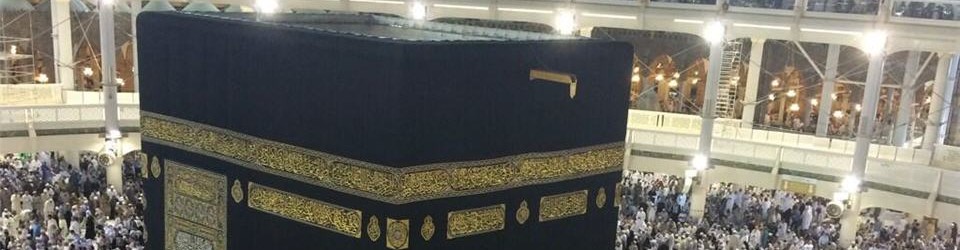
In an unprecedented move aimed at preventing congestion and stampedes and ensuring safety of the guests of God, Saudi authorities have urged domestic and foreign pilgrims to postpone their Haj plans for this year if possible due to ongoing expansion work at Makkah’s Grand Mosque.

The call follows the government’s decision to reduce the number of foreign pilgrims by 20 percent and domestic pilgrims 50 percent this year.

Arab news

The company of pious

OLYMPUS DIGITAL CAMERA

Hakim al Ummah Mawlana Ashraf Ali Thanawi (Allah have mercy on him) said,

‘I consider that in this era keeping company of the pious (ahl Allah) is an absolute essential (fardh e ‘ain).

Moreover, my fatwa is that in these times keeping the company of and having close contact with the pious and elite (friends of Allah) is absolutely essential.

This is because, there can not be any doubts about taking the means of safeguarding one’s faith being essential.

And it has been established by experience that in these times safeguarding one’s faith (eman) is only possible by keeping company of the pious.  No spell works, with the blessings of Allah, after this relationship.’

Fayuz ar Rahman, page 123

On Death of the Shaikh!

zaiqatulmaut-300x225

On the death of  Mawlana Shah Abrarul Haq (Allah have mercy on him) (died May 17th, 2005), the last surviving khalifa of Hakim al Umma, an individual inquired sayyidi wa sanadi Shaikh Mufti Mohammad Taqi Usmani sahib ( Allah preserve him and allow us to benefit from him a lot. Ameen!) regarding the attitude to be adopted by a murid on the death of his/her Shaikh.

Shaikh replied,

“Regarding this murideen fall into two categories.
First are those who are mojaz (have permission to initiate and guide others). For them it is not essential to take another Shaikh. However, it is very beneficial and advisable to take one and not leave one’s self independent.

Second category is the rest of murideen (disciples). It is absolutely essential for them to take another Shaikh as soon as possible.

In both the cases it is wise to select the next Shaikh from the same silsila (spiritual lineage) with the similar disposition and style (hum mazaq) in approach to Tasawwuf/islah as the recently deceased Shaikh, for uninterrupted spiritual progress.”

Jeddah, 18th May, 2005

Dealing with lustful thoughts

20130523-143259.jpg

An individual (blind, physically weak and financially challenged) complained about the (lustful) attraction towards women and young men that was driving him crazy. He elaborated that this engrossment is to the extent that I am negligent of food consumption. I pray but sometimes I’m unaware of what was recited in prayers. I am very much afraid of this condition. I request a remedy for it.

Hakim al Ummah Mawlana Ashraf Ali Thanawi (Allah have mercy on him) replied,
There are two levels of being attracted towards something.
One is mere attention towards it and the second is love that is attention accompanied with a desire.

The first level is a natural thing. Allah has placed (sexual) attraction in men (for women). It can neither be eliminated by any means nor it is required from us to do so.
The second level is within one’s control (ikhteyar). It means that one has control to some extent in keeping it or annihilating it. An individual can increase his involvement in a thing to such an extent that that he is engrossed in it completely all the time. On the other hand he can avoid a thing to the extent that he no more desires it. Hence being volitional it is binding (to be acquired).

First treatment is use of determination (himmat). Allah has placed the performance of volitional acts on the determination of an individual. He has promised assistance after determination.

The second treatment is diverting thoughts. The attention has to be diverted away when there are overwhelming thoughts (of this nature). It is an axiom that lower-self (nafs) can not be attentive towards two things at one time. Therefore, at times of excessive desires be busy with something else. This may be religious activity like offering prayers, making remembrance or reciting Holy Quran, or it may be worldly activity like visiting someone, etc, etc..

The third treatment is to ignore these overwhelming desires completely. This is with the understanding that these feelings are not going to harm me at all. This is the most effective treatment.
The individual said that how was it possible to ignore these thoughts. They have spoiled my prayers, dhikr and shugul. Not for a moment these thoughts leave me.

Hakim al Ummah replied,
These thoughts are from the first level. They are not sinful. You are responsible for your actions. You are responsible for implementing these thoughts into action. Until then it is neither sinful nor are you accountable for them. These thoughts are not going to harm you even if they continue for your whole life.

The fourth treatment is to make supplication.
The individual requested for some special prayer formula recitation (wazdhifa) to ward away this calamity.

Hakim al Ummah replied,
Wazdhifa can not do this. The treatment is as mentioned above. Instead to wazdhifa make supplications (dua).

(In summary) use your determination, become busy in something else, cry and make heartfelt supplications showing extreme neediness that O Allah! Save me from these calamities.

Indeed supplication is effective and leads to facilitation in difficulties.

Malfuzat e Hakimul Ummat, volume 29, page 131
Become intelligent!

20130509-184430.jpg

Observing the prevalent Muslim attitude of not being wise and intelligent, Shaikh Shah Wasiullah Allahabadi repeatedly quoted this advice of Shah Ahlullah brother of Shah Waliullah muhadith Dehlavi (Allah have mercy on them all) from his book Chahar Bab,

‘Although, Intelligence, wisdom, understanding acumen and intellectual foresight are innate capabilities, but they can be improved further with acquiring vast experiential knowledge, keeping company of the wise, readings intellectual texts, listening to the beneficial advices and biographies of the (successful) predecessors.

Therefore, it imperative that everyday we try to improve our intellectual abilities.

We should be vigilant in making conscious and extra effort to be in the category of intelligent and not in that of stupid people. ‘

Halaat e Muslih al Ummat ra, volume 4, page 338

Two rakat prior to maghrib salah

20130506-083308.jpg

Sayyidi wa sanadi Mufti Mohammad Taqi Usmani (Allah preserve him with ‘afiyet) said in discussion regarding the permissibility of praying two rakah prior to the fardh salah of maghrib,

The correct and just thing is that there is no proof (daleel) of two rakah prior to maghrib being disliked (karahiyet). And there are many proofs of its permissibility.

However, it must be taken into account that at places where there is time interval prior to congregational salah (jamah), like in the blessed Haramain, then being stubborn that I am a Hanafi and whatever happens I am not going to pray is not the proper attitude. In these situation it should be offered.

One thing that has to be always avoided is: creating fitnah.

Praying these two rakah are permissible and wherever there is time available (between adhan and jama’h) they should be offered. However, it should not be offered at places where none has even heard about this issue. Initiating these prayer in this situation will create a fitnah resulting in useless discussions.
However, mention the permissibility of this issue at an appropriate opportunity.

Inman al Bari, volume 3, pages383-5

Things that soften the hard-heart

20130420-201848.jpg

Imam al Qurtubi (Allah have mercy on him) said,

Understand it very clearly that following things soften the worst hardened hearts,
1. Visiting the graves
2. Listening to the discourses of pious scholars
3. Reading about the past obedient ascetics and scholars
4. Remembrance of that which will uproot all pleasures, ward off all desires, separate one from others, make existence detestable, and orphan the children who were adored by their parents. That is, death.’

Ebrat ka saman, page 27-8, Urdu translation of Imam Sha’rani (Allah have mercy on him)’s Mukhtaser Tazkirah al Qurtubi,

Remembrance of death

20130420-195647.jpg

Shaikh Mohammed al Daqqaq (Allah have mercy on him) said,

‘A person who reminds himself of death often is honored with three gifts,
1. Early facilitation of repentance
2. Being content with one’s provision
3. Having the desire to and delight in worship’

Ebrat ka saman, page 25, Urdu translation of Imam Sha’rani (Allah have mercy on him)’s Mukhtaser Tazkirah al Qurtubi,

Tip: Repentance from disobedience

20130410-130218.jpg

Shaikh Muhammad ibn Ahmed al Mawahib al Tunisi (Allah have mercy on him) said,

‘The prerequisite for repentance according to the masters of this path (sulook) is to break from the company of the disobedient.’

‘Warning: Take care not to return to the place you deserted and to the spot where you parted (with disobedience), for there you might immediately suffer a relapse.’

Qawanin Hikam al Ishraq, page 38

This company, place or spot may include individuals, specific venues and materials that are heard, read or seen. This is, especially so for the indiscriminate use of Internet in our days.