Category Archives: T. Tarbiyet

Contains principle and guidelines on training and disciplining of the morals (ikhlaq) of murid

Utilize time effectively

time-managementA group of seekers requested for some advice.

Sayyidi wa sanadi Shaikh Mufti Mohammad Taqi Usmani (Allah bless him with a long, healthy and productive life, Amin!) said,

‘Firstly, try to utilize the time effectively.

Each and every moment must be spent in actions that lead to Allah’s pleasure. These  include in addition to the acts of worships, the mutual dealings (muamlaat), social etiquette (adaab ul ma’asheret), fulfilling the rights of one’s own self (nafs), the rights of the children, spouses and parents. etc.

Not a single moment of a believer’s life should be in anything that displeases Allah.

In fact a believer can make all his activities a form of worship, like eating and drinking. That is by performing it with the pure intention and correct method as per the commandments of Allah.

Therefore, it must be ensured that the time is not wasted at all. One should be involved in any of the good actions as mentioned above.’

Attending Fiqh Academy session, Riyadh, KSA after Friday prayers

Abundant remembrance of Allah

dhikr e kathir

O you who believe, remember Allah abundantly[33:41]
and proclaim His purity at morn and eve.
[33:42]

Sayyidi wa sanadi Mufti Mohammad Taqi Usmani (Allah bless him with a long, healthy and productive life with ‘afiyet, Amin!) said,

‘It must be remembered that if the tongue is not immersed in vocalization of remembrance of Allah the heart (qalb) will never be habitable (to the remembrance of Allah).

This is because the remembrance of Allah by vocalization via tongue is like the first step. If an individual does not climb it, then how can he reach the (real) remembrance, (that is) with the heart.

Therefore, the first step in developing a sustainable relationship with Allah is the remembrance with tongue (dhikr e lisani). This must never be abandoned.

Dhikrullah kay fadhail, page 11

In this discourse Shaikh mentions the various methods of remembrance prescribed by the Sufis, including the dowazdah tasbih that is staple dhikr of Ashrafiya path.

It usually takes 30 plus minus 5 minutes . It is preferably done after tahajjud or fajr salah in solitude with as much concentration as possible.

This is the kickoff.

Sparing time for islah

20131110-212336.jpg

In the booklet ‘Manual for those seeking islah‘, sayyidi wa sanadi Mufti Mohammad Taqi Usmani (Allah grant him a long, healthy and productive life with ‘afiyet, Amin!) wrote,

‘For the above mentioned tasks one will have to spare at least an hour daily, though it may be in multiple sittings. If one feels mentally ready for them and can ensure that insha Allah I will do them then only request should be made to this lowly writer for service (of guidance in islah). Otherwise, please excuse me.’ Page 4

It is common practice nowadays that individuals attend the spiritual discourses of a Shaikh and read his books or those recommended by him.They improve somewhat in their outwardly actions and following of Sunna. They consider themselves seekers (talibeen e islah) and pride themselves to be associated with a particular Shaikh.

However, they rarely ask the Shaikh individualized spiritual advice for betterment of their morals and remembrance of Allah. Even if they do this than it is mostly random, disorganized and poorly abided with. Similarly those who are associated with a Shaikh for years are content with the initial tasbihats for remembrance of Allah. They do not yearn for more. As a result they do not progress spiritually. That is, they lack good moral characteristics, persist with the blame worthy ones and do not achieve the state of perpetual remembrance of Allah.

As instructed above one has to take islah seriously and spare time for it. The above mentioned hour is for a beginner, a novice. So what about the intermediate and advanced salik?

Firmness of determination in giving up sinful

20131108-171433.jpg

The third component of repentance (taubah) is the firmness of determination to never commit sin again.

This is volitional and can be done all the time. However, will power is needed for all endeavors. Similar is the matter here.

That is, one will have to make a firm determination to,
– bear whatever great difficulties or financial losses or physical hardships or public criticisms that may be encountered in following the commands of Allah and His Prophet (Allah bless him and grant him peace) and
-never to abandon the following of Allah and His messenger (Allah bless him and grant him peace).

If one does not have this determination then (it is evident that) he is not a seeker of Allah(‘s pleasure).’

Tahseel qasdus Sabeel, page 16

Sayyidi wa sanadi mufti Mohammad Taqi Usmani (Allah bless him with a healthy, long and productive life, Amin!) said,
‘I had some confusion about this component of taubah.
How can one guarantee about his own self (nafs) that he will never ever sin again in his future life?
In practical life it had happened that even after sincere repentance one succumbed to the same sinful temptations. Would this mean that the repentance done previously was deficient?

I inquired Shaikh Baba Najam Ahsan khalifa mujaz e suhbet of Hakim al Umma (Allah have mercy on them) about this.
He said,
‘It is at the moment of repentance one should have this conviction.
That is, one has to have firm determination at that moment of repenting never to commit this sinful act ever again.
As for the apprehension regarding the future one should ask Allah to facilitate this for him and try to the best of his ability. Doing this will, insha-Allah, keep him firm.

Slips of the sincere

i-failed-my-way-to-success-thomas-edison

Sayyidi wa sanadi Mufti Mohammad Taqi Usmani (Allah bless him with a long, healthy and productive life, Amin!) spoke briefly about the common problem of the slips of a sincere seeker on this path (sulook).

Below is a discussion on this issue from that discourse and teaching of our pious predecessors,

It is often a case that a sincere salik has been trying his best effort and also making supplications to Allah to keep him firm on pious actions and save him from involvement in sinful. But after weeks or months of being successful a dreadful moment comes and he fails and falls into sinful.

On realization of his mistake he is perplexed and disheartened. Thoughts like, ‘this path is not for me’, ‘I’m a failure’, ‘Divine help did not come’, ‘all the effort and supplications went wasted’, etc. plague his mind.

An individual can be so dejected, especially after multiple such episodes that he abandons all the effort and becomes totally heedless. May Allah save us all from this calamity. Amin!

However, a salik consults his Shaikh. He is instructed to repent, reaffirm his determination and move forwards. Moreover, it is emphasized not to ruminate and go into a root cause analysis of the incident.

A sincere salik must trust his Shaikh. As a result this slip becomes a stepping stone for further progress.

There are many lessons learned from the mistakes of the sincere seekers. They are mentioned below. However, they should not be used for rationalization of sinful activities. This discussion is about those who are sincere in their intention and effort but rarely slip. They include,

  • Their remorse is more genuine, intense and sustained and  it leads to immediate repentance
  • The resulting repentance is more sincere
  • It leads to increased connection with Allah
  • There is increased reliance on Allah and being His slave (abdiyet)
  • They appreciate (shukr) the blessing of Allah in giving them an opportunity to acknowledge their mistake and repent
  • They appreciate (shukr) the blessing of Allah in the form of the Shaikh’s guidance who encourages them and pulls them out from depths of despair
  • They see the flimsiness of their own effort and actions so they trust in Allah
  • They become aware of their true self and are not delusional of self piety (ujub)
  • They do not look down upon other fellows or consider themselves to be better (kibr)
  • Their reaffirming of determination and enthusiasm to move forwards is much more
  • Their effort in doing good actions and avoiding sinful is increased (or at least not decreased than before)
  • Their supplications asking Allah for assistance are increased and become more heartfelt leading to further increase in connection with Allah
  • They become more aware and experienced  of detecting the hidden traps and deception of nafs and Satan and work to avoid them
  • They excessively seek refuge (istiaza) in Allah from all that leads to Allah’s displeasure

And many others.

These are the mistakes that sometimes outweigh pious deeds!

(Ramadhan 1434, post-dhuhr talks, paraphrased)
 

Ongoing need of treatment & re-treatment in the spiritual path

failure-is-not-falling-down-but-refusing-to-get-up

In discussion about the need of repeated treatment for moral ailments sayyidi wa sanadi Mufti Mohammad Taqi Usmani (Allah bless him with a long, healthy and productive life, Amin!)  said,

‘Do not assume that (the treatment of moral ailments once done) suffices forever.

There is always a need of re-treatment.

That is, one has to reevaluate (his/her condition) repeatedly and (if necessary) treat again.

Do not assume that all those individuals who are bestowed with the permission (ijaza) of taking bayiah have become so perfect that they neither falter nor are they infallible from making mistakes nor are they immune from developing the desires of sinful.

That is not the case.

They also develop the desires for sinful. They also falter. However, they become immediately aware of their slip. This is because of the attribute developed in them and (previous ongoing effort of) moral disciplining (by spiritual struggle and excessive remembrance of Allah). After this awareness they have do the treatment of their aliment.

Even (Hakim al Umma Mawlana Ashraf Ali) Thanawi (Allah have mercy on him) said that when I see a (spiritual) illness in myself, I treat it (sometimes by giving a public discourse about it. That is in order to wake up my nafs, so I practice what I preach).’

Islahi Majali, voume 1, page 69

Importance of daily recitations

13392370802


Shaikh Wasiullah Allahabadi (Allah have mercy on him) said,

‘The pious elders have said, تارك الورد ملعون

It means that the individual who (intentionally) leaves his daily recitations (wird) is  accursed.

This is because offering extra (nafil) salah or recitations (awrad) in the beginning (of sulook) is not as detrimental than to initiate and then stop them. 

This is extremely bad. Allah’s alienation is for such an individual. This results in the individual becoming absolutely incompetent. He can neither follow the Deen properly nor achieve any worldly success.

Therefore, one should not initiate extra (routine) pious actions, like tahajjud or recitations. If he does initiate them then he should have a firm intention of doing them all his life. Otherwise misfortune will engulf him.

It is mentioned in Tabqat e Kubra (page 142) that on the day the murid leaves his wird the Divine help is cut off from him.’

Wasiyet ul ehsan, Talifat e Musleh al Ummat ra, volume 5, page 56-7

Shara’iah,near Jara’nah, Makkah al mukarramah


Renewal of bayiah

20131011-162332.jpg

A senior seeker, who had taken bayiah several years ago, requested for its renewal.

Sayyidi wa sanadi Shaikh Mufti Mohammad Taqi Usmani (Allah preserve him) replied,
‘There is no need of repeating the ritual.
The essential thing to do is to reaffirm the determination (for one’s islah).’

Islahi makateeb

Jeddah, KSA

Passing on rewards of good deeds to pious

20131007-081809.jpg

An individual wrote about his daily routine of reciting some verses of Holy Quran and passing on the reward (esal e thawab) to pious predecessors.

Hakim al Umma Mawlana Ashraf Ali Thanawi (Allah have mercy on him) appreciated the practice but made it clear that this must not be with the expectation that in return there will be spiritual benefit from their souls. This would be against sincerity. The passing on of rewards must be solely for Allah’s pleasure in appreciation of the services they provided in spreading the Deen.

Paraphrased from Tarbiyet us Salik,

Moreover, some people who do esal e thawab routinely are afraid that if they stop it, even for a genuine reason (poor health or lack of finances, etc.) there will wrath of these pious predecessors and some disaster will strike them. This is shirk. May Allah protect us all from this. Amin!

Vallejo, CA

Tasawwuf

20131002-075435.jpg

‘Quran and Tasawwuf’ is a famous book written by Dr Mir Waliuddin (Allah have mercy on him). In the introduction he mentions all the various definitions of Tasawwuf by the masters of this path and concludes,

‘In view of all these various definitions by the people of the path it is known that Tasawwuf is the purification of the lower self (from all that is impermissible) and acquisition of (good) morals characteristics.’

Quran and Tasawwuf, page 14

People nowadays confuse Tasawwuf with special methods of remembrance, meditations, particular garments, dancing, trance and celebrations, etc..
It has to be made vividly clear upfront to an spiritual aspirant before he embarks on this path what Tasawwuf is and what it is not.

Frankfurt airport, to IDSA 2013

Etiquette of Haramain Sharifain

20130925-120127.jpg

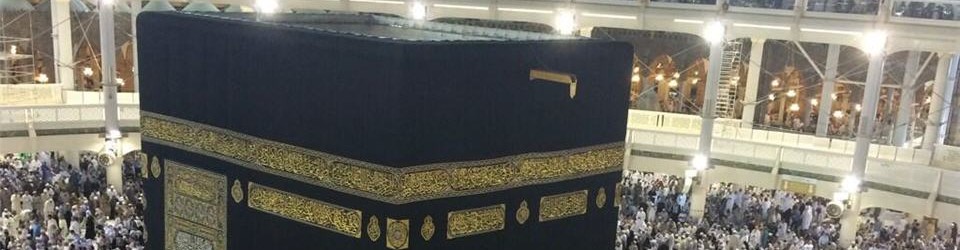
Every Muslim desires to visit the blessed and radiant cities of Makkah and Medinah (Haramain sharifain: the noble sanctuaries). At least once in his lifetime.

For many this opportunity comes with the performance of Hajj. Others get this chance when they visit for Umrah. Sometimes repeatedly.  Few individuals are blessed to get jobs in these cities and earn their living there.

All of these moments spend in the noble sanctuaries are extremely precious. A virtuous deed done in these precincts can earn a reward of 50,000 to 100,000 times performed elsewhere.  An unimaginable bonus!

Each and very second has to be utilized effectively to reap maximum benefit. A challenging task indeed. Especially, for individuals like us who are not organized and motivated. Laziness, apathy and negligence become the major barriers.  Moreover, committing sinful acts in these sanctuaries are  reciprocally or extra-reprehensible and blameworthy.

It is for these reasons some pious scholars have advised against taking permanent or prolonged residence in these noble  sanctuaries. They include our Imam Abu Hanifa (Allah have mercy on him).

Shaikh Haji Imdadullah mohajir Makki (Allah have mercy on him) advised an Indian  nawwab planning to migrate to Hijaz,

‘Staying in Hindustan and having a desire to live in noble sanctuaries is better than living here and being occupied in your stately affairs in Hindustan.’

Shaikhul Hadith Mawlana Zakariya mohajir Madani (Allah have mercy on him) use to tell those expressing their desire to migrate to Medinah e munawwarah,

‘Do not make such a decision of migration by observing my example. I have come here (towards the end of my life) to die (and be buried in Baqi).’

In short, the etiquette of the noble sanctuaries are significant and have to be taken very seriously.

The interview: Medinah e munawwarah 19th Ziqada 1434


Love of the Prophet (blessings and peace of Allah be upon him)

20130922-165601.jpg

A hundred thousand greetings, salutations and honorable congratulations be upon the pure tomb of the head to the throne of the Law, the full moon of the firmament, the sun of the constellation of reality, the crown upon the head of the the mystics, the chief of the prophets, the one intimate to the secret of “He revealed to His servant what He revealed” (53:10), the one breathing the fragrant air of the garden of the station of “at two bows length or bearer” (53:9), Muhammad, the Apostle of Allah- the blessings and peace of Allah be upon him and upon all his family members, friends , descendants and followers.’

[Ma’din ul Ma’ani, page 2]

The Prophet (blessings and peace of Allah be upon him) said,

“None of you believes until he loves me more than he loves his children, his parents, and all people.”

(Sahih Bukhari and Muslim)

Freedom from hypocrisy

20130916-103510.jpg

حدثنا عبد الله حدثني أبي ثنا الحكم بن موسى قال أبو عبد الرحمن عبد الله وسمعته أنا من الحكم بن موسى ثنا عبد الرحمن بن أبي الرجال عن نبيط بن عمرو عن أنس بن مالك عن النبي صلى الله عليه و سلم انه قال :
من صلى في مسجدي أربعين صلاة لا يفوته صلاة كتبت له براءة من النار ونجاة من العذاب وبريء من النفاق
تعليق شعيب الأرنؤوط : إسناده ضعيف لجهالة نبيط بن عمر

Anas ibn Malik (Allah be pleased with him) says that the Prophet (Allah bless him and give him peace) said:
Whoever prays forty salah in my mosque (Masjid an-Nabawi) without missing a salah in between them, then freedom from the hellfire, escape from punishment, and freedom from hypocrisy will be written for him”

(Musnad Ahmed)

The chain of this Hadith has been classified as weak by Muhaddithun.
Nevertheless, it is considered mustahab to offer the forty prayers in Masjid an-Nabawi.

Arif billah Dr Abdul Hayy ‘Arifi (Allah have mercy on him) said,
‘Acting on mustahibat is a calling of love (muhabbat).’

Criteria for spouse selection

20130914-182649.jpg

The Prophet (Allah bless him and give him peace) said,

Do not marry women due to their beauty and elegance. It is possible that this beauty and elegance leads them to the path of destruction.

Do not marry them because of their wealth.
It is possible that their wealth leads to transgression and involvement in sinful.

Instead marry them on the basis of their religious state (Deen).

A black slave girl who is religious and endowed with good manners (ikhlaq) is better than a beautiful women from a notable family who has bad manners (ikhlaq.).
Ibn e Majjah via Uswa e Rasool e Akram Allah bless him and give him peace) , page 662