Things to avoid in close relationships

Hazrat Hasan Abbas sahib, son of Hazrat Arifi ra told us that his blessed father advised him and his brothers that in order to maintain good mutual friendly relationship amongst themselves they should avoid the followings;

1. Giving opinion or consultation, without been requested to do so.

2. Criticism of each other, especially in public.

3. Interference in each other’s affairs.

Teen tark, pda, December 2003

ذکر قلبی

کیمیا تاثیر ہے یہ قطرہ ناچیزے دل

گر کسی کی یاد میں اس کو مٹا کر دیکھۓ

سیدی و سندی مدظلہ

Shopping in Medinah

Sayyidi wa sanadi Hazrat Mawlana Mohammad Taqi Usmani sahib db instructed his son-in-law, who was proceeding for Hajj;

“Whatever essential things you have to buy (for yourself, family & friends back home) do it in Medinah e munawwarah with an intention to support the business of people of this blessed city.”

Hajj 1427/2006

Hakeemul Ummat ra’s waseeyat # 10

Have firm conviction that khatimah bil khair (blessed ending of one’s life) is the most superior and perfect blessing (of Allah SWT). Pray for this husun e khatimah. Beseech with humility, especially, after the five daily prayers. (At the same time) also, be thankful (to Allah SWT) for the eman (faith) you have now. This will according to the promise (of Allah SWT)

لئن شكرتم لاذيدنكم

increase this blessing manifold.

Ma’asir Hakeemul Ummat ra, page 485

Whom to consult

Hakeemul Ummat Hazrat Mawlana Ashraf Ali Thanawi ra said;

“In seeking consultation with someone make sure of the following two things:

1. You have complete trust on this individual. That is, you are sure that he will advice sincerely whatever is most beneficial for you.

2. He (the consultant) has the insight (baseerah) in the field he is being consulted.

Tohfatul Ulema, volume 1, page 85

Most of us are negligent in point #2. We ask question regarding professional education, bussiness, marital matters, etc. from naïve pious individuals who do not have substantial knowledge & experience about these issues.

Never argue with parents!

Sayyidi wa sanadi Hazrat Mawlana Mohammad Taqi Usmani sahib db said:

There should never be any arguments with one’s parents.

You can explain and elaborate your viewpoint to them but arguing is out of question.

Malfoozat Kebriyet e Ahmer, number 25

Walk gently, do not run!

A new comer after attending Hazrat Sayyidi wa sanadi’s majalis became over enthusiastic and started actions beyond his capabilities.

On coming to know this Hazrat Mawlana Mohammad Taqi Usmani sahib db advised him to walking gently and not to run upfront (without learning to walk properly).

Malfoozat Kebriyet e Ahmer, number 15

Love of the material things (hubb e maal)

Sayyidi wa sanadi Hazrat Mawlana Mohammad Taqi Usmani sahib db said;

“The meaning of being devoid of love of material things (hubb e maal) does not imply that one abandons means of livelihood, or distributes his residence and belongings among others. (That is, get rid of all material things.)

The desired level in love of material things can be achieved by acting on the following:

1. A definite resolution that I will not earn a single penny by any impermissible means.

2. A firm determination not to spend any amount on any thing impermissible.

3. Being thankful (to Allah SWT) for all the material blessings provided by Him.

4. In addition to the wajib (essential) charity, give in the way of Allah SWT. The best way to do this, as practice by pious elders, is to allocate a portion of your earnings for this purpose, for example five percent or ten percent of the total earnings. Hazrat Hakeemul Ummat ra used to give twenty percent of his income in this charity.

Malfoozat Kebriyet e Ahmer, (compiled by Dr. Syed Abdul Qadir Ahmer sahib in 1991) number 13
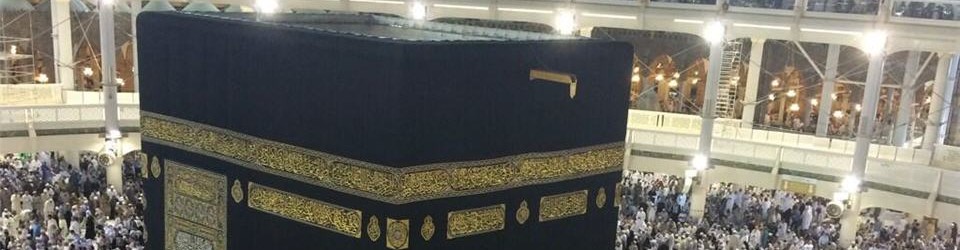
Grumbling in Hajj

Hazrat Hakeemul Ummat Mawlana Ashraf Ali Thanawi ra said:

One of the reasons of being upset in Hajj journey is that one considers himself to be of higher status (i.e. takabbur). In journey when something occurs that they consider below their eminence (e.g. traffic jam, delay in food, etc.) they get upset and start grumbling.

If everyone effaced himself, forgoing his ego, desires and status, and considers himself to be a khadim (one who provides service to others) none of these will happen.

Waaz: Hajj al mabroor,Khutbat e Hakeemul Ummat ra, volume 17 Sunnat e Ibraheem, page 263-4

Sign of accepted Hajj

Hazrat Hakeemul Ummat Mawlana Ashraf Ali Thanawi ra said:

“Remember!

One of the signs of Hajj being accepted (by Allah SWT) is that one develops a yearning in his heart to return for Hajj again.

It is suspected that he who returns with a determination never to go again his Hajj has not been accepted.”

Waaz: Hajj al mabroor,Khutbat e Hakeemul Ummat ra, volume 17 Sunnat e Ibraheem, page 268

Shukur

(Being Thankful to Allah SWT)

Arif-billah Hazrat Dr. Abdul Hayy ‘arifi ra said:

“This action creates love of Allah SWT and strengthens the relationship with Allah SWT (ta’aluq ma’Allah). One feels the tastefulness of contentment in his state and life becomes filled with serenity (afiyat).

Moreover, one of the blessings of this action is that a thankful person seldom commits sins.

Also, it saves one from the deadly diseases of takabbur (arrogance/pride), hasad (envy), greed, avarice, extravagance, miserliness, etc.”

Ma’moolat e yoomia, page 18