Category Archives: A. Reality of Tasawwuf

The nature, definition, goals and principles of Tasawwuf

Difference between a scholar & a Shaikh

20130501-215848.jpg

‘There is difference between the duties of a scholar and a Shaikh.

The duty of a scholar is to recite from the holy Quran and Prophetic sayings, explain them and give beneficial advice to people. Then it is up to the people if they listen or snooze, accept or become hostile, act on the advice or criticize it. The scholar does not care about these attitudes. He did his job. That was to convey the message.

Whereas, the Shaikh gives religious instructions to the audience and in addition demands actions from them accordingly. He gives guidance to the people, mentors them and then evaluates their progress (or failure).’

Halaat Musleh al Ummat ra, volume 4, page 253-4

Wishful desires

20130409-172059.jpg

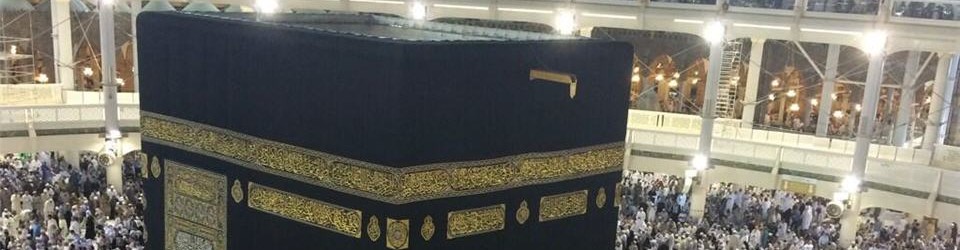
Our master Shaikh Abdul Qadir Raipuri (Allah have mercy on him) repeatedly mentioned this warid from his Hajj journey,

I saw individuals clinging to the house of Allah, holding it’s cover and crying profusely. They were supplicating for things for which they had done nothing at all in this world of taking means to achieve objectives (that is from the possible means within their reach).

Seeing their state it bolted out of my heart that these supplications (that are without taking the necessary means of achieving a goal within one’s reach) can not make a car run without fuel or a driver than how can they bring a drastic change in the affairs of our world.’

Sawanih, page 18

These are wishful desires (tamanna). They have to be differentiated from aspirations that are accompanied by effort within one’s means.

The stages of nafs: Nafs e mulhimah / part 3

20130327-222018.jpg

20130327-222157.jpg

The Inspired Nafs

Allah Almighty says,

(9)ونفس وما سواها ( 7 ) فألهمها فجورها وتقواها ( 8 ) قد أفلح من زكاها

[91:7]
and by the soul, and the One who made it well,

[91:8]
then inspired it with its (instincts of) evil and piety,

[91:9]
success is really attained by him who purifies it,

In this stage of development the nafs is gifted with the ability to distinguish between good and evil. Moreover,the performance of good actions and abstinence from evil is facilitated for him by the Grace of Allah.

This Grace is manifested as immense desire to please Allah. And at this stage nafs remains drowned in intense love of Allah (‘ishq illahi).

This is possible by following the recommendations of the Shaikh and excessive remembrance of Allah as instructed by him. In fact it is mandatory (wajib) to follow the recommendations of the Shaikh at this stage to be successful.

This is both a phenomenal and a challenging stage.

Any heedlessness here will pull the nafs to its initial stage. (May Allah protect us all from this disaster. Amin!)

Its characteristics include; self restraint (hilm), philanthropy, contentment, humility, repentance, patience, forbearance, forgiveness, maintaining a good opinion about others, acceptance of others’ excuses, etc.

In addition to the excessive remembrance of Allah and following the instructions of Shaikh meticulously one has to repeatedly remind himself of meeting Allah and His perfections. He has to be vigilant in following the Shariah and be compliant to his daily wird. He must efface his ego by purposefully doing permissible humble actions.

Here the individual observes that everything is from Allah (tawhid e afa’li). He abandons all criticism. He cries often and is deeply effected by the crying of others. He withdraws from all the creation and finds solace with Allah. He is attracted to beautiful audition.

In short this stage is marked by intense love, lofty desires and high aspirations to please Allah.

The stages of the nafs: Nafs al ammara part 1

نفس امارہ

.

Shaikh Abdul Ghani at Tarablusi al Khalwati (Allah have mercy on him) said,

‘It is your lower self (nafs) that veils you from Allah.

The scholars of Reality (al haqiqa) have mentioned seven stages of the nafs according to its changing states, the ammara, lawamah, mulhema, mutmainah, radhiya, mardhiya and kamilah.’

Al-Ifadaat al Wasiya,(Urdu translation of Tarsih al Jawahir al Makkiyah fi Tazkiya tul Aklaq al mardhiyah)

Following is a summary of Shaikh’s discussion.

1. The inciting nafs (nafs-i-ammara)

إِنَّ النَّفْسَ لأَمَّارَةٌ بِالسُّوءِ إِلاَّ مَا رَحِمَ رَبِّيَ‎

Surely, man’s inner self often incites to evil, unless my Lord shows mercy.”[12:53]

In its primitive stage the nafs incites us to commit evil: this is the corrupt nafs as the lower self, the base instincts. Its characteristics include; stinginess, greed, envy, ignorance, arrogance, lust, anger, heedlessness, coveting, bad manners, involvement in useless, making others’ fun, having malice for them and harming them with speech or hand.

It becomes the instrument of Satan’s seduction (to sin). It the most lethal enemy. Therefore extreme caution is needed in not listening to its insolent commands. (In a Prophetic saying the struggle against it has been mentioned as the highest level of righteous effort : jihad al akbar).

Being steadfast on the commandments of Shariah is essential. Keeping constant vigilance (muhasba) is required. It is imperative to have extreme humility and engagement in supererogatory  deeds. This is facilitated by giving up (after consultation with Shaikh) the excessive permissible pleasures and all useless activities. By routinely crying in front of Allah asking for help and making remembrance of Allah as instructed by the Shaikh.

‘Never leave supplication because of being depressed and frustrated (by frequent slips) or lose hope by considering the goal to be unrealistic. This will severe the determination altogether.’

If one persists then Allah will spiritually enlighten the heart of the seeker that will make it possible to see the diseases that inflicts the nafs.

Then comes the second stage.

continued.

Procedure for selecting a shaikh

IMAG0262

Hakim al Umma Mawlana Ashraf Ali Thanawi (Allah have mercy on him) said,

‘Often visit the friends of Allah (darwaish) who are speculated to be perfect (kamil).

Do not rush to criticize or deny anyone of them. (1)

However, do not hasten to make bayiah.

First thing to evaluate (in a potential Shaikh) is his steadfastness on Shariah. If this is not case then one should leave him even if he performs extraordinary feats. (2)

Allah orders us: And do not obey the one whose heart We have made heedless of Our remembrance, and who has followed his desire and whose behavior has exceeded the limits. [18:28]

And if he is steadfast on Shariah then his piety and being a friend of Allah (wali) is established. However, the seeker is in need of training (tarbiyah) to reach  perfection (takmeel) (at the hands of a qualified mentor who can effectively do this). Therefore, (it is best to wait more) do not commit for bayiah even now. In addition, ascertain that there is (spiritual beneficial) effect in his company (suhba). That is, (manifested as) development of love of Allah, abhorrence of worldly and sinful activities.

It has been mentioned in the hadith that a sign of friends of Allah is,

إذا رؤوا ذكر الل: When one sees them he is reminded of Allah.

 It is difficult for most of the common folk to assess this effect in brief periods of company (available with the Shaikh). At this juncture it is essential to approach an intelligent and truthful disciple of the Shaikh and ask him about the effect of his company. ٓAllah says,

فَاسْلوا أَھْلَ الذِّكْرِ إِنْ كُنْـتُمْ ال تَعْلَمُـونَ: So, ask the people (having the knowledge) of the Message, if you do not know. [21:7]

And Prophetic saying is إنما شفاء العيّ السؤال: the cure for ignorance is in asking for clarification.

If a reliable individual testifies then trust him (and proceed for a commitment). And if many people testify similarly then it is more reassuring. However, these testifiers must appear to be truthful and not from the category of مریداں ھمی پراند. That is, disciples that exaggerate and make boastful claims for their Shaikh.

The alternative method to select a Shaikh for those who can not visit the Shaikh in person due to unavoidable engagements or lack of physical or financial resources is to establish long term correspondence with the Shaikh. That is, in writing ask for instruction about the path and follow them practically. Then write back his/her condition and do as instructed. This has to be done for a considerable period of time. Then if (there has been genuine spiritual benefit and improvement in one’s religious state) a desire to commit then ask for bayiah and accept whatever the Shaikh replies.

(2)

Shariat wa Tariqat, page 65-66

(1) Background culture, ethnic origin, socio-economic status, educational level, depth of experience and many other factors mold an individual’s personality and how he deals with others. Until and unless it is blatantly haram activity it is best to make an excuse.

(2) In our era three areas in particular should be looked into, being lax in sins of speech, unrestricted intermingling of sexes and dubious financial dealings.

(2) One should make sincere dua for facilitation of this process.

IMG_0556

The curriculum of Tasawwuf

20130226-213812.jpg

.

Hakim al Ummah Mawlana Ashraf Ali Thanawi (Allah have mercy on him) recommended a curriculum for the seekers to develop a clear understanding of the path of Tasawwuf.

The text included are arranged in particular order. They start with the simple basic books of Hakim al Ummah and move to Imam Ghazali’s Arbaeen and then to more advanced text such as Mathnawi of Mawlana Rumi, Adaab al Uboodiyah of Imam Sharani and Akmal ush Sheyam explanation of Al Hikam of Shaikh Ibn e AtaAllah al Iskanderi (Allah have mercy on them).

In addition to clearing concepts, the reading of these texts motivates the seeker to be firm on the path and to progress further.

Senior Shuyuk of our path used to complete the reading and explanation of this curriculum in special sessions reserved only for the serious seekers.

Individual seekers must read these books diligently like textbooks. They should mark the outstanding passages and take notes for later review.

Nisab e Tasawwuf

Nisbet

20130220-165004.jpg

Hakim al Ummah Mawlana Ashraf Ali Thanawi (Allah have mercy on him) said,

‘To achieve strong nisbet (an experiential mutually friendly relationship with Allah) and perfect unison (wusool) the (the specific sufi methods of) remembrance (dhikr), spiritual exercises (ashgal) and meditation techniques (muraqabat) are needed.

It is highly recommended to acquire them.

The minimum criteria for being given ijaza and functioning as a Shaykh is acquired by achieving a strong nisbet,

Shariat wa Tariqat, page 51

The sequence of events in sulook

20130218-181605.jpg

Hakim al Ummah Mawlana Ashraf Ali Thanawi (Allah have mercy on him) said,

The sequence of events in the suook according to the people of this path are,

Firstly, there is development of determination (to traverse the path). At this time one should entrust one’s self to a perfect (kamil) Shaykh. In our era this is described as baiyah (or islahi ta’aluq).

Then the Shaykh e kamil will train the seeker either via general or comprehensive methods. This will create nisbet (experiential strong mutually friendly relationship with Allah) to an extent.

Alternatively, the Shaykh may initially bestow and transfer the nisbet and then proceed for training.

When the heart (qalb) is emptied from all the connections then the Shaykh may give khilafa (ijaza to instruct) to the seeker or wait till the down pouring of states and marifa. If they are destined then their knowledge and affects will descend on qalb (of the seeker). Their overwhelming is known as ascension (urooj ) and their peak is manifested as a indescribable effulgence (tajjali e bay kaif).

Then some are drowned in this forever while others recuperate. This recuperation is called descending (nuzool). The perfect viceregency (khilafat) and being a advanced level Shaykh is achieved at this level. ‘

Shariat wa Tariqat, page 51-2

Seekers of today!

20130207-105548.jpg

Shaikh Abu Saeed Gangohi (Allah have mercy on him) came to realize his spiritual loss after the death of his Shaikh. He had not completed his spiritual training as yet. He inquired about the senior spiritual inheritors of his Shaikh. It was mentioned that Shaikh Nizamuddin Balkhi (Allah have mercy on him) was the most distinguished deputies (khulafa).

For his islah Shaikh Abu Saeed travelled from Gangoh, India to Balkh, northern Afghanistan. A distance of approximately 1700 km (1050 miles). This was by horse or camel caravans and took many months to cover.

This was reflective of his yearning (talab) for islah and spiritual betterment to gain pleasure of Allah.

Compare this to our yearning!

Today we search for a Shaikh in the immediate vicinity of our residence, province or city. We want someone who will change his schedule to accommodate our convenience.

This is is NOT talab!

This only proves that we are not true seekers and do not realize the importance of islah.

If we were seriously sick and came to know of a expert physician we would seek his consultation irrespective of the location of his clinic, timings and charges. This is because we realize the potential danger of our illness if left untreated.

However, we are content with our spiritual maladies, the anger, arrogance, impatience, love of wealth & fame, ostentatiousness, insincerity, pretentiousness, the sins of speech and eyes, etc.

May Allah open our eyes and make us aware of our mistakes. May He facilitate this for us, the undeserving servants’, by His infinite mercy, kindness and philanthropy. Amin!

Real keramat

ایاک-نعبد-و-ایاک-نستعین

Shaikh Abdul Ghani Tarablusi al Khalwati (Allah have mercy on him) said,

‘The real keramat (performance of extraordinary feats) in this world، according to the pious masters (of the path), is to be steadfast on the straight path (sirat e mustaqeem) and be content with Allah (‘s decree) in all states.

This is the station (muqam) that is comprehensive of outwardly and internal servitude (uboodiyet).

It is the highest station of all.’

Tarsih al Jawahir al Makkiyah fi Tazkiya tul Aklaq al mardhiyah, (Urdu), page 223

First thing to do

20130114-191411.jpg

Sayyidi wa sanadi Shaikh Mufti Mohammad Taqi Usmani (Allah preserve him) said,

‘The first thing to do (for a spiritual seeker) is be concerned about his self improvement (islah).’

Jawahirat e Shaikh ul Islam, page 33

This improvement is to be in all domains of Deen. That is, in beliefs, acts of worship, mutual dealings & transactions, social etiquettes and moral characteristics.

This is the basic foundation of Tasawwuf, without it spiritual development is impossible.

Ignoring this essential stepping stone and becoming engrossed in sufi methods of remembrance (dhikr), recitation of litanies and attendance of specific gatherings, etc. are all from the deceptions of the nafs and Shaytan.

Who is a sufi?

qul rabbi zidni ilma

Shaikh Abdul Ghani Tarablusi al Khalwati (Allah have mercy on him) writes in the initial instruction for a seeker,

‘There are various categories of good deeds. They include the essentials (faraidh), the highly recommended (wajib), Sunna and desirable (mustahib). It is a must for the seeker to start with what is most important. That is, to follow the hierarchy of these actions.

The one who does not follow this hierarchy is ignorant and misguided.

For example, if an individual has fardh salah that has to be expiated and instead of doing that he is involved in offering supererogatory (nafil) salah. Similarly, an individual has to pay back his loan or fardh zakah but he is donating in supererogatory charity. Also, an individual’s parents are in need of his service but he abandons them for a desirable (mustahib) action. All of these are examples of misguided and sinful activities. They darken the heart (qalb).

However, following this hierarchy of deeds is not possible effectively without the guidance of a qualified (kamil) Shaikh or acquisition of knowledge of Shariah laws (fiqh).

It is for this reasons it is said ‘a sufi is a scholar who acts on his knowledge’.

Tarsih al Jawahir al Makkiyah fi Tazkiya tul Aklaq al mardhiyah, (Urdu), page 98-9


What is deen?

new masjid e Nabawi

Shaikh Mohammad Kaleem (Allah preserve him) a senior khalifa of Arif billah Dr Abdul Hayy Arifi (Allah have mercy on him) said,

‘What actually is deen?

I quote from a discourse of Hakim al-Umma Mawlana Ashraf Ali Thanawi (Allah have mercy on him).

It is the rectification of the relationship between the slave (abd) and his Lord (Allah).

In technical terms it is described as ‘ubodiyet’, the opposite of which is arrogance (kibr).’

Shaikh Mohammad Kaleem sahib db’s residence. Darul Uloom Karachi, Sunday, noon, 18th December 2012.

Way to islah

Hakim al-Ummah Mawlana Ashraf Ali Thanawi (Allah have mercy on him) instructed,

‘Pray two rakah salah with intention of making repentance and then supplicate as follows;

O Allah! I am Your obstinate disobedient servant.

I want to become obedient but nothing happens with my desires. However, everything is possible only with You.

I want to reform myself but I lack the determination to do so. Only You can reform me.

O Allah! I am extremely inapt, severely corrupt and very sinful. I am failing. Please, help me!

I have a weak determination to resist temptations of sinful activities. Please, give me the power to do so.

I do not have anything for salvation. Please, provide me with the means of salvation from Your hidden treasures.’

For ten or twelve minutes  make repentance arduously. Then say;

‘O Allah! Kindly forgive all the sins that I have committed till now. Though I do not say that I will not commit them again. I am aware that I will do them again. However, I will ask for forgiveness again.’

In this manner daily ask for forgiveness, acknowledge your weakness, supplicate for betterment (islah) and verbally recount your ineptness, corruption and evilness. In short, debase yourself explicitly in front of Allah daily for ten minutes.

O brothers! Neither take the medicine nor abstain from the harmful, only use small quantity of this elixir daily prior to sleep.

In few days you will observe that from Divine sources your determination will become strong without facing humility and hardships. Overall, things will happen from Divine which you can not even imagine now.’

Waaz: Milat e Ibrahim, Volume 31, page 390, quoted from Majalis e Hazrat Eshrat ra, page 13-4