Category Archives: B. Praise worthy morals

The good moral characteristics that are to be developed within one’s self

Ubudiyet?

Shaykh Abu Saeed (Allah have mercy on him) said,

‘The reality of ubudiyet has two components.

First is acknowledgment of absolute neediness to Allah (iftiqar ilAllah). This is the real servitude (abdiyet) and the essential part.

The second is meticulous following of the Prophet (Allah bless him and grant him peace). This should be with exemplary elegance. (That is, its goal must be to follow and emulate the Sunna). The pleasure and comfort of one’s lower self (nafs)  should not be the objective to do so.’

Shaykhan: Ainan e tajriyan, page 48

Picture: Secret underground mosque in Bor, Hadramaut, Yemen

Die & death

____________

‘O Ahmad! act (virtuously) before you die, and

annihilate yourself (i.e. your sinful and blame worthy desires and actions) before your death.’

___________________

Mulhemat of Shaykh Jamaluddin Ahmad Hansvi (Allah have mercy on him), page 46.

Picture is of the Manuscript Library in Tareem Hadramout, Yemen. 2011

Progress

Our master Shaykh Sayyid Ahmad Kabir Rifa’i (Allah have mercy on him) said,

‘Two things accelerate one’s progress in religion (deen). One of them is to remember Allah (dhikr) in solitude. And the other is excessive remembrance (i.e. acknowledgment, thankfulness) of the bounties and blessings of Allah.’

Hikmet e Rifai ra, Urdu translation of ‘al-Hikam al-Rifai’ by Mawlana Abdul Haleem Sharar ra, (First edition printed in 1916, second reprint 1967), page 35

The first step

The most important thing is to avoid all sins, especially those committed by eyes, ears and tongue.

This requires knowledge (fiqh) and self determination (himmat).

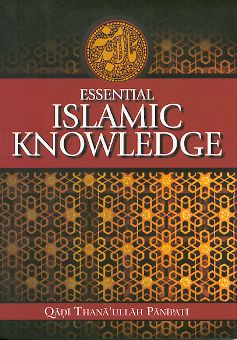
For fiqh the books Bashti Zewar/Heavenly Ornament or Essential Islamic Knowledge (A handbook of Hanafi fiqh by Qadi Thanaullah Panipati, Allah have mercy on him) are fine.

For determination motivation is required. This is gained by being in good, pious company or reading from the books of or about pious. The Path to Perfection by Shaykh Masihullah (Allah have mercy on him) is a good book to start. Also posts on this site are a selection from these kinds of books. Try to read a couple of them daily.

Min fayuzaat e sayyidi wa sanadi damet barkatahum

Asceticism

____________

Our master the Prophet Of Allah Jesus, Son of Mary (on whom be peace), said:

‘The world is a Bridge,

pass over it,

but build no houses upon it.

He who hopes for a day, may hope for eternity;

but the World endures but an hour.

Spend it in prayer for the rest is unseen.’

Written on Buland Darwaza, Fatehpur sikri.

The two wings of Tabligh

____________

Shaykh Mawlana Mohammad Manzur Nomani (Allah have mercy on him) wrote to a disciple,

‘The vigilance in remembrance (dhikr), contemplation (fikr) and spending time alone with Allah (khalwa) is decreasing in those associated with Tabligh. This is a dangerous development. There are two wings (needed) for Tabligh. First is  the effort and striving among the public. The other is having a very special relationship with Allah. It is essential to maintain a balance between them.’

Meyray Shaykh meyray Hazrat Mawlana Mohammad Manzur Nomani ra by Shaykh Qutubud-deen Mullah db, page 38

Spiritual workout

It is a hallmark of Ashrafiya teachings to keep the things at their appropriate level in the hierarchy of Shariah rulings. An overemphasis on an issue can make it bida’ (innovation). Whereas, an underestimation can lead to loss of significant benefit.

There seems to be this kind of controversy regarding certain specific methods of remembrance and concentration techniques in Tasawwuf.

Understanding by means of example may make the issue a bit clearer.

Following extract is taken from an athletic training website,

‘Most of us enjoy watching professional athletes, at the peak of their performance, participate in their sports. Practicing a sport effectively demands a high degree of skill and requires the ultimate in physical fitness. This can only come about with regular training.

A professional athlete will need to plan a daily workout schedule so that they peak at their top performance on the day of the competition. This requires a carefully thought-out regime of cardio workouts, strength training, and stretches; along with strategic rest periods interspersed so that the athlete arrives at the day of the event perfectly trained but not over trained or under trained.

Exercise logs are how they keep track of all the details of their workouts each day. They include information such as the type of workout, the duration and the intensity. This not only keeps them on track to meeting their overreaching goals, but it also helps to motivate them because they can see in writing every day that they are making progress, which is encouraging.’

Months and years of such dedicated effort is needed to achieve the goal.

A spiritual seeker’s goal is to attain the absolute pleasure of Allah.

This can only be achieved by doing what is required and abandoning what is restricted by Shariah. This is his competitive event. It happens multiple times during the day each day of his life. This sounds simple. However, due to lack of knowledge, proper upbringing and regular guidance, corrupt social and financial influences and complicated life styles a overwhelming heedlessness has  developed in us that makes this task practically very difficult. Especial effort and extensive reprogramming of mind is required.

To face these challenge the pious Sufi masters developed spiritual workouts. These are the Sufi forms of remembrance (dhikr), concentration techniques (muraqaba and ashgals) and repetition of various prayers, litanies or actions in certain specific ways. They are not the goal or objective in themselves. They are a means to create the determination, motivation and strength to implement Shariah rules at each and every moment of one’s life. It is futile for this reason to search for an explicit source from Quran and Hadith literature to approve of them. They are neither considered to be more rewarding nor superior to the acts mentioned in Quran and Sunna.

Moreover, it is unnecessary to discuss these issues in public. All of the spectators are focused on the performance of the athlete in the arena. None cares what type, how much or how extensive his routine workout was during his training? The serious athlete need to follow their coach’s recommendations. Sporadic following of such workouts by enthusiastic individuals is futile to bring about the desired results.

Meticulous following of Sunna and abstaining from all that is sinful (actions and thoughts) are the gold standard to measure an individual’s success in attaining the pleasure of Allah.

Million times repetition of the Supreme Name (Allah) with jahr o zarb or habs e dam, vigilant pas anfas, hours of muraqaba or months of khalwah, recitation of litanies, singing qasaid, etc are of no benefit in reality if the above mentioned gold standard is not achieved.

Wa ma taufiqi illa billah!

Alchemy!

Shaykh Mawlana Mohammad Manzur Nomani* (Allah have mercy on him) wrote to a disciple,

‘Considering his action to be of inappropriate standard to be presented to Allah, crying on it and making repentance for the shortcomings in it makes a deficient act of worship worthy of acceptance.’

Meyray Shaykh meyray Hazrat Mawlana Mohammad Manzur Nomani ra by Shaykh Qutubud-deen Mullah db, page 42

*Author of Ma’arif ul Hadith, an authority on deviant sects (especially Baraelwis) and editor of monthly Al-Furqan was a khalifa of Mawlana Abdul Qadir Raipuri. He also benefitted from suhba of Shaykh Mawlana Wasiullah Allahabadi.  He was born in 1323H/1905 and passed away in 1417 H/1997. Allah have mercy on them all. Amin!

He gave ijazet e bayah to two individuals only. Al-Haaj Qutubud-deen Mulla in Balguam, Karnataka,  & Hafiz Mohammad Iqbal in Gonda, UP. May Allah preserve them.Amin!

The spiritual light

In the final chapter of his primer on Hanafi fiqh Shaykh Qadi Thana’ullah Panipati (Allah have mercy on him) [d. 1225 H/1810 CE] said,

‘The spiritual light of Islam or the Messenger of Allah, may peace and blessings of Allah be upon him, should be sought in the breasts of the true ascetics so that that light may be kindled in your own heart.

When this light enters you, you will be able to recognise, through your faculties of discernment, all good and evil.

One becomes a stranger in this temporal world and is transported to the next world through one’s constant remembrance of Allah.

One begins to seek the company of others who cause one’s love for this world to decrease, and one’s love for Allah and the next world to increase.’

Essential Islamic Knowledge: A Handbook of Hanafi Fiqh, page 256

اکابر دیوبند کی خصوصیت: تواضع،فنائیت اور للہیت

————————————

سیدی و سندی حضرت مولانا محمد تقی عثمانی صاحب مدظلہم العالی نے فرمایا

اگر صرف وسعت مطالعہ، قوتِ استعداد اور کثرتِ معلومات کا نام علم ہوتو یہ صفت آج بھی ایسی کمیاب نہیں لیکن اکابر دیوبند کی خصوصیت یہ ہے کہ علم وفضل کے سمندر سینے میں جذب کرلینے کے باوجود اُن کی تواضع،فنائیت اور للہیت انتہا کو پہنچی ہوئی تھی۔ یہ محاورہ زبان زدِ عام ہے کہ ”پھلوں سے لدی ہوئی شاخ ہمیشہ جھکتی ہے“ لیکن ہمارے زمانے میں اس محاورے کا عملی مظاہرہ جتنا اکابر دیوبند کی زندگی میں نظر آتا ہے اور کہیں نہیں ملتا۔

اکابر دیوبند کیا تھے؟

———————————

Whom to follow?

_____________________

Imam al-Ghazali and the signs of the ‘Ulama

____________________

A considerable confusion exists among the Muslims regarding the religious leadership.

This is compounded by the plethora of religious information and instructors online.

Some people endorse scholars from a particular lineage, others from a particular ethnicity, fiqh following or no fiqh following and others look up to some families that their forefathers have been following  from centuries. Many recommend any scholar with a continuous teacher-student lineage (sanad) reaching up to our master Prophet Muhammad (Allah bless him and grant him peace.)

However, the confusion remains.

The most beneficial information in this regards is the one being presented in the above article. It expounds on the qualities a true scholar must have.

Shaykh al-Hadith Mawlana Zakariyyah (Allah have mercy on him) quoted this in Fazail -e-Sadaqat, from ‘Proof-of-Islam’ Imam Ghazali’s (Allah have mercy on him) epic work Ihya al-Uloom ad-Deen, volume 1.

Realizing its benefit Mawlana Mazoor Nomani (Allah have mercy on him) published it in a seprate booklet (Ulama-e-Akhirat ki pehchan, (Urdu) Al-Furqan book depot,Nazeerabad, Lucknow).

It is fortunate that Mawlana Ismael Nakhuda khalifa of Shaykh Mawlana Abdul Hafeez Makki (Allah preserve them) translated and edited this for the benefit of English speaking masses. Allah reward him abundantly. Amin!

Following is a brief summary of the qualities. Careful and repeated readings of the full article in highly recommended to understand and apply this important information in our daily practical life.

1.  An ‘alim is one who does not try to acquire wealth through his learning.

2.  A true ‘alim is that there should be no contradiction between his knowledge and his practice of din.

3.  He is always concerned with such branches of knowledge that are beneficial for the hereafter and which exhort one to perform good deeds.

4.  He is least interested in the elegance of dress or delicacies of food.

5.  He (without any necessity) keeps away from sultans and rulers, and never visits them.

6.  He does not take hasty decisions when giving verdicts in religious law (fatwas) and is very careful in giving advice on religious matters.

7.  He is seriously interested in the esoteric science, in other words Suluk.

8.  His faith and belief in Allah Most High is ever increasing and they are always concerned about this — firm belief is [a believer’s] capital.

9.  Under all conditions, he should wear a true expression of being inspired with the fear of Allah Most High.

10. He is more concerned about those regulations of Islamic law which pertain to religious practices; to what is lawful and unlawful.

11.  He has studied, with deep insight, various branches of knowledge. He does not accept the opinions of others, for we are bound to follow the Messenger of Allah (may Allah bless him and grant him peace) and seek guidance from his sayings alone

12. He is strict and stringent in his avoidance of bid’ah (innovations).

Continue reading……………………..