Category Archives: C. Blame worthy Morals

The bad moral characteristics that have to be removed from within ourselves

Allah’s mercy in His displeaure!

Shaikh Mufti Mohammad Hasan (Allah have mercy on him) said,

‘By committing sinful activities an individual harms himself alone. This is the reason for Allah being displeased with these transgression.

There is mercy in Allah’s displeasure for what is harmful for an individual.

Acknowledgment and contemplation of Allah’s mercy creates His love. This love facilitates activities that please Him. This leads to the blessings of His pleasure and proximity.’

Al-qawl al-Aziz, page 25

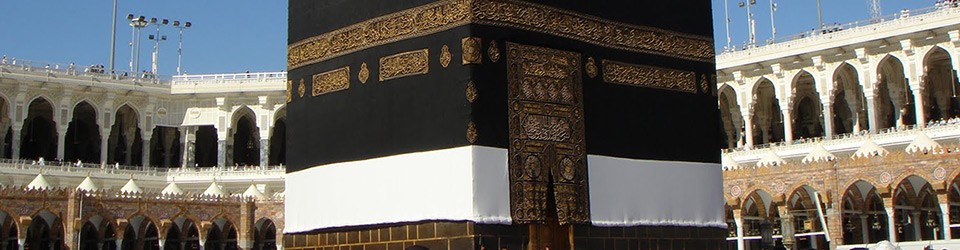
Jeddah

Time management


 – Go to sleep right after Isha salaat and wake up in tahajjud. Complete all your reading and writing tasks at that time. That has been the routine of our akaabireen.

– Never attend any gatherings after 9 pm. If there is a gathering at your place, make sure its ends before 9!

– He further said that nowadays most of the gatherings are not segregated so one can easily apologise the host beforehand for not being able to attend it. Secondly, one could very well visit earlier, give a present and politely inform the host why they needed to leave.

The biggest ‘calamity’ that has befallen the urbanites is this day and age is that they have stopped sleeping early, and the misfortune (be-barkati) this produces in one’s life, and time, is clearly evident in our messed up daily routines.’

musaafir-e dasht

Dealing with marital conflicts

Shaikh Mawlana Yusuf Ludhyanawi shaheed (Allah have mercy on him) said,

‘A pious man wrote to his Shaikh the complaints about her wife in detail and requested advice on how to deal with this situation.

The Shaikh replied that, how can an individual who can not be patient on the (mental & emotional) afflictions caused by his wife claim to be superior to her?’

Narrating an incident of a friend Shaikh said,

One day I became fed up of this continuous bickering between my wife and myself and approached Shaikh Arif-billah Dr. Abdul Hayy Arifi (Allah have mercy on him). I told him that I am tired of this situation. I am short tempered and my wife is more short tempered than me. Patience and forbearance is totally lacking in both of us.  Please, guide what should I do?’

Shaikh Arif-billah used to be very succinct in his replies. He avoided lengthy talks. He listened carefully and recommended,

‘Make the traffic one-way.’

That is, let her speak and you remain quiet.

I did as instructed and the situation became better.’#

‘….. In summary in regards to the eccentricities of their spouses men should have forbearance. They should try to improve (islah) them as much as possible and leave the rest to Allah.’*

Momin aurat, # page 43, * 42

Signs of arrogance

The arrogance (kibr) means that an individual considers himself superior to others regarding the excellent (and desired) qualities. 

It is expected that when an individual has such an allusion about his grandeur the nafs bloats up and starts to manifest the signs (of kibr). They include,

1. Trying to be ahead of everyone while walking with others.

2.  Preferring to be seated in a prominent place in a gathering.

3. Looking down on others with despise.

4. Being angry if others do not initiate to greet and welcome.

5. Being upset if others do not respect him/her.

6. Being visibly annoyed if others offer advice (nasiha).

7. Not accepting the truth even after being convinced.

8.  Looking at the general public as though they are donkeys.

Allah save us all from these.(Amin!)

Taharat e qalb, page 165

Blame worthy morals

.

‘The strongest impediment in receiving the spiritual blessings from the Most Merciful (al-Rehman) is the defilement of the heart (qalb) with the blame worthy moral characteristics.

The pious precedent mentors gave foremost priority to the cleansing (tazkiya) of these blame worthy morals.

Moreover, if in an individual even after traversing the various stages of this path (sulook) the special blessings do not appear it would definitely be because of the remaining traces of these blame worthy moral characteristics in him.’

Halaat e Muslih al-Ummat ra, volume 3,  page 86

Setting priorities


The initial instruction given to the seekers by the khalifa of Hakim al-Umma Shaikh Mawlana Shah Asadullah (Allah have mercy on them) have been published in ‘Asa’ad ut-Talibeen’.  

They include;

Completion of qaza salah and fasts, performance of the fardh Hajj and emphasis on payment of zakah.

Moreover, abstaining completely from back-biting (ghiba), foul language, loose talking and purposeless interminlgling with others.

Reading the books of Hakim al-Umma Mawlana Ashraf Ali Thanawi (Allah have mercy on him).

Performing each salah meticluously in first row with the opening takbir along the Imam’s.

The following issues were especially instructed,

1. Keep the dealings (with others) very clear.

2. Do not cause any discomfort and harm to others

3. Do not interfere in the matters of others unnecessarily.

4. Take account of yourself (nafs) daily. Be thankful for the good deeds and repent on the mistakes.

5. Never ever be satisifed with yourself (nafs). Always watch over your outward and inner actions.

6. Follow the instructions given and the ma’amolaat.

7. Keep (the Shaikh) updated about your state and condition.’

Akse-Jameel ra, page 201-2

Focus on others or self?

.

Sayyidi wa sanadi Shaikh Mufti Mohammad Taqi Usmani (Allah preserve him) said,

‘Focusing on the defects of others makes an individual incognizant of his own deficiencies.

All are ready to criticize others and find the faults. But never ever pay any attention to their own defects.

Today we should analyze this attitude of ours. That is, when we are criticizing others does a feeling of self appraisal arise in us. Do we ponder about our deficiencies?

If we do then why don’t we try to get rid of them.’

Mojudah halaat aur hamari zimaydari


Leaving argumentation

The Prophet of Allah (blessing and peace of Allah be upon him) said,

‘An individual who is on untruth but abandons argumentation and squabbling (by accepting the truth) for him a house will be constructed in the periphery of the Paradise. Whereas, for the individual who is on truth but abandons confrontation and argumentation (He acknowledges that the opponent is not accepting, the time is being wasted and he is fears possibility of blameworthy morals to be be stirred in his nafs) a house will be constructed in the center of the Paradise. (That is certainly superior to the one located in the periphery.) And for the individual who has the best morals a house will be constructed in superior most part of the Paradise.

This is reported in (Sunan e) Tirmizi.

It has been observed that most of the pious in spite of being on truth circumvent the contentious issues and prefer to remain silent when someone squabbles or confronts them. The rationale for this is referred in the Prophetic saying (hadith) translated above.

This attitude (of leaving all argumentation) appears to be desired (characteristic ) as per this hadith.’

Basair e Hakimul Ummat ra, page 577-8

The path

.

Shaykh Jalaluddin Thanesari (Allah have mercy on him d.989 Hijra) instructs,

‘Understand that the beginning of this path is Shariah. Therefore, all essential (fardh), recommended (wajib), Sunna, praiseworthy (mustehib) and etiquette (adab) actions are to be performed. Moreover, avoiding in food, residence and personal being all that is impermissible, suspicious, and of minor or major impurity. This is called purity of physical being. This is all Shariah.

Then comes the path of tariqat. This is to keep one’s heart free of the blame-worthy morals, such as love of the worldly, lust, envy, hatred, arrogance, greed, misery,etc. In addition adorning it with praise-worthy morals, like truthfulness, purity, humility, philanthropy, chivalry, trust, sincerity, best manners and trustworthiness in dealing with fellow human beings (etc.). This is called revolution (gardesh) and changing of morals. Acknowledge that this is a magnanimous feat. This is because without it the real wealth of deen is not achieved and traveling on the path of truth is impossible. Moreover, this feat requires keeping the lowest profile and maintaining seclusion, so that these actions become well established without failures.
سخن باكس مگو الا بضرورت
خلل تا در نيفتند در حضورت

After this comes the path of reality (haqiqah) and realization (marifa).’

Irshad ut Talibeen, page 9

2nd AfME Pneumococcal Summit
Dubai, UAE 12-13 April 2011
Passing on the reward to Akabir

.

A spiritual aspirant wrote his occassional routine of distributing food to the needy and forwarding its reward (esal e thawab) to the senior Sufis of the tariqa.

Hakim al-Umma Hadhrat Mawlana Ashraf ‘Ali Thanawi (Allah have mercy on him) replied,

“This is a reward earning act. However, in doing so the intention should not be to gain spiritual benefit (faiz) from the blessed souls of these pious individuals.”

Tarbiyet us Salik, volume 1, page 436

Most likely this is because it is against sincerity (ikhlas). It is just like giving a gift to someone with the intention that he will repay in kind or more.