Category Archives: C. Blame worthy Morals

The bad moral characteristics that have to be removed from within ourselves

Ever lasting spiritual struggle

Hadhrat Hakim al-umma Mawlana Ashraf ‘Ali Thanawi (may Allah ahve mercy on him) said,

“Hardship persists in performance of good deeds.  It is because these actions are against the desires of the lower self (nafs). The lower self essentially tries to fight them off. This  may be a minor or a major battle. Hence, it remains essential to act against the desires of the lower self by doing spiritual struggle (mujahida) life long.

This is true both for the novice (mubtadi) and the one who has arrived (muntahi). Both of them have to face the opposition of the lower self some time or another, either in  form of laziness in performance of good deeds or indulgence in a sin. Novice gets into it a lot and the muntahi a little. In order to prevail in this battle it is essential for both of them to engage in spiritual struggle (mujahida). ”

Basair al-Hakim al-Umma, page 164-5

Related: Spiritual struggle

Blessings and three kinds of sufis

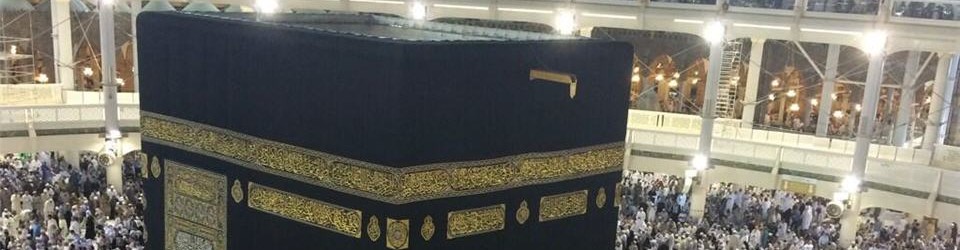
The nikah ceremony in Masjid al-Haram’s coutyard behind the rukn e yamani conducted by Hadhrat Mufti Mohammad Taqi Usmani ( may Allah preserve him) was simple.

In addition to numerous pilgrims and guests, Pir Zufiqar Ahmad Naqshbandi and Hadhrat Mansoor Ali Khan (may Allah preserve them) were among the audience.

Afterwards there was a reception in one of the five star hotel ballroom in front of the holy Haram. The arrangements were lavish. The food was delicious, plentiful and in variety.

Seeing this arrangement Hadhrat Mufti Mohammad Taqi Usmani (may Allah preserve him) said,

“It is in these settings the difference between a novice sufi, a sufi who has attained ma’rifah and a sufi who is deficient can be seen.

The novice (mubtadi) sufi devours the food and enjoys the luxuries for the pleasure of his own self (nafs).

Whereas, the one who is realized (muntahi) sufi considers these luxuries to be a blessings and benevolence of the real Provider (جلا جلاله). He partakes of them feeling obliged and thanks his Lord abundantly.

The sufi who is deficient considers these to be blame-worthy extravagance and indulgence in worldly luxuries and tries to spoil them before consuming. For example adding water to dilute the most delicious curry, etc. His sight is still on the material things themselves and not on their Creator and Provider (جلا جلاله). ”

(Makkah e mukarramah, 26th Sha’ban 1428/8thSeptember 2007, After ‘esha)

Stop indulging in sin!

For treatment of most of the spiritual maladies Hadhrat Nawab Eshrat ‘Ali Khan Qaiser (may Allah preserve him) usually recommends,

“To make an intentional effort in suppressing the desire of indulging in sin using one’s determination and abstaining from it completely.”

If a seeker does not do this, that is, make an intentional effort using his determination all other things (dhikr, shugal, etc.) will fail. Therefore, this enforcement of one’s determination and volition, which is the real treatment, should never be abandoned in hope of acquiring some magic remedy that will cause us to stop sinning by itself without making any effort at all on our part. (Because this is impossible).

Halat e Eshrat wa maktubat e Masih al-Umma, page 55

This is the essential (fardh) struggle (mujahida) for a seeker!

How to protect the eyes from unlawful?

A sincere individual requested advice of our pious elders on how to protect the eyes who have become used to seeing the unlawful.

Following information was compiled,

MashaAllah, you are aware of the problem. That is the most important step towards its elimination. Do not despair.

Ask advice from your Shaykh also. Follow it thoroughly. If you can not be consistent with his recommendation and God-forbid slip, tell that also to the Shaykh. InshaAllah, eventually you will succeed.

Effective things in protecting the eyes that come from our akabir are,
1. Firm determination not to indulge in unlawful.
2. Abstaining from the sources where it may come. Mixed gathering, magazines,
internet.
3. Making repentance immediately if you slip.
4. Making it essential on yourself to pray at least 8 units (ra’akat) of nafil as penalty (jurmanah) for each episode.
5. Making lot of suplication. Ask, beg and plead, O Allah! I want to abstain, I am weak, please, give strength in my determination and help me.
6. Asking your Shaykh and other pious Muslims for prayers (dua).
7. Never give up.
8. Effectively managing your time, so there is no waste of it in useless or sinful. For this a practical daily time table is essential.
9. Being consistent with your daily wird as prescribed by the Shaykh.

May Allah give me and you the tawfiq of abstaining from all that is sinful and make us His true slave . Ameen

Karachi: Heat, rain and no electricity

All are complaining about the excessive heat, the torrential rains and no electricity in Karachi these days. No doubt the conditions are very tough and depressing.

The most important question for us is, how should a salik act in these condition?

The simple answer is, by turning to Allah.

Asking Him for help in removing these difficulties.

Acknowledging our lack of gratitude when the conditions were smooth.

Being patient. That is, recognizing that these calamities are from Allah and He is al-Hakim and al-Hakeem. It has for sure many benefits in it for us, we may not be aware of them. However, to gain His pleasure in accordance with His commands and the Sunna of His beloved (may Allah bless him and give him peace) we are being patient.

Acknowledging our feeble, weak condition and sole reliance on Allah in getting rid of them.

Asking Allah to make these difficulties an atonement for our wrongdoings and sins.

Reminding ourselves of the numerous other bounties of Allah that we possess even now.

Not to discuss these issues in a tone or style that may give the impression of complaining that Allah has been unjust at causing suffering to me.

These are the teachings of Hadhrat Mawlana Taqi Usmani (may Allah preserve him) and high-light how Tasawwuf is practiced in everyday life of a person.

Allah alone gives success.
Things to do when angry

Hakim al-Umma Hadhrat Mawlana Ashraf ‘Ali Thanawi (may Allah have mercy on him) advised the following to a spiritual aspirant for facilitating control over actions done in anger,

“1. To remove one’s self from that site

2. Recite اعوذبالله من شيطان الرجيم

3. Drink water

4. Immediately get involved in some work

5. Forgive the perpetrator reminding yourself of Allah’ power (Qadir), your own sins, fear of punishment and desirability of forgiving.”

Tarbiyet us Salik, volume 1, page 346

Am I a salik?

A spiritual aspirant inquired, ‘I question whether am I a traveler (salik) on the path or not?’

Hakim al-Umma Hadhrat Mawlana  Ashraf ‘Ali Thanawi (may Allah have mercy on him) replied,

” This question is from the sub-sections of arrogance (kibr). It is arrogant to consider one’s self to be outstanding. Similarly, holding an assumption of be being from the outstanding is also arrogance, which is the basis of asking this question. You should repent and continue with your work. (Leave it for Allah’s decision) to make you a traveler on the path or keep you a non-salik.”

Tarbiyet us Salik, volume 1, page 360

Embarrassment infront of Shaykh

Many seekers feel embarrassed discussing their sinful conditions with their Shaykh. This should not be the case. Shaykh-disciple relationship is similar to the physician-patient liaison. In both of them it is essential that the disciple or the patient is open, truthful and precise. This an absolute requisite for obtaining any benefit from these relationships.

Hadhrat Mufti Mohammad Taqi Usmani (may Allah preserve him) says,
“This Shaykh-disciple relationship is not an ordinary ritualistic practice. One should have firm conviction and trust in the Shaykh that he is the best person to make the correct diagnosis of my spiritual ailments and considerately prescribe the best treatment for my circumstances.” (Dastoor al-‘amal, 1)

It is arrogant and deceitful to hide one’s real condition from Shaykh.

How to Stop seeing the prohibited?

A spiritual aspirant wrote,

“At times of having the opportunity of casting lustful glances I remind myself that if I am able to save my eyes from seeing the prohibited it will be a grand miracle (karama). In fact it will be million times superior to any super natural feat.  I also recall the saying from the ‘Awarif (ul ma’arif) that Allah asks us to be steadfast (isteqama, on His commands) and we are anticipating for miracles (karama) to happen. All praise to Allah, with His support I am able to save myself easily (from casting lustful glances).

Please, approve of these thoughts.”

Hakim al-Umma Hadhrat Mawlana Ashraf ‘Ali Thanawi (may Allah have mercy on him) replied,

“These thoughts are absolutely correct. May Allah increase and bless your knowledge and understanding. ”

Tarbiyet us Salik, voulme 1, page 225

Ostentation

Hakeem al-Umma Hadhrat Mawlana Ashraf ‘Ali Thanawi (may Allah have mercy on him) said,

“Pious elders have stated that as doing some thing (primarily) to please others is ostentation (riya), similarly abandoning an action for same reasons is also ostentation.”

Tarbiyet us Salik, volume 1, page 349

Allah save us from it! Ameen.

Be thankful!

Grand-Shaykh Hadhrat Haji Imadadullah mohajir Makki (may Allah have mercy on him) said,

‘Most of the individuals (traversing the path) remain devoid (of the ma’arifa) because of being unthankful. They complain that we do excessive remembrance (dhikr) and spiritual exercises (shugal) but derive no benefit.

Whereas, in reality, being busy with Allah and His remembrance is a huge blessing in itself. If Allah would not have attracted (jazeb) you towards Himself would it had been possible for you to make His remembrance?

A slave (‘abd) should maintain his slavehood (bandegi), and (remember that) Allah is the Master with absolute authority. ‘

Shama’im e Imadadiya, page 89

Backbiting

Hakim al-Umma Hadhrat Mawlana Ashraf ‘Ali Thanawi (may Allah have mercy on him) instructed a disciple,

“A novice (mubtadi) spiritual aspirant should not engage even in backbiting (ghibah) that may be permissible.”

Tarbiyat us Salik, volume 1, page 317