Category Archives: C. Blame worthy Morals

The bad moral characteristics that have to be removed from within ourselves

Correcting others

A mureed wrote about his excessive anger on non-Islamic actions committed by his family members. This was causing lot of frictions between the relatives.

Hakim al Umma Hadhrat Mawlana Ashraf ‘Ali Thanawi (may Allah have mercy on him) adviced him,

“It is the responsibility of a mentor or a leader to hold those under his supervision accountable for their actions. You are currently busy in your own reformation (islah) and should not have time for all of this. It is inappropriate for you to interfere in anyone’s affairs.”

Tarbiyat us Salik, volume 1, page 57

Remedies for spiritual ailments

Hadhrat Mufti Mohammad Taqi Usmani (may Allah preserve him) said,

“Hakim al-Umma laid great stress on prescribing proper remedies for the spiritual ailments of people. This cure was not to give them some sort of medicinal syrup or to engage in (recitation of) some formulas (wazifas), but his prescribed remedy comprised action (either physical or via thought).”

Irshadat-e akabir 25, The Path to Perfection, page 142

Committing A Sin Doesn’t Decrease Desire for It

Hakim al-Umma Mawlana Ashraf ‘Ali Thanawi (may Allah have mercy on him) said:

“Committing a sin thinking it will decrease [or eliminate] the desire for that sin [in the future] is a deception of Satan.

Yes, the desire will decrease temporarily, but the faculty and power of committing sin will be strengthened [in the long term], resulting in the eradication of sin becoming (difficult) beyond one’s power and strength.”


Source: An excellent new blog;
at-Talib
Resources for the Seeker of Knowledge

Avoid causing inconvenience to others

Hakim al-Umma Hadhrat Mawlana Ashraf ‘Ali Thanawi (may Allah have mercy on him) once said:

The sum total of good character is to avoid causing inconvenience to anyone.

The Messenger of Allah sallahu ‘alayhi wasallam forbade anyone from lifting (hiding) the stick (such as a walking stick) of his Muslim brother even if it is out of jest, for this would cause him distress.

Making people laugh at the expense of others is also prohibited due to the embarrassment and inconvenience it may cause.

Source:

Pearls of the Elders:an excellent blog. Excerpts from the biographies, sayings and writings of the ‘Ulama of Deoband


Come leaving the arrogance, prepared for humiliation

An individual wrote a letter requesting permission for visiting Hadhrat Hakim al-Umma Mawlana Ashraf ‘Ali Thanawi (may Allah have mercy on him) for self reformation (tazkiya).

Granting permission Hadhrat told him (this will be achievable) only if he comes leaving behind all arrogance and prepared to receive all kinds of humiliation.

Tarbiyat us Slaik, volume 1, page 91

Treatment of unintentional thoughts

A salik wrote: While I am reciting my daily wird, thought comes to my mind that if someone saw me doing this what would he think. Is this riya (ostentation)?

Sayyidi wa sanadi Hazrat Mawlana Mohammad Taqi Usmani sahib db replied:

“If you abandon your wird, acting on this thought then this will be riya.

However, if you continue the recitation then there is no sin (riya) in these unintentional thoughts.

This is the treatment for these unintentional thoughts. That is, not to pay any attention to them. Ignore them and renew your concentration towards the wird.”

Islahi khutoot

Love of the material things (hubb e maal)

Sayyidi wa sanadi Hazrat Mawlana Mohammad Taqi Usmani sahib db said;

“The meaning of being devoid of love of material things (hubb e maal) does not imply that one abandons means of livelihood, or distributes his residence and belongings among others. (That is, get rid of all material things.)

The desired level in love of material things can be achieved by acting on the following:

1. A definite resolution that I will not earn a single penny by any impermissible means.

2. A firm determination not to spend any amount on any thing impermissible.

3. Being thankful (to Allah SWT) for all the material blessings provided by Him.

4. In addition to the wajib (essential) charity, give in the way of Allah SWT. The best way to do this, as practice by pious elders, is to allocate a portion of your earnings for this purpose, for example five percent or ten percent of the total earnings. Hazrat Hakeemul Ummat ra used to give twenty percent of his income in this charity.

Malfoozat Kebriyet e Ahmer, (compiled by Dr. Syed Abdul Qadir Ahmer sahib in 1991) number 13
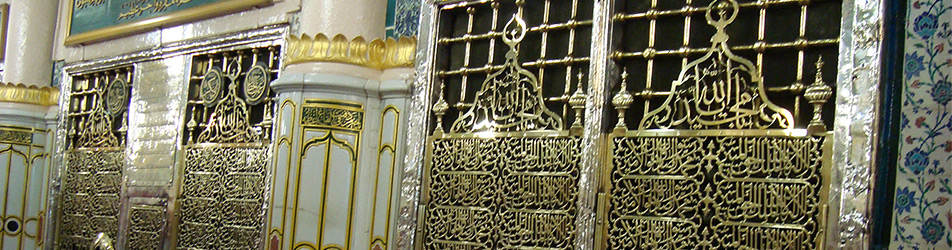
Grumbling in Hajj

Hazrat Hakeemul Ummat Mawlana Ashraf Ali Thanawi ra said:

One of the reasons of being upset in Hajj journey is that one considers himself to be of higher status (i.e. takabbur). In journey when something occurs that they consider below their eminence (e.g. traffic jam, delay in food, etc.) they get upset and start grumbling.

If everyone effaced himself, forgoing his ego, desires and status, and considers himself to be a khadim (one who provides service to others) none of these will happen.

Waaz: Hajj al mabroor,Khutbat e Hakeemul Ummat ra, volume 17 Sunnat e Ibraheem, page 263-4

Religious arguments

A mureed wrote;

“One of my colleagues often talks to me regarding the futility of taqleed, dishonesty of scholars, etc. He wants to argue. I usually listen to him silently, without replying.

Sayyidi wa sanadi Hazrat Mawlana Mohammad Taqi Usmani sahib db replied;

“This is most appropriate attitude. One should abstain from arguing as much as possible.”

The mureed continued;

“However, if his speech crosses the limit, I reply.”

Sayyidi wa sanadi db replied;

“This should also be very brief.

However, if at any time you feel that he wants to know the truth genuinely then going into details won’t be detrimental.”

Islahi khutoot

The worldly that is not blame-worthy!

Hakeemul Ummat Hazrat Mawlana Ashraf Ali Thanawi ra said while commenting on the verse 13 of surah as-saff [:And (He will give you) another (blessing) which ye love: help from Allah and present victory. Give good tidings (O Muhammad) to believers], said;

“Seeking those wordly things by which one gets assistance in his religion is not blame worthy”.

Masail us Sulook min Kalam Malik ul Muluk, page 510, Idarae Islamiyat, Lahore

Jihad

kahaf

Discussing the ayah:

و جاهدو فى الله حق جهاده :الحج 78

Hakim al Umma Mawlana Asharf Ali Thanwi (Allah have mercy on him) enumerates the different types of stuggles (mujahida) encountered in tasawwuf.

“Jihad bin Nafas. That is, to purify it by fulfilling the rights of one’s own self and abandoning the (extravagant & sinful) pleasures.

Jihad e qalb. That is to cleanse the qalb/heart (of all impurities and whatever that is other than Him] and detach it form all the attachments of both the worlds (i.e. here & hereafter).

Jihad e ruh. That is, to achieve fana (annihilation) of the self (desires, suggestions, planning, expectations, etc).”

Masail us sulook min kalam Malik ul mulook, page 364

Disgusted by Tawheed

Hazrat Hakeemul Ummat Mawlana Ashraf Ali Thanawi ra mentioned in relation to the verse 45 of surah al-zumar (39):

و اذا ذكر الذين من دونه اذا هم ستبشرون 

[45. When Allah, the One and Only, is mentioned, the hearts of those who believe not in the Hereafter are filled with disgust and horror; but when (gods) other than He are mentioned, behold, they are filled with joy! ]

“Similar to it is the condition of some ignorant claimant of tasawwuf. That is, at the mention of pure/authentic tawheed they are sickened. And (are delighted to) do istigatha (calling for help) with awliya.”

Masail us Sulook min Kalam Malik ul mulook, page 468

Tawheed is one of the essential muqamat (stations) in Tasawwuf.