Category Archives: C. Blame worthy Morals

The bad moral characteristics that have to be removed from within ourselves

Deadly Prevalent Sins

Sayyidi wa sanadi hazrat Mawlana Mohammad Taqi Usmani sahib db told us;
There are two extremely deadly sins very much prevalent in our days.
Even the seemingly religious individuals pay little attention to avoid these.
They are:
1. Sins committed by tongue. That is, engaging is lying, back-biting, vulgar or useless speech.
1. Inappropriate use of eyes. That is, seeing the prohibited (na mahram): lustful glances.
Special effort has to be made to abstain from them completely.”
Ramadan 1426 discourses

Etiquettes of being a Civilized Individual

The rulings of Shariah have been broadly classified into five categories. They are:
1. those related to the beliefs (‘aqaid)
2. those pertaining to the forms of worship (‘ibadaat)
3. those related to the mutual financial transactions (ma’amlaat)
4. those associated with manners of civilized living (ma’ashrat) and
5. finally, those dealing with the inner morals (ikhlaq)

It is sad to see that most of us, Muslims, only consider a’qaid and ‘ibadaat to be the components of deen and are completely ignorant of the rest.

Few select practicing ones include ma’amlaat to be deen also.

Ikhlaq, all praise to Allah SWT is practiced by those involved in tasawwuf.

The Shariah ruling regarding how to live a civilized life is abandoned by most of us.
However, it is ironic that we brothers/sister who are involved in discussions of higher & lofty realities of Tasawwuf are disregarding the rights of fellow individuals. The fact remains true that the rights of fellow human beings (haqqul ‘abd) can not be forgiven by repentance alone. It require asking forgiveness from the aggrieved individual. Most of us are totally unaware of the rulings of Shariah pertaining to the etiquettes of civilized living. The extent of this ignorance is so great that enemies of Muslims regard Islam to be incompatible with the civilized world life. Post 9/11 western strategy is to modify Islam to make it civilized.Hakeem ul Ummat Mawlana Ashraf Ali Thanawi ra being the mujaddid high lighted the importance of these rulings in most of his discourses and writings. The most beneficial of these is a concise treatise “Aadab ul Ma’ashrat” (Etiquettes of Civilized living).
The importance of this book is evident by the fact that it is the first reading in the nisab e Tasawwuf (curriculum for salikeen) recommended by Hakeemul Ummat ra.
The basic principle underlying the rulings of civilized living is,
“My words, actions and attitude should not be the source of any discomfort or annoyance for fellow human beings at all.”
InshaAllah, quotes from this book regarding some important and common lapses in our every day (uncivilized) life will be posted here.
Allah SWT give us the tawfeeq. Ameen!
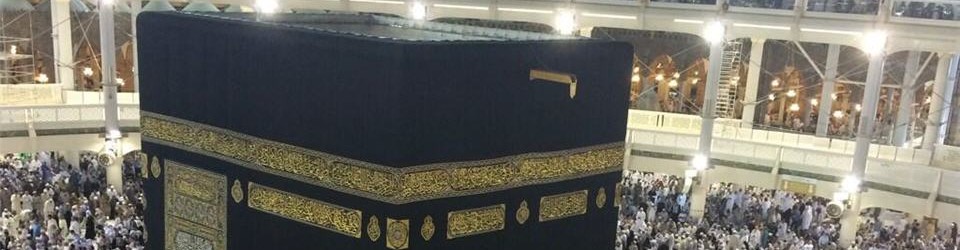
Lustful glances

Nothing happens without determination.

The real treatment of stopping from lustful glances is to think at that moment:

“Allah SWT is watching me now and on the Day of Judgment I will be questioned regarding this.

And if Allah SWT condemns me for punishment what will happen of me?”

By recalling this repeatedly again and again

one will attain success.

Therefore, make determination.

This is the only treatment.

Initially for few days there will be some hardship indeed,

but eventually,

inshaAllah, it will become a habit.

And then the gratification and peace

you will find in it can only be imagined of.

(Basair-e-Hakeemul-e-Ummat 369

Misfortunes: Consequence of sins or A Blessing in Disguise

Hakeemul Ummat Hazrat Moulana Shah Ashraf Ali Thanvi ra said:

A misfortune or difficulty resulting in increasing distress and anxiety is a consequence of sins.

Whereas, one which causes an increase in one’s relationship to Allah SWT and a enhancement in one’s submission and acceptance (of the Divine will) is not a trial or tribulation in reality.

Though, it may seem to look like it.

These seemingly trials & misfortunes are sometimes for elevating one’s status (in afterlife) and for testing one’s love.

Maasir e Hakeemul Ummat 390

Preventing Miserliness

Sayyidi wa sanadi Hazrat Moualan Mohammad Taqi Usmani sahib (Allah SWT preserve him and allow us to benefit from him abundantly. Ameen!) wrote to a aspirant seeking islah (self reformation);

To prevent one’s self from the slightest tinge of bukhul/miserliness (a devastating blame worthy moral trait) make it a habit of giving in charity a fixed amount each month. Regardless of how petty that amount may be.

Islahi khutoot

Bad Opinion about others

An aspirant wrote:

1. I get numerous bad-opinion thoughts (budgumani) regarding other people frequently.
2. I try to get rid of them and start thinking something nice about these people.
Is this appropriate?

Sayyidi wa sanadi Hazrat Moualan Mohammad Taqi Usmani sahib (Allah SWT preserve him and allow us to benefit from him abundantly. Ameen!) replied;

“1. There is no accountability for involuntary thoughts.
2. Indeed, this is its treatment.
Add to it a thought about any of the bad things regarding yourself.”

Islahi khutoot

Diagnosis of blame worthy moral trait

An aspirant wrote:

In the last weekly majlis (suhba) you spoke regarding hubb-e-jah (love of status & fame). I have this disease. I have started the treatment you had prescribed (to get rid of it).

Sayyidi wa sanadi Hazrat Moualan Mohammad Taqi Usmani sahib (Allah SWT preserve him and allow us to benefit from him abundantly. Ameen!) replied;

“How did you make this diagnosis yourself?
What are those specific things that you have thought to be of hubb-e-jah in yourself?”

Islahi khutoot

————————————————————————

This is a common mistake!
Only the Sheikh can make the diagnosis.
Mureed has to inform him about the signs and symptoms which are suspicious.
That are, the incidents involving specific behavioral and diseased thought processes which might be a manifestation of a blame worthy moral trait.
Based on these occurrences Sheikh makes the decision and prescribes a treatment.

Riya?

A spiritual aspirant wrote;

While reciting my tasbeehat (wird) I make sure no one sees me. I worry what they might start thinking of me as being devout. Is this riya (ostentation)?

Sayyidi wa sandi Hazrat Moulana Mohammad Taqi Usmani sahib (Allah SWT preserve him and allow us to benefit from him abundantly. Ameen) replied:

“If you abandoned the recitation of the tasbeehat based on these thoughts, it will be riya. However, if you continue the recitation despite these (involuntary) feelings then there is no wrongdoing.

The treatment of these thoughts is not to pay any attention to them and focus on your recitation.”

Islahi Khutoot

What to tell the Shaykh?

Hakeemul Ummat Hazrat Moulana Ashraf Ali Thanvi ra’s very special khalifa Moulana Shah Wasiullah ra said:

I do not look for how many raka’t of tahajjud you pray?
I am looking for how many of your blame worthy moral traits have been successfully treated.

People keep telling me regarding their virtuous acts.
As for the the blame worthy moral traits they acquire the following attitude:

وہ الگ باندھ کر رکھا ہےجو مال اچھا ہے
(The real stuff I have kept separately hidden)

Meaning they never mention any thing regarding these filthy moral traits, hypocritical attitudes (acting to be pious but in reality not being so ) and improper trust (on Shaykh. That is, hiding things from him).
Whereas, these are the very thing I need information about.
Because, your relationship with me is for islah (reformation). And islah (reformation) is done of these blame worthy moral characteristics. Hence, it is most beneficial to inform me regarding them.

Nevertheless, you mashaAllah, may also have few virtuous qualities. This is very good. But even if you do not mention them to me what will you lose. Indeed, hearing good things regarding you will make me happy and motivate me to make (special) dua for you. But remember this part is a secondary thing and not the original aim and objective (of islahi ta’luq).

Halat-e-muslihul Ummat page 310-11

The Islahi Correspondence between Mureed & Sheikh

This islahi/self-reformation correspondence is the vital cornerstone of sulook in our path.
–
Mureed writes about his state in regards to observance of Shariah, the wird prescribed, overwhelming thoughts and any questionable moral traits demonstrated in every day life in dealing with self and others. The Sheikh reviews it and diagnoses any ailments, if present and treats as appropriate.

To be definitely effective this has to be at regular intervals, usually once every month or fortnightly.

It is alchemy.

Recognizing its importance, nafs & shaytan try their best to put obstacles for doing it successfully. Mureed becomes lazy & slack, finding numerous excuses for not doing it. Even if he sits down to write a letter, he can not recall anything ‘significant’ to convey.

Once as similar mureed wrote to Sidi wa sandi Hazrat Moulana Mohammad Taqi Usmani sahib (Allah SWT preserve him & allow us to benefit from him a lot. Ameen!) that I can not bring to mind any thing to write in my letter.

Hazrat db replied:
“Writing even this, itself is sufficient.”

This is because; it keeps you in the habit of writing letters to the Sheikh, shows your concern and sincerity for self reformation, is an opportunity to request for dua and informs the Sheikh that at least you are not deteriorating and seeing your effort he makes special dua for you.
–
Hazrat db
also said;
“For mureed who do not have the opportunity to be in close direct contact with the Sheikh to discuss their states in person regularly, it is essential to have this islahi correspondence. The mureed and even the Sheikh who do not recognize this are committing a fundamental mistake in Tasawwuf (especially our tareeq/path).”

Useful Obnoxious Talk!

Arif-billah Hazrat Dr. Abdul Hayy ra said:
–
If someone talks obnoxiously to us, it becomes a therapy for the reformation of nafs. And when people call our names respectfully with grand titles attached it causes this nafs to grow fat (heedless). The obnoxious talk becomes a treatment for this fattening.

Sukoon-e-qalb 44

Method to abandon sins!

Sidi wa sanadi Hazrat Moulana Mohammad Taqi Usmani sahib db instructed a mureed:

Whenever the desire to sin arises, ask Allah swt’s refuge and pray for being saved from committing it.

After being successful in it by Allah swt’s tawfeeq(benevolence) be excessively thankful to Allah swt and continue to have firm determination (for abandoing sins). InshaAllah, with time the intensity of these desires will decrease gradually (for the one who is systemically & methodological involved in his islah).

Islahi-khutoot

Dunya?

Sidi wa sanadi Hazrat Moulana Mohammad Taqi Usmani sahib db said;

“These worldly goods, wealth, property and resourses are not duyna, per se. But, everything which causes you to be forgetful of Allah swt’s command and commit sin is dunya (blameworthy worldly).”
Islahi Majalis pg193/vol4

One has to get rid of this dunya to attain any t’aluq with Allah swt. As it has been mentioned in hadith, ‘the love of dunya is the source of all sins.’

To treat this disease effectively one has to undergo therapy under the supervision of a Sheikh.

The Sheikh usually advices the mureed to actively reflect about the temporality of this life, the everlasting life to come, death, conditions leading to it, the state of a sinner in the grave, the accountability to the angels Munkar & Nakeer, the situation of standing before the Allah swt and answering His questions on the day of jugment and the hell-fire. This is to be done daily for 3-5 minutes. After doing this for a while one has to get back to Sheikh, especially if one notices persistence of this dunya in his/her actions, so that the therapy may be maximized etc.

May Allah swt save us all from this reprehensible dunya. Ameen.

Trying to Correct Others!

Sidi wa sanadi Hazrat Moulana Mohammad Taqi Usmani sahib db said;

“Whenever one of us becomes increasingly religious his first priority becomes correcting other people. This similitude is that of a person with lethal cancer who is worried about some one else’s common cold. One who himself is severly afflicted (with muhlekat-e-nafs) never cares about other’s minor aliment. The problem is that we do not know our diseases as yet. Once we find out the deadly diagnosis all of these sermons for-others, hurting comments, slander and back-biting will disappear.”

For this diagnosis one has to approach the spiritual physicians/The Sheikh.