
Category Archives: D. Acts of Worship
محبت رسول اکرم صلی اللہ علیہ وسلم کی حقیقت


Essential tajweed

A murid informed sayyidi wa sanadi Shaykh Mawlana Taqi Usmani (may Allah preserve him) that these days he was taking classes with a Qari to improve his recitation of the Holy Quran. Shaykh was obviously very much pleased, highly approved of this effort and made supplication for its facilitation.
Reciting the blessed Quran properly is very much neglected by most of the Muslims in general. However, this can not be true for the seeker (salik). He has to try and achieve the best level possible in all acts of worship. This is the reality of truthfulness (sidiq), an essential spiritual charactersitic (maqam).
Hakim al-Umma Mawlana Ashraf ‘Ali Thanawi (may Allah have mercy on him) said,
“It is absolutely essential (fardh) to learn tajweed (that is, the science and arts of reciting the Holy Quran). This is so because the Holy Quran is in Arabic language and it is essential (fardh) to recite it in this language. The proper pronunciation and articulation of the Arabic text can not be achieved without tajweed. Hence, it is essential to learn it.”
(at-Tabligh, Tufa tul-Ulema, volume 1, page 487)
Further more he added,
“(In general) there are three subdivisions of this science,
1. Proper articulation of the (Arabic) letters, as much as possible.
2. Paying due attention to the places of pause (waqaf). It means that not to pause at places where there will be confusion and meaning will be changed by doing so.
These two are absolutely essential (wajib al-‘ain) for everyone.
However, a person who tries his best and fails to achieve them is excused (ma’zoor).
3. Paying due attention to the idgam, tafqhim, izhar wa iqhfa. This is recommended (mustehib).
Another fourth subsection of this is the knowledge of different styles of recitation (‘ilm al-ikhtilaf al-qirat). This is wajib al-kifaya on the whole Ummah.
Imadad la-Fatawa, Tufa tul-Ulema, volume 1, page 487.
However, it is important to recognize that tajweed can not be learned by reading books alone. It has to be systematically studied with a qualified teacher. Listening and observing how the pronunciation is done is essential and equally important is that the learner recites it back and the teacher either corrects or amends or approves it.
As per Hakim al-Umma the real reason for being lazy in learning tajweed is,
“The love and fear of Allah has departed from the hearts.
If today it was announced that whoever corrects his articulation he will receive $5 per letter a large population of Muslims will try to correct their recitation of Quran and claim the prize. But, alas, for the sake of Allah’s pleasure there arises no yearning to do so!
Fazail saum o salat, Tufa tul-Ulema, volume 1, page 490
May Allah give us the tawfiq to recognize this and facilitate it for us. Amin!
Teaching by example

Scrupulousness in matters of religion
The following simple incident demonstrates how a Shaykh teaches the disciples with his actions. May Allah give us the sight to see these and a determination to implement them in our daily life. Amin!
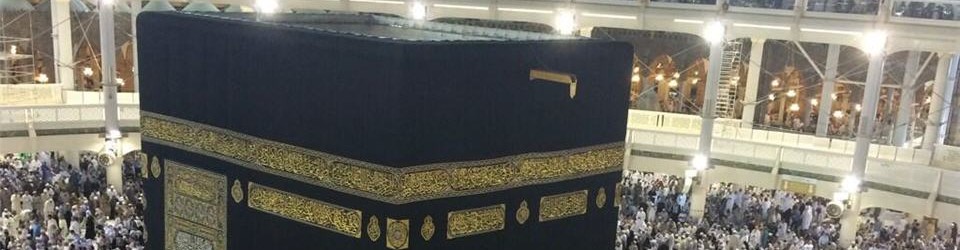
After performing the Umrah sayyidi wa sanadi Shaykh Mawlana Mohammad Taqi Usmani (may Allah preserve him) proceeded to the barbers shop to cut hairs, as it is necessary (wajib) to come out of state of ihram.
To the female companions he specifically instructed to make sure that they cut their hairs within the boundaries of Haram sharif and not on returning back to Jeddah.
Sitting in front of the barber Shaykh asked a lowly murid to check his hairs and make sure that it was greater in length to an interphalangeal space (minimum length when trimming hair is permissible instead of shaving the head completely).
Having made sure about the hair length, Shaykh instructed the barber on how much hair has to be trimmed in order to come out of state of ihram. He did so gently, in very simple language and demonstrated this to him using his fingers.
Friday, 23 Jamadi al-awal 1429/27 June 2008, Misfila, Makkah e mukarramah.
Basis of & wisdom behind the Shariah rulings

It was early Friday morning. The streets of downtown Jeddah were deserted. The car was traveling at the maximum speed allowed. However, it had to stop at all the red traffic lights for one or two vehicles to pass by and then continue towards Makkah e mukarramah expressway.
Sayyidi wa sanadi Shaykh Mawlana Mohammad Taqi Usmani (may Allah preserve him) reminded us of this situation and said that this scenario brings to his mind the issue of basis (illat) and the wisdom (hikmet) of rules and regulations. That is, there is wisdom behind all rules but observance of it is not contingent on this benefit. The order of regulatory authorities prevails. In our situation the rule is to stop at the red traffic light allowing other vehicles to pass until it turns green and the wisdom of this is to avoid accidents. Even if there are no other vehicles around it is necessary to stop at a red traffic light and whoever violates this law will be charged and fined.
Similarly, Shariah is the Divine law. There is wisdom behind most of these rulings. However, obedience to these regulations is not dependent on their perception.
For example it is mentioned in the Holy Quran that,
“Satan wishes only to plant enmity and malice between you through wine and gambling, and to prevent you from the remembrance of Allah and from Salāh. Would you, then, abstain?” 5:91
The Shariah ruling is that drinking wine and gambling are unlawful (haram). Some of the wisdom for this rulings are mentioned in these verses. However, even if an individual claims that indulgence in these activities does not prevent him from the remembrance of Allah and prayers it would not make drinking intoxicants and gambling legitimate (halal) for him.
Nowadays there is lot of confusion is this regards.
This has to be engrained vividly in our minds. That is, the rulings of Shariah are to be observed irrespective of the wisdom and benefits behind them. They are the orders of Supreme Authority.
Friday, 23 Jamadi al-awal 1429/27 June 2008, Jeddah to Makkah
This is absolutely in concurrence with slavehood (abdiyet).
The supreme station an individual can attain.
Imperative characteristics

The three imperative characteristics the Shuyukh of Ashrafiya spiritual path (tareeq) try to cultivate in their disciples (murid) are,
1. Absolute following of the Shariah in all situations and under all circumstances
2. Always trying to rectify the lower-self (islah e nafs)
3. A profound conviction that this worldly life is transient and the real and permanent destination is the here-after.
Malfozat e ‘asr e hazera, page 11
Sunna = Spiritual realisation

Shaykh Muhammad ibn Ahmad al-Buzaydi (may Allah have mercy on him) said,
“In fact, the Prophetic practice (sunna) is total spiritual realisation (ma’rifah) itself, nothing more and nothing less, for those who know its value.”
The Adab of Perfect Seeker, page 90.
مواعظ اشرفیہ

Signs of sincerity
Shaykh Dhu-Nun al-Misri (may Allah have mercy on him) said,
“Three things are among the marks of sincerity (ikhlas):
that people’s praises and condemnation be equal to one,
that one is oblivious of one’s works while doing them, and
that one forgets about the reward that one gets for one’s work on Judgement day.”
al-Risala al-Qushayriyya, via The adab of true seeker, page 83-4

Company to keep!
The blessed Prophet (Allah’s blessing and peace be on him) said,
“To be alone is better than bad company, but good company is better than being alone.”
From: an-Noor
Istikhara
Hakim al-Umma Hadhrat Maulana Asharaf Ali Thanwi رحمه الله تعالى explains that Istikhara is not a means of coming to the unseen. By doing Istikhara one is asking Allah Ta’ala to protect him from harm and determine a good fate for him.
(Ahsanul Fatawa with reference to Bawadir).
Source: Ask Imam
Gift of love
Arif billah Hadhrat Dr Abdul Hayy Arifi (may Allah have mercy on him) instructed the seekers to supplicate the following after each salah,
اللَّهُمَّ أَعِنِّيْ عَلَى ذِكْرِكَ وَشُكْرِكَ وَحُسْنِ عِبَادَتِكَ
(Allahumma a’inni ‘ala dhikrika wa shukrika wa husni ‘ibadatika)
O Allah! Assist me in remembering You, in thanking You, and in worshipping You in the best of manners.
This is gift of love. Presented by the Allah’s beloved to one on his blessed Companions.
One day he (Prophet Muhammad [Allah bless him and grant him peace]) took Mu’adh ibn Jabal (may Allah be pleased with him) by the hand and said, “O Mu’adh, by Allah (exalted is He) I love you, and I advise you, O Mu’adh, never forget to recite, after every prayer (the above).”
[Sahih Ahmad 5:245, Sahih abu Dawud 2:86, an-Nasa’i]
صلوة بئر

اللهم صل على
سيدنا و مولانا محمد و على ال سيدنا و مولانا محمد
صلوة دائمة مقبولة تؤدّى بها عنّا حقّه العظيم
دلائل الخيرات, المنزل السابع
This is the salutation & blessings recited by that girl, who spat in to the well so water rose up until it overflowed and spilled across the ground and Imam Jazuli (may Allah have mercy on him) made his ablution (wudhu).
Use your will power!
Hakim al-Umma Hadhrat Mawlana Ashraf Ali Thanwi (may Allah have mercy on him) would say that if a person is not willing to utilise his will power then not even a Prophet can save him from committing sin.
Source: In Shaykh’s Company