Category Archives: H. Whispering & random thoughts

wasawis and khatrat

Guidance

The pious Gnostic (‘arif)  swear by Allah that acceptance of guidance is neither achieved by intelligent argumentation nor via thorough research. Neither can one thrust it forcefully nor passionately upon another.

It is the light of guidance itself from Allah that illuminates the heart. The doubts cease and truth is manifested. It is an act of mercy, kindness and benevolence from Almighty Allah.

Supplications play a vital role in facilitation of this. Therefore, one should not be neglectful of making excessive dua. This is asking, showing one’s need, reliance and humility to Allah.

Focus on others or self?

.

Sayyidi wa sanadi Shaikh Mufti Mohammad Taqi Usmani (Allah preserve him) said,

‘Focusing on the defects of others makes an individual incognizant of his own deficiencies.

All are ready to criticize others and find the faults. But never ever pay any attention to their own defects.

Today we should analyze this attitude of ours. That is, when we are criticizing others does a feeling of self appraisal arise in us. Do we ponder about our deficiencies?

If we do then why don’t we try to get rid of them.’

Mojudah halaat aur hamari zimaydari


Leaving argumentation

The Prophet of Allah (blessing and peace of Allah be upon him) said,

‘An individual who is on untruth but abandons argumentation and squabbling (by accepting the truth) for him a house will be constructed in the periphery of the Paradise. Whereas, for the individual who is on truth but abandons confrontation and argumentation (He acknowledges that the opponent is not accepting, the time is being wasted and he is fears possibility of blameworthy morals to be be stirred in his nafs) a house will be constructed in the center of the Paradise. (That is certainly superior to the one located in the periphery.) And for the individual who has the best morals a house will be constructed in superior most part of the Paradise.

This is reported in (Sunan e) Tirmizi.

It has been observed that most of the pious in spite of being on truth circumvent the contentious issues and prefer to remain silent when someone squabbles or confronts them. The rationale for this is referred in the Prophetic saying (hadith) translated above.

This attitude (of leaving all argumentation) appears to be desired (characteristic ) as per this hadith.’

Basair e Hakimul Ummat ra, page 577-8

Apathetic murid

Sayyadi wa sanadi Mawlana Mufti Mohammad Taqi Usmani (Allah preserve him) said,

‘Previously it was well known that two individuals seldom slept at night. One is the newlywed. The other is a new disciple (murid). However, the situation has changed for the murid with a very few exceptions.

Apathy is common. Yearning and desire to progress is totally lacking.  Completing the daily basic wird is a humongous unsuccessful challenge even after years of relationship with the mentor. This is a common complaint in their islahi letters. What can be done in this regards? No one can do what you have to do yourself. There are no magic potions, amulets or invocations to facilitate this.

Even senior aspirants are stuck on the very basic wird. Aspiration for doing more remembrance (dhikr) and communicating this desire to the mentor is absent. Remember the Shaykh is not going to advance you to the next level until you verbalize your interest and show progress.’

Ramadhan 1429

Treatment of worrisome random thoughts

.

Hakim al-Umma mujadid Shaykh Mawlana Shah Ashraf ‘Ali Thanawi (Allah have mercy on him) said,

‘None of us can surpass the ranks of the Holy Companions (sahaba). They were also afflicted with such worrisome random thoughts (waswasa) that they approached the Prophet (Allah bless him and give him peace) and said that they felt it was easier to burn and turn to char then to utter them. However, the Prophet (Allah bless him and give him peace) replied;

ذاك صریح الایمان

It is very obvious that there can be no worst random thoughts than that of unbelief (kufr). However, this ruling applies even to it.

If there are such overwhelming random thoughts then one should use the prescription of diverting one’s thoughts towards something else. This something else could even be a worldly matter, like carrot halwa or turnip pickle. Thoroughly occupying one’s thoughts with (the list of) their ingredients, amounts and recipe. Diverting the thoughts in this manner will indeed require effort initially. However, inshaAllah, eventually the power to ward off these worrisome random thoughts will be achieved.’

Basair e Hakim ul-Ummat ra, page 254-5

The difference between the state of a salik and non-salik

Hakim al-Umma mujadid Shaykh Mawlana Shah Ashraf ‘Ali Thanawi (Allah have mercy on him) said,

‘There two kinds of people.

Those individuals who are not traveling on this path (sulook) and characteristics of yearning and desire (of Allah’s pleasure) have not even developed in them. Their condition is that whenever their hearts are pure and uncluttered they make remembrance of Allah. The awareness of being involved in sinful activities does not stop them from doing good works. This is because they do not care about it (the involvement in sinful).

Then there is the other kind, ones who are traveling on this path and have developed some tastefulness (dhauq). Their state of heart is such, because of their relationship with Allah (ta’luq maAllah), that any tiny bit of change in it due to negligence and involvement in sinful activity  causes them extreme grief. This is to the extent that they become disheartened of being involved in remembrance and good works and do not find the courage to do so in the future. This is not because of being heedless of their Lord, most High. It is due to the acknowledgment that now (with this involvement in sinful) how can I face my Lord and make His remembrance. At the outlook this does not seem to be a good state because it is suspending remembrance (of Allah). However, in some instances even this state is a blessing. This is because, in these instances it will result in that sinful activity not to be carried out ever again.

Hence, having this state is a blessing. However, it is essential to point out that one should not act on the calling of this state. That is, not to stop the remembrance at all. Moreover, it is essential for this individual not to be negligent of remembrance for a second and be despaired. This remembrance (dhikr) should continue irrespective of being involved in millions of sinful activities.  This is because the spiritual darkness that leads to suspension of remembrance (by being involved in sinful) will only be lifted by the remembrance (of Allah) alone. There is no other cleanser to do this. If this is done with consistency then, inshaAllah, one day (eventually) escape from the dreadful condition (of involvement in sinful activity) will be achieved.’

Basair e Hakim ul-Ummat ra, page 528

Essential advice for salik

.

Shaykh al-Mashaikh Haji Imdadullah mohajir makki (Allah have mercy on him) said,

‘Keep away from the company of Sufis that act against the Shariah.

Meet other people with good manners only as required.

Consider yourself to be the lowest creature.

Do not criticize anyone.

Speak with compassion.

Love being silent and alone (khalwah).

Keep your time well planned.’

Taleem ud deen, page 227

(The edition by Maktaba e Rehmania, Lahore is the best currently available. It has explanation and translation of all Arabic and Persian quotes in footnotes.)

How to develop concentration in salah?


.
Shaykh Mawlana Shah Wasiullah Allahabadi (Allah have mercy on him) said,

‘A lot of people inquire regarding concentration in salah. I tell them all try to develop concentration towards Allah outside salah, when this will increase then it will persist during salah also.

The pious elders improved their salah similarly. They recited wird for the development of concentration towards Allah in their hearts.
Therefore, all of them recited the blessed kalima لا اله الاالله محمد رسول الله excessively as a wird. This renews the faith and strengthens it.

In my opinion you should also recite it abundantly. InshaAllah, concentration towards Allah will develop in your heart and eventually persist in salah also.’

Majmua talifat Muslih al- Ummat, volume 3, page 41
Medinah e munawwarah

Spiritual involvement

Shaykh al-Arab wal-Ajam Hadhrat Haji Imdadullah mohajir Makki (Allah have mercy on him) instructs a seeker,

‘After fulfilling the faraidh (absolutely essential), wajibat (highly recommended) and Sunna one should occupy his time in spiritual works of rectifying the condition of his heart (remembrance and contemplation) and not spend it in offering extra (nafil) salah or recitation of litanies. Instead he should consider the rectification of his heart to be a perpetual must (fardh) and never be negligent in it.’

Dhiya al-Qulub via Taleemud-deen, page 45

Spiritual recession

A person complained that now he did not feel motivated to do good deeds. Previously he had this motivation but it has ended.

Shaykh Mawalana Rasheed Ahmad Gangohi (Allah have mercy on him) replied,

‘There are three reasons for one’s spiritual recession,

1. Corrupt companionship (suhba)

2. Suspicious food (unlawfully obtained or non-halal/dhabiha)

3. Involvement in sinful activities.

Analyze your situation and whatever the reason is from these, try your best to fix it. ‘

Sulook wa Ahsan: Irshadate Faqih al-Ummat ra, page 333

[P.S. For us this companionship may be that of people, books, magazines, television, DVDs or Internet sites]

Tips to Alleviate Hardships

Hakim al-Umma Shaykh Ashraf Ali Thanawi (Allah have mercy on him) said,

 ‘Actions that diminish sufferings and hardships include:

– Recalling our transgressions (sin)

– Reminding ourself of the reward/compensation on hardships

– Reflecting that in hardship there is test of faith (‘eman). That is, it analyzes if there is faith present or not.

– Remembering, it causes a state of overwhelming slave-hood (abdiyat). The dirt of self-assertion, arrogance and pride is cleansed. The reality of one’s being is revealed and the person realizes not to make any boastful claims.

– Bringing to mind that it causes one to perceive the supremacy and grandeur of Allah’s actions and one’s own feebleness.

Hence, hardships result in increasing slave hood (abdiyat). And the abdiyat is a very distinguished state (maqam).”

Ma’asir Hakeemul Ummat, page 390-1

Sufi litanies

An individual inquired regarding the litanies and supplication that pious Sufi Shuyukh compiled, for example hizb al-bahr. That is, in presence of excellent, comprehensive and unparalleled litanies and supplications from Quran and Hadith what was the reason to do so.

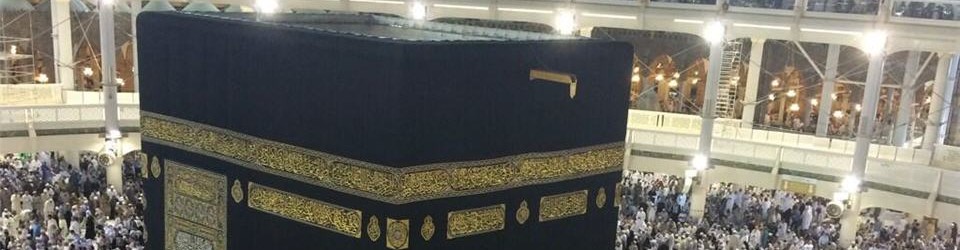
Sitting in matawaf behind rukun-e-yamani surrounded by several Indian, Pakistani and local pilgrims, sayyidi wa sanadi Shaykh Mufti Mohammad Taqi Usmani (Allah preserve him) replied,

‘There is no doubt that the supplications  from Quran and Hadith are superior and most effective then others. However, supplication can be done in other ways also. We do them in our dua everyday. Moreover, some of these were  Divinely inspired (ilqa)  to the pious Shuyukh. This is the case of hizb al-bahr.’

Makkah e mukaramah, 4th March 2011, after esha

Checklist: Am I progressing in my Deen?

‘Join XYZ-Jamat or PQRS-Tariqa!’

A common advice we all often get. Directly or indirectly by our well-wishers. Most of us are offended and become defensive. We retaliate with our own suggestions. A few become confused. A smaller number becomes disillusioned by these rivalries and schisms.  May Allah save us all from these disasters. Amin!

The sincerity of these well-wishers can not be questioned at all.

However, it should be a wake up alarm to us. Following questions must pop-up in our mind. Why did this person suggest this to me in particular? Am I following  correctly and progressing in my religious effort? Or there is something that made this person feel that I need to improve?

Thinking on these lines this lowly writer came up with a random quick checklist for myself. InshaAllah, it will be beneficial for others.

The Checklist:

I need to have explicit answers to the following statements from the time I joined this specific group, jamat, tariqa or started on my own to be more religious ,

1. I thoroughly studied the fiqh of everyday worship and apply it meticulously.

2. Made record of my missed salah, fasts, zikah, hajj and financial dues. I am trying to compensate for them.

3. I have improved my tajweed.

4. My actions on Sunna has increased. That is, appearance, manners, actions and supplications for different occasions like waking up, eating, sleeping, wearing clothes, etc.

5. My salah is more organized, on time, in congregation (if masjid is close by) with better concentration.

6. I deal with humility when interacting with my family members (especially parents and spouse) and others.

7. I can better control my anger.

8. My school/college/work performance has increased or at least not deteriorated.

9. My involvement in useless (TV, Internet, news, magazines, novels, etc.) has decreased substantially.

10. I am worried about causing discomfort and harm to others and try my best to avoid it.

11. The sins I used to commit previously have decreased substantially in frequency and intensity.

12. My day is better organized with time allocations for recitation of Holy Quran, dhikr and religious reading.

13. I do not look down upon fellow Muslims.

If answers to most (>11) of the above questions is affirmative then we need to be thankful to Allah and continue on our path to perform even better.

However, if this is not the case then there are two possibilities.

Firstly, either we are not following the teachings of that group, jamat or tariqa correctly.

Or if we are doing all the things as per instruction then that group, jamat or tariqa is invalid. At least this is true for us, maybe secondary to our circumstances and environment. It is only in this case that we need to pay heed to the advice of that well-wisher and look into the XYZ & PQRS option.

Sayyidi wa sanadi Shaykh Mawlana Mohammad Taqi Usmani (may Allah preserve him) said,

‘In a Prophetic tradition (hadith) it is narrated that; the person whose two days are the same is in big loss.

This means that his today was spent in the same manner as yesterday and no progress occurred.

That is,  progress in being more religious, in spiritual evolution, increase in worship and improvement in obedience, following of Sunna and abundance in Allah’s remembrance.’