Category Archives: H. Whispering & random thoughts

wasawis and khatrat

Practical hypocrisy

——————-

Shah Waliullah Muhadith Dehlawi (Allah have mercy on him) said,

‘A type of nifaaq (hypocrisy) is that an individual affirms verbally and in his heart to the commands of Allah and His prophet (Allah bless him and give him peace) but by committing sinful activities via his tongue, heart (mind) and genitals he is totally surrounded by transgressions.

Hence, an individual who is thoroughly annihilated in sinful activities. That is, committing sins has become an instinct and a part of his personality. This individual is a munafiq (hypocrite).

This type of hypocrisy can exist with eman (belief).

The noble Companions (Allah be pleased with them) were afraid of this type of hypocrisy.’

Taharet e qalb, page 69

دعا تو دل کی پکار ہے

——————–

حضرت مولاناابرارالحق صاحب رحمۃ اللہ نے فرمایا

دعا تو دل کی پکار ھے، کوئی ھاتھ پھیلائے زبان سے کھے اور دل کھیں اور ہو تو وہ دعا نھیں ھے، دعا کی صورت ھے۔

اس کی مثال میں عرض کرتا ھوں : ایک شخص نے حاکم کے پاس ایک درخواست لکھی اور وہ بھت عمدہ ٹائپ ھے، کاغذ بھی اچھا ھے، القاب و آداب ھیں، ٹکٹ لگاکر پیش کی، لیکن جب درخواست دینے کا وقت آیا تو حاکم کے سامنے درخواست پیش کی اور منہ پھیر لیا تو کیا ھوگا؟ اس کی درخواست منظور ھو جائے گی؟ یا کھا جائے گا کہ بڑا گستاخ اور بے ادب ھے کہ درخواست حاکم کے سامنے پیش کرنے کا سلیقہ بھی نھیں آتا۔

اسی طرح دعا میں بھی قلب غافل ھے اور دل کھیں اور ھے تو پھر اللہ تعالیٰ کے یھاں ایسی دعا قبول نھیں کی جاتی۔ اس لئے دعا کرے تو دل کو متوجہ رکھے۔

________________

Picture: Mihrab of Masjid Mehdar, Tarim, Yemen

Annihilation

Shaykh Mawlana Wasiullah (Allah have mercy on him) said,

‘If someone rebukes another individual without a reason and he remains silent. That is, not saying anything in return. This leads to extreme annihilation of the lower self (nafs).

Allah likes this quality very much.

This is also called patience (sabr), an unique quality of a believer.’

Shaykhan: Ainan e tajriyan, page 54


Doubts!

A reader wrote,

Assalamualaikum wa rahmatullahi wa barakatuhu.

I need some clarifications:-

I always have doubts about the akabir of Deoband. That is,  I want to know regarding the negative words that Barelwis spread about Moulana Ashraf Ali Thanvi.(rahmatullah alaih) and other akabir ulema. I respect the akabir of Deoband very much for their knowledge but after hearing the negative things about Deobandis, my heart is always in suspicion about the honesty of Deobandis.

Please,Please…. help!

And sorry for asking such questions.

Jazakallah hu khairaa.

Following reply was sent. (InshaAllah it will be beneficial to all of us.)

Bismillah
 
Respected brother  
as salam o alaykum wrwb
 
JazakAllah.
 
There are two answers for your question.
First is the ilzami (accusatory) and other islahi (reformative).
 
The ilzami answer is that why don’t you have doubts and suspicions about the Baraelwi comments being corrupt, false, dishonest, thimblerig & politically motivated. If you can give me some reason then we might have a discussion.  The upshot of this answer is how do you as an individual lay person can judge between the two groups?

Our akabir have taught us this, “A murid complained that when people talk negatively about you it hurts me and my heart aches.
Hakim al-Umma Mawlana Shah Ashraf Ali Thanawi (Allah have mercy on him) replied;
‘There are a multitude of people who talk badly about Allah, His messenger (blessings and peace of Allah be upon him) and the  scholars (mujtahideen). Have you done any thing to stop that?
If not, then why does it hurt you when poor Ashraf Ali is censured.  And you feel concerned about stopping this?
There is nothing in this attitude except kibir (arrogance).
It annoys you when your seniors are censured. You feel humiliated at this. This is a hidden deception of nafs (ego/lower self).
Suppose, even if it is not kibir (arrogance). Then I ask, why did you feel concerned about anyone  saying any thing good or bad (regarding my seniors).
What harm did it cause to you?
If you had focused on the goal (of tareeq, i.e. seeking perpetual pleasure of Allah ) you could not have time to waste on these petty issues.

Hakeemul Ummat ra kay hayret-angez waqiyat, page 81

 
The islahi answer is for the truth seeking sincere individual. May Allah make us both from them.Amin!
(Your openness to come forward and ask this is itself a sign of seeking the truth. MashaAllah.)
 
First it must be very clear that we are bound to follow Sunnah meticulously. Following Hakim al-Umma Mawlana Ashraf Ali Thanawi (Allah have mercy on him) or Molvi Ahmad Raza Khan sahib is not an obligation. We won’t be questioned in here-after regarding this. If the following of Sunnah(both, external and inner) is facilitated through their teachings well and good. If not then you have to look somewhere else.
 
(Alhumdulliah, I have personally benefited a lot from the teachings of Hakim al-Umma in bringing deen into my life to a degree. May Allah allow me to benefit more. Amin! Similarly I have read about and seen personally lot of people who changed their life for better by following his teachings.)
 
Having doubts is natural phenomenon. However, being affected to the degree to actively suspect and consider another Muslim (irrespective of him being a pious, learned scholar/sufi)  to be intentionally dishonest is blame-worthy condition (bad-gumani, keyna, etc.) . There should be explicit proof for this.
 
It is usually a result of keeping company with people who have this already in them and are lax on issue of ghibet/bad-gumani/hifazet-e-lisan/etc., and/or lack of knowledge and being involved in useless.
Being sins their darkness clouds the perception of truth. This can only be lifted by repentance and resulting Divine enlightenment.

The teaching of our pious master is,
 
کفر است در طریقت ما کینہ داشتن

آ‏‏ئین ما است سینہ چوں آئینہ داشتن
 
Please, make excessive supplication, keep your focus on the following of Sunna and consult your Shaykh for the cure of these potentially fatal spiritual ailments.
 
For the time being the best things to do  will be,
1. Avoid all useless discussions.
 
2. Try your best to follow Sunnah meticulously in each and every aspect of your life.
 
3. Make dua excessively. Ask Allah SWT for guidance. Especially set 10 minutes daily after ‘esha salat and make dua for your own islah, isteqamat and correct understanding of deen.
 
4.If you lack information then please, read the book ‘Aqaid e Ulemae Deoband aur Hassam ul Haramain’. It is  in Urdu and available online.

 
5. Even after all these measure if the doubt and suspicion persist then the best thing will be to ignore both the groups and follow the Sunnah and scholars who affiliate with none of these groups. It is best to remind ourselves that it is a fitnah by definition when truth can not be distinguished  and things become suspicious. The best strategy as per Prophet (Allah bless and grant him peace) is to keep ourselves completely aloof from it.
 
I pray and hope that my rambling makes sense to you. If there are any question, please, do not hesitate to ask. The benefit is mutual. JazakAllah.

Take care.
Please, do try to make dua for me.
muhtaj

Spiritual Diseases: The Rule of Thumb

In spiritual diseases (muhlekat e nafs) the rule of thumb is;

If one considers him/herself to be free from a specific disease, e.g. arrogance (kibr), hasad (envy) etc. it is for sure that he/she is afflicted with it.

That might be the reason that many of the noble companions ridhwanullah ta’ala ajmaeen considered themselves to be hypocrite (munafiq) and most of the pious (awliya) consider themselves to be worse than unbelievers (kafir-e-farang).

Being steadfast on daily routine

Shaykh Ibn Ata’illah al-Iskandari (Allah have mercy on him [d. 1309CE]) said,

‘It is only an ignoramus who regards constancy of acts of worship and remembrance (adhkar) as insignificant.

The Divinely epiphanies (waridat) will occur even in the Hereafter while acts of worships (award) will end with this world. It is, therefore, of greater importance to maintain something which has no substitute.

Your Lord demands wird from you while you expect waarid from Him.

What relationship is there between your desire and His demand?’ (al-Hikam,  #112)

Explaining it Shaykh Abdullah Gangohi (Allah have mercy on him) said,

‘It is only an ignorant individual who regards steadfastness in acts of worship and remembrance to be insignificant.

There are two reasons for this misconception,

Firstly – The occurrence of Divinely epiphanies (waridat) will be even in the Here-after. In fact, they will be more there because here on Earth there is contaminations of human temperament and the material bodies that causes impediment in acknowledgment of these Divine epiphanies. But, in the Here-after these impediments will no longer exist. On the other hand, the acts of worship, remembrance and recitation which are rendered with the physical body are possible only here on Earth. Thus, after death there is no substitute for them. Whereas Divine epiphanies exist here and will exist in the Here-after as well, even in greater measure (both in quantity and quality). Hence, it is of greater importance to guard the acts of worship performed physically. That is, the daily routine called wird (or ma’amolaat).

Secondly– The wird is Allah’s demands while it is the seeker who desires waaridaat. There is no comparison between what we desire and the demand of Allah. It is best for us to attach greatest importance to Allah’s demand.

It is, therefore, essential for the seeker to be steadfast in the observance of the acts of worship and the wird which has been imposed on him. He should not regard these to be inferior to waarid. This is because the normal cause of waaridaat is also the wird. As a result of the seeker’s wird, he is blessed with the occurrence of waaridaat.’

Ikmal ush Shiyam, 21st chapter (edited)

مراتب فنا

 (حضرت مولانا شعیب اللہ خان صاحب مدظلہ(بنگلور، 

 خلیفہ مجاز ہیں حضرت مفتی مظفر حسین رحمۃ اللہ علیہ کے

جو حضرت حکیم الامت رحمۃ اللہ علیہ کے مجاز حضرت اسعداللہ رحمۃ اللہ علیہ کے خلیفہ تھے۔


A dream for guidance!

A person wrote the following,

“I saw a dream that I am writing to you. It was the night of 27th Ramadan 1237H. With the possibility that it may be the Night of Power (shab e qadr) I had planned to offer optional salah (nawafil) all night. However, after ‘esha salah when I returned home I laid down on the bed besides the main door (to rest for a while). I fell asleep. Around two o’clock I saw a dream that I have traveled to a place where there is a very large open area, many miles wide. There is organized seating arrangement on the floor. In between there is a table covered with a table-cloth. Millions of people wearing their best clothes and perfume are sitting with reverence (adab). There are few high ranking individuals sitting on the chairs around the table. On the table there is writing board around 2-3 yards in length and 1 or 1.5 yards in breadth. A respected individual dressed in white gown (‘abaya) and green turban (‘amamah) on head is standing besides the table greeting and shaking hands with the crowd. The blessed face in radiant like the sun and with his enlightened and enlightening tongue he is telling them,

“I tell you with much emphasis that you should abstain from all that is impermissible (haram) and be steadfast on that is permissible (halal).”

Observing all this I went forward and greeted the blessed person with ‘as salam o alaikum’. He replied, ‘wa alaikum as salam wa rehmatullah’. I reached forward and shook hands and embraced him also. He told me that it was very good and that I should become a mureed, and he promised to tell me eleven things that he has reserved especially and exclusively for me. This humble guy (myself) stood there with utmost reverence. He gave me the permission to sit. I was going to sit on the floor but he instructed me to sit on one of the chairs. Thanking him I sat on one of the vacant chairs. I was extremely happy in my heart.

On the blackboard I saw numerous names written in elegant and bold white letter. I saw them very clearly. The names that I could read included, Hahdrat Mawlana Fazalur Rehman Ganjmuradabadi, …….., Haji Imdadullah, Haji Ashraf ‘Ali and Molvi Mohammad Ishaq, etc.

As I turned to my side I saw Hadhrat Mawlana Fazalur Rehman Ganjmuradabadi, whom I was blessed to visit as a child. Immediately it flashed to me that this is the scenario of Judgment day. The blessed individual is our Prophet (صلى الله عليه وسلم) and those sitting on the chairs are his Companions, including Sayyidina Abu Bakr, Umar, Usman and ‘Ali (may Allah be pleased with them all).

It also occurred to me that I am already a mureed (of a Shaykh) and should not hide it from the blessed Prophet (صلى الله عليه وسلم) and should seek Allah.

Around an hour or later the blessed Prophet (صلى الله عليه وسلم) called for me. I shook hands and embraced him. Furthermore I reminded him of those eleven things he had promised to tell me so that I can follow them wholeheartedly. I also informed him that I am already a mureed but I want Allah. On hearing this, he immediately pulled away his hand from me and said, ‘Indeed you are ………. and you are the mureed of …………., an innovator (bida’ti). Futhermore he took a pencil and crossed out my and my Shaykh’s names from the list on the blackboard. Then the blessed Prophet (صلى الله عليه وسلم) told me to go away. With lots of courage and adab I humbly said that my Shaykh is not an innovator.

The Prophet (صلى الله عليه وسلم) replied that he is an innovator and in addition he associates partners with Allah (mushrik).

Humbly and with utmost veneration I said that I have never seen him doing any shirk.

The Prophet (صلى الله عليه وسلم) said, he is involved in taking out effigies of the tombs of the martyrs of Kerbala (taziyadar), a lover of the worldly things, an idolater prostrating in front of the graves. Didn’t you see him at …….. village, in Lucknow that he bowed his head infront of his Shaykh’s grave and forbade you from visiting the holy sanctuary in Medinah e munawwara.

(I became a mureed in 1893 CE. In 1898 I received khilafa and in 1900 this incident happened. In this 26 or 27 years relationship I attended the death anniversary of a sufi saint (urs/hawl) and listened to the sufi poetry sung with musical instruments (qawwali) only once.)

I cried and begged but the Prophet (صلى الله عليه وسلم) did not reply. As the last resort I ran and held the blessed feet of the Prophet (صلى الله عليه وسلم). The Prophet (صلى الله عليه وسلم) rebuffed my hands and stroked me (with his blessed foot) strongly in my ribs. I fell down and started to tremble. This woke me up. At that time I was crying, feeling the pain in my ribs and I was trembling. I went inside the house and told my son ………. Chatari the whole dream just mentioned. In the morning I wrote this all and send it to my Shaykh. He came in person to my house and listened to the whole incident again. His response was to prepare for Hajj journey this year in order to visit the blessed Prophet (صلى الله عليه وسلم) and ask forgiveness. I did not commit due to insufficient funds and debts.

Since I have seen this dream my conviction towards my respected Shaykh has waned off. Now I am approaching you for my religious betterment (islah). I will be very fortunate if I am considered to be your humble servant.

Hakim al-Umma Hadhrat Mawlana Ashraf ‘Ali Thanawi (Allah have mercy on him) replied,

“This dream is absolute guidance. It is essential (wajib) to leave the Shaykh who acts against Sunna and to establish contact with truthful people (ahl e haqq). I have no hesitation in giving instructions regarding the spiritual path. Start acting on the fiqh as outlined in the books, Behashti Zewar (Heavenly Ornaments) and Islah e rasoom. Take the awrad from Qasdus sabil and general advices from my spiritual discourses (mawaiz). The full instructions in detail will be discussed when we meet in person.

Tarbiyet us Salik, volume 2, page 1069-70
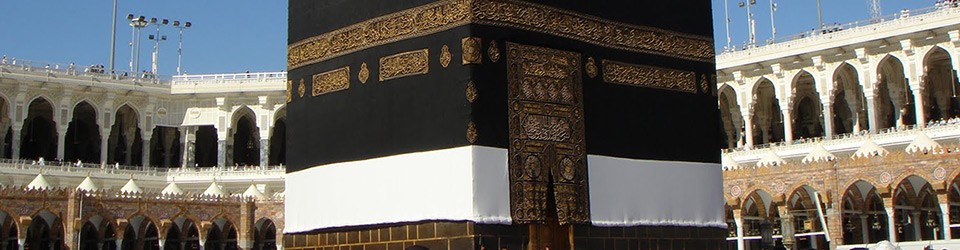
Tip on adding something new to our daily routine

__________

It is a common every day incident that we read or hear something that is virtuous and a blessing to be in-cooperated into one’s daily routine. However, in addition to forgetfulness we find it difficult to spare an additional time slot for this small endeavor in our daily schedule.

Sayyid wa sanadi Shaykh Mufti Mohammad Taqi Usmani (Allah preserve him) instructed,

‘The tip to include something new in your daily routine is to squeeze it between two already established chores.’

___________

___________

Utilizing time appropriately

———-

Sayyidi wa sanadi Shaykh Mawlana Mohammad Taqi Usmani (Allah preserve him) said,

‘The development in technology has led to remarkable shortening of time required to accomplish common everyday chores. For example, the use of mobile phone, email, modern transport means, gas and electric cooking etc. has drastically decreased the time required for similar actions done previously via conventional methods. However, it is essential for us to contemplate that what use are we making of the extra time that is being saved.’

Sunday waaz 2010, Darul Uloom Karachi