Category Archives: J. Rights

Request for esal-e-thawab

Dadi sahiba* wife of Engineer Zafar Ahmad Thanawi, daughter of Sayyid Sajjad Hussain and sister in law of Shaykh Dr Abdul Hayy Arifi (all khulafa of Hakim al-Umma, Allah have mercy on them) passed away today early morning.

She was in her nineties.

Having lost her mother at very young age she spent long duration at Hakim al-Umma’s house in Thana Bhawan, while her father visited for his own islah. Her nikah was performed by Hakim al-Ummat and she also made bayiah with him.

She use to repeatedly tell us that Hakim al-Ummat had a pleasant friendly attitude and was complete and pure loving compassion (shafqat).  She never saw any strictness the people exaggeratedly report.

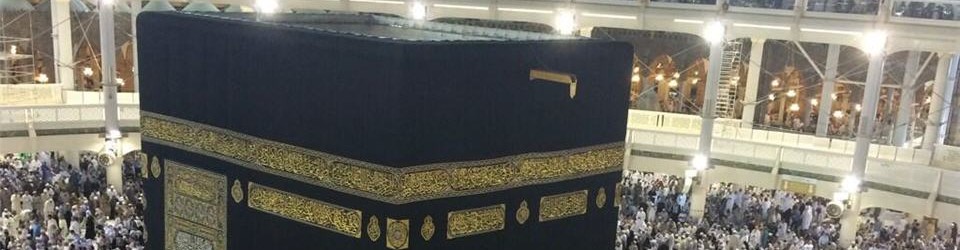
She also narrated the details of the remarkable Umrah journey her family did via sea with the families of Shaykh Mufti Mohammad Shafi and Dr. Abdul Hayy Arifi (Allah have mercy on them) in 1950s.  Especially mentioning the religiosity and maturity of sayyidi wa sanadi Mufti Taqi Usmani (Allah preserve him) who was a teenager at that time. He use to lead the women of the group in tawaf reciting the supplications and guiding them in its rites.

In accordance with tradition of People of truth, she use to ask us (her grandchildren) again and again  to make supplication (dua) for a blessed ending of life (khatima bil kahir) for herself.

After informing my beloved wife and loving parents, she was the first family member to know about the  ijaza by sayyidi wa sanadi Mufti Mohammad Taqi Usmani (Allah preserve him).  She was exhilarated and made lot of dua.

May Allah make complete magfirah,  raise her status manifold in hereafter, facilitate the stage of qabr & barzakh and give exemplary patience (sabr-e-jameel) to all her family. Amin!

(*Grandmother of my wife.)

Words of wisdom

Amir al-Momineen Sayyidina Ali ibn e Abi Taleb (Allah be pleased with him) said,

‘Beware!

1. Absolutely do not keep expectations from anyone except Allah.

2. Do not be afraid of anything except your own sins.

3. Do not be ashamed to learn something you do not know.

4. If you do not know the answer of a question acknowledge your ignorance openly.

Al-Murtaza, by Sayyid Abul Hasan Ali Nadwi (Allah ahve mercy on Him), page 290

Silence

____________________________

The Prophet (Allah bless him and give him peace) said:

 من كان يؤمن بالله واليوم الآخر فليقل خيرا أو ليصمت

“Whoever believes in Allah and the Last Day let him speak good or remain silent.”

[Bukhari and Muslim]

The Sufiya suggest that this applies to all types of talking. That is, of the tongue (speech) and that of heart & mind (active thinking)!

____________________________

Counting the blessings!

Hadhrat Mawlana Mufti Mohammad Taqi Usmani (may Allah preserve him) said,

“Once my Shaykh Hadhrat Dr. Abdul Hayy ‘Arifi (may Allah have mercy on him) was invited to a dinner. Few of his disciples, including me were accompanying him. After the sumptuous meal Hadhrat addressed us regarding the excessive thankfulness due on each and every blessing.

Hadhrat enumerated that in this single episode how many blessings were incorporated. First blessing was the delicious food itself. Second, the respectful manner in which the host served it to us. Third, our feeling of hunger which made it possible for us to consume it. Fourth, our good general health that allowed us to eat indiscriminately. If we had an aliment we would have to restrict ourselves to specific foods only. Fifth, our being free from overwhelming and disturbing thoughts. If a close family member had been sick it would have been impossible to enjoy the delicious meal. Sixth, the company of friends and pious individuals we had. Rude and irreligious fellows would had made the whole event a miserable experience. So on and so forth the list of blessings will continue. We are aware that it is essential to give thanks for each and every of these blessings. True and real thanks will gush out from the depths of the heart with realization of these things.

Hadhrat Mufti sahib added, the ability to appreciate the blessings in such manner is due to a very close and intimate relationship with Allah (taluq ma’Allah), that is the goal of Tasawwuf.

These are gems to take from Shaykh’s company (suhba). “

Friday 27th July 2007, Masjid Darul Uloom, Karachi. After ‘asr majlis

Salafi advice

The great spiritual master Dhu’n Nun al-Masri (Allah have mercy on him) said:

“The early Muslims (salaf) would counsel each other with three counsels:

First: Whoever rectifies their relationship with Allah, Allah rectifies their relationships with people.

Second: Whoever rectifies their inward, Allah rectifies their outward.

Third: Whoever rectifies their Hereafter, Allah rectifies their worldly life.”

[Sharh al-Hikam al-Ghawthiyya, 111]

Source: Seeker’s Guidance

Islahi majalis

—————————————-

Sayyidi wa sanadi Mawlana Mohammad Taqi Usmani (Allah preserve him) has repeatedly told us,

‘It must be remembered that these gatherings are not lectures and preaching sessions. The discussion here is to improve our spiritual condition. The first and foremost addressee is my own self.

Please, be attentive of this fact and have this intention of improving yourself. Otherwise it is a waste of time, energy and resources.’

Objective of attending the majalis

Shaykh Mansur Ali Khan (Allah preserve him) said,

‘Every week we gather here to listen to religious discussion. It is imperative that we have a clear objective regarding these gatherings.

These are not lectures of formal religious education. These are training sessions (tarbiyeti) for the spiritual aspirants (salikeen).

Their objectives are, to

1. Create and nurture love of Allah and His beloved Prophet (blessings and peace of Allah be upon him) in our hearts.

2. Develop the habit of turning (ruju’) to Allah in all circumstances via supplication (dua).

3. Emulating the Sunna method of doing things in every aspect of life.

4. Becoming cognizant of here-after and accountability for one’s deeds.

It is essential to have these goals in mind. It makes the journey easier by keeping you on the track and retuning to it if you slip.’

Sunday majlis, Jeddah, 3rd July 2010

Daily Workout

Sayyidi wa sanadi Shaykh Mufti Mohammad Taqi Usmani (Allah preserve him)  advised a murid;

“Do physical exercise/workout daily.

Perform it, irrespective of the kind it may be or for how long you do it. 

This is an obligation on you for (maintaining the physical well being of) your body.”

Malfoozat; Kebriyet e Ahmer,by Dr Syed Abdul Qadir Ahmer sahib db, page 11, # 47

Ashrafiya precisian: The daily wird

Points to bear in mind for the daily routine (wird) of a novice seeker.

Go slow and easy initially.
Do not exhaust yourself by fixing a routine that is beyond your limits. (Inform the Shaykh upfront of your limitations).
Make lot of prayers (dua) for ease, guidance and acceptance from Allah in this regards.

Also, it must be remembered that all these things are supererogatory (nafil). They provide assistance in fulfilling the essential actions (wajibat) to gain Allah’s pleasure. The most important of which is to abstain from all that is impermissible (sins).

Also, your duties as a sonْ/daughter, brother/sister, spouse, parent, employee at work, or student in college have priority over all these nafil activities. This means that when there is a clash between these two kind of activities precedence in given to the wajib. If there is no clash then it is highly recommended to do them diligently.

Min ifadat e murshidi

Tip to avoid a burnout!

Hakim al-Umma Mawlana Ashraf ‘Ali Thanawi (Allah have mercy on him) said,

‘My respected teacher Mawlana Yaqub Nanotawi (Allah have mercy on him) used to advice the seekers that they should end their routine activities (wird, tilawat, tasbihat, readings, etc.)  before they loose complete interest  in them. Leaving a desire to still do more. If they do not do this they will have a burnout (experience of long-term exhaustion and diminished interest) eventually.

Allah save us all form this.

To make it easier to understand he gave the example of yo-yo (Urdu:chakai/chukdor). The tip for successful play is to pull the string before it unwinds completely. If it were to unwind totally the yo-yo spool will never return and just dangle there aimlessly.

Similar is the tip for a salik (and the instructing murshid) to keep the flame of interest and desire burning.

Undertaking too much, too quickly with drastic lifestyle changes over a short period of time  is usually spiritually unhealthy.

The natural spiritual growth is slow, continuous and imperceptible process. Just like the physical development. Years and decades are required to reach and manifest the signs of spiritual puberty and maturity.

A perfect murshid (Shaykh-e-kamil) is needed for this reason.

(Paraphrased. Malfuz reported in Majalis e Hakim al-Ummat ra, and repeated many times by sayyidi wa sanadi wa murshidi Mufti Mohammad Taqi Usmani (Allah preserve him) in his discourses.)

The most important nasiha!

Giving instructions to a newly appointed mujaz sayyidi wa sanadi Shaykh Mufti Taqi Usmani (Allah preserve him) said,

The first and most essential thing is,

1. Never to be negligent of one’s own islah.’

Hidayet baraay e mujazeen

This reality has to be realized that islah never ends.

It is an ongoing process.

Concern about criticism: Arrogance

A murid complained that when people talk negatively about you it hurts me and my heart aches.

Hakim al Umma Mawlana Shah Ashraf Ali Thanawi (Allah have mercy on him) replied;

‘There are a multitude of people who talk badly about Allah, His messenger (blessings and peace of Allah be upon him) and the  scholars (mujtahideen). Have you done any thing to stop that?

If not, then why does it hurt you when poor Ashraf Ali is censured.  And you feel concerned about stopping this?

There is nothing in this attitude except kibir (arrogance).

It annoys you when your seniors are censured. You feel humiliated at this. This is a hidden deception of nafs (ego/lower self).

Suppose, even if it is not kibir (arrogance). Then I ask, why did you feel concerned about anyone  saying any thing good or bad (regarding my seniors).

What harm did it cause to you?

If you had focused on the goal (of tareeq, i.e. seeking perpetual pleasure of Allah SWT) you could not have time to waste on these petty issues.

Hakeemul Ummat ra kay hayret-angez waqiyat, page 81

I’m asleep!

Hakim al-Umma Mawlana Ashraf Ali Thanawi (Allah have mercy on him) used to repeatedly tell the salikeen that if a person gets the idea that he has acquired a praiseworthy trait or state and gotten rid of a blame-worthy one then he should be extremely suspicious of this.

He gave this example to make it easy to understand.

That is, if a person is aware that he is sleeping then his sleep is defective. It is not a  genuine sleep. A sleeping person is completely unaware of his sleep.

Similar is the case of a salik.

He should always rely completely on his Shaykh’s instructions and be suspicious of all his activities considering himself to a novice just initiated.

Min ifadat sayyidi wa sanadi Hazrat murshidi db

Experiential knowledge

Like previous masters of the path Hakim al-Umma Mawlana Ashraf Ali Thanawi (may Allah have mercy on him) made it explicitly clear that Tasawwuf is a practical thing which has to be experienced personally.

It is, however, important to clear a misconception which especially plagues those who stress on reading the advanced text of Tasawwuf dealings with higher spiritual realities of experiences and unveilings without proper guidance of a Shaykh.

We mistakenly set an imaginary expected standard for this experiential knowledge.

For example, in love of Allah and His Prophet (Allah bless him and give him peace) we select  Sheikh Abdul Qadir Jilani or Khawajah Moinuddin Chishti ra’s state of love.  And when this not happen within our expected short time frame, we feel at loss.

This is inappropriate. This is the path (tareeq) of slave hood (abdiyat). Our under-par desires,  immature wishes and unrealistic standards have no place in this path. They have to be annihilated (fana).

Sayyidi wa sanadi Mawlana Mohammad Taqi Usmani (Allah preserve him)  repeatedly tells us that after implementing the requirements of Shariah correctly (with the additional aid of the Shaykh’s instruction) experiential knowledge will be gained by each and every salik. It will develop accordingly to our aptitude and effort. Moreover, with persistence in these spiritual works of body and heart it will, inshaAllah, increase both in quantity and quality over time and become ingrained in us.

mun ifadat e sayyidi wa sanadi Hazrat murshidi db