Category Archives: J. Rights

Facing antagonism

mlarazakan1

A seeker complained about the Barelvi antagonism.

Shaykh Sayyid Abdush Shakoor Tirmizi* (may Allah have mercy on him) replied,

‘I make supplication (dua in this regards).

Be patient and maintain silence.

Make supplications yourself also.

Maintain complete silence by tongue and heart in this regards.

Advice your acquaintances to do the same.

Do not even discuss these controversial issues. The truth has already been established and disseminated. God-willing (inshaAllah) it is sufficient.

(Beware!) This is the era of calamities (fitna).’

Hayat e Tirmizi, page 134

* A senior khalifaof Shaykh al-Islam Mawlana Zafar Ahmad Usmani and Mufti Mohammad Shafi (may Allah have mercy on them)

Progress: explained

kaba12

An individual inquired that after becoming aware of this progress issue I feel at loss. My religious activities in worship, wird, recitations, etc. have been at a static level for a considerable period of time.  I feel guilty.

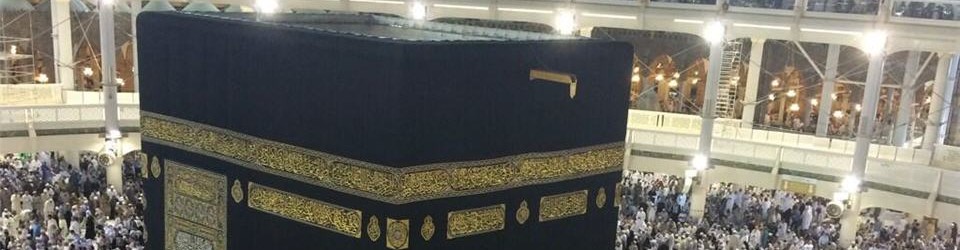
Sayyidi wa sanadi SHaykh Mawlana Mohammad Taqi Usmani (may Allah preserve him) answered as he walked towards the mataf to perform tawaf,

‘It must be remembered that there are two components involved in this advancement one is quantity and the other is quality.

There is room that the quantity remains static, but for a seeker  it is essential that the quality of his actions increases every day.

He must try to develop more sincerity, precision and concentration in his actions following and imitating the Sunna. Moreover he must be in constant contact with Allah via remembrance (dhikr) and supplications.

This progress is an imperative requirement for the seeker.’

Makkah al mukarramah, Saturday, 7th February 2009/12 Safar 1430, after esha salah

Progress

profits_rising_4

Sayyidi wa sanadi Shaykh Mawlana Mohammad Taqi Usmani (may Allah preserve him) said,

‘In a Prophetic tradition (hadith) it is narrated that; the person whose two days are the same is in big loss.

This means that his today was spent in the same manner as yesterday and no progress occurred.

That is, no progress in being more religious, in spiritual evolution, increase in worship and improvement in obedience, following of Sunna and abundance in Allah’s remembrance.’

Jeddah, 5th February 2009

Dream

dreams

A seeker reported an unusual pleasant dream.

Sayyidi wa sanadi Shaykh Mawlana Mohammad Taqi (may Allah preserve him) told him,

‘All praise is to Allah!

خيرًا تلقاه و شرا توقاه خيرلنا و شرَ لاعداءنا


Islahi khutoot, xii/1429

The points regarding tarbiyah for the seeker in this simple answer are,

1. Good dreams are a blessing. One should thank Allah for them.
2. It is Sunna to recite this supplication when interpreting a dream.
3. Inculcating the habit of turning to Allah in all conditions.
4. Sometimes the dream does not require an explanation.
5. In spite of being a blessing a balanced approach has to be maintained regarding the dreams.  What really matters are the actions done in the wakeful state.

Beaware of Nafs

katrina_image

Hakim al-Umma Mawlana Shah Ashraf Ali Thanwi (may Allah have mercy on him) said,

“Always remember this tip.
Never ever provide any occasion or means for your inner-self (nafs) to misbehave.

This is a an essential thing that is being told.

This inner-self (nafs) is the enemy that has ruined the zuhud (asceticism), taqwa( God-fearing) and piety of high-ranking individuals in few moments.
Never consider it to be dead. Sometimes due to unavailability of resources it is hidden (acting dead). But it is lurking for an occasion or a means to act (and attack).”

Sawanih wa ta’lemat e Hazrat Arifi ra pg 382

Understanding the concept of bid’ah

alaikumsmall

Hakim al-Umma Mawlana Ashraf Ali Thanawi [may Allah have mercy on him] said,

‘It should be realized that actions and practices innovated after the passage of the first three generations of Muslims [khairul quroon/ best of eras] are categorized into two types,

First category: Pseudo-bid’ah
Those actions whose rationale is new but some essential acts of the Shariah [ma`moor behe] are dependant upon it. Hence, without this [innovation] this faculty of Deen will not function effectively.

For example, the compilation and authoring of religious texts, the establishment of learning institutes (madrasa) and spiritual retreat lodges (khanqahs), etc.

These things were not present during the era of Prophet [Allah’s blessings and peace be upon him], and their initiative is new, however, an essential part of the Deen depends on [the initiation of] these acts.

It is well established that it is an essential and necessary requirement upon every [Muslim] individual to protect and safeguard the Deen. One should also remember that during the ‘best of era’s, such means [the above mentioned innovations] did not exist. This was because there was no need for them. That era was permeating with blessings [of Prophet (Allah’s blessings and peace be upon him], and the memories of the his blessed Companions [Allah be pleased with them all] were so excellent that when they heard or observed Prophet [Allah’s blessings and peace be upon him], saying or doing anything, it remained embedded and etched in their minds. Their understanding and intellect was also such that there was no need for formal classes wherein prescribed lessons in Deen needed to be taught.

Following this era, in the subsequent Muslim generations negligence and carelessness [in matters of Deen] crept in, the memories became weaker, deviated and eccentric interpretations and implementations increased. This threatened the gradual destruction of the edifices of the Deen. Hence an urgent need arose to formulate methods to administrate the structures of the Deen, safeguarding all its facets. In this regards, the basic texts of the Deen, Prophetic tradition (hadith), Principles of studying the Prophetic tradition (usool-e-hadith),  the rulings of worship (usool-e-fiqh),  and basic belief (aqaai`d) needed to be compiled. Hence, learning institutes (madrasa) were established in order to teach these sciences of the Deen.

In similar vein, the physicians of the soul (mashaa`ikh) saw the need to establish spiritual retreats (khanqahs) to revive and nurture the spiritual, perpetual and mutually favorable personal relationship with Allah (nisbet) and self-reformation.

Besides these, there was no other means envisaged which would safeguard our Deen.

Hence these are such things whose reasons and causes [sabab] are new, and these sababs were not prevalent during the khariul quroon. These are also such matters upon which the existence and preservation of some essential religious matter rests. Hence these things may fit the apparent hue and definition of bid`ah, but in reality they are not bid`ahs. On the contrary, according to the ruling: prelude to an essential is also essential itself (muqaddamatul wajib wajibun), they are essential (wajib) acts.

Second category: Real bid’ah
In the second category are those innovated actions and practices whose rationale [sabab] is old (and was present during the best of era but they were not performed).

For example, the motive (sabab) of celebrating the birth of Prophet [Allah’s blessings and peace be upon him] (mawlid), forwarding reward of good deeds to the deceased on specific days (teeja, daswah), etc. are all old.

The reason for the performance of mawlid is expression of happiness at the birth of the Prophet [Allah’s blessings and peace be upon him]. This very reason was established and existent during the era of the Prophet [Allah’s blessings and peace be upon him] and his blessed Companions [Allah be pleased with them all], but it was never celebrated by any of them. Can we claim that, God forbid (nauthubillah), their minds  did not perceive doing this activity?

However, if the reason (sabab) was not present during their era, then at least we could have said that they had no rationale to do it. But since the reason for holding mawlid was also present during that time, and neither the Prophet [Allah’s blessings and peace be upon him] nor his blessed Companions [Allah be pleased with them all] ever held or encouraged such activity, we can safely state this to be a bid`ah – in word, definition and practice. 

This  category of innovations fall under the scope of the  Prophetic saying (hadith),
“Whosoever innovates anything into our religion, is not from amongst us.”

Hence, it is impermissible to participate in and hold such gatherings.

This is the general ruling to recognize and distinguish between Sunna and bid`ah.

Rulings about all other matters can be deduced from this explanation.
[Wa`azus Suroor, page 27]
Motivation

motivation-circle

People often say that motivation doesn’t last. Well, neither does bathing – that’s why we recommend it daily.

– Zig Ziglar quotes (American motivational Speaker and Author. )

Source: Ibn Ayyub

For motivation (hal)in the path of Allah company of pious is essentially required.

This may be either their physical companionship or by reading their sayings, works and biographies.

A sincere seeker will obviously note the difference of doing and missing this in his daily activities.

Hold firm to Sunna in these times

alaikumsmall

من تمسک بسنتی عند فساد امتی فلہ اجر مائـۃ شہید

Explaining this Prophetic saying Shaykh Shah Wasiullah quotes Mulla ‘Ali Qari (may Allah have mercy on them) that,

“Whoever practices (‘aml) on my Sunna during the period of the affliction of my Ummah, that is when innovations (bida), ignorance (jahl) and lack of action (fisq) are rampant, will receive the reward equivalent to that of hundred martyrs.

It is of interest to note that bida has been given precedence over ignorance and lack of action when defining the distinguishing characteristics of that era.

Elucidating on this point, it is mentioned that,

Ignorance is the absence of knowledge.
Fisq is absence of action in spite of knowledge.
Whereas, in bida there is both knowledge and action, but the knowledge is of incorrect assumptions and actions are in opposition to the Sunna. They principally fulfill one’s own desires.

This is the reason that bida is deemed a greater problem than the ignorance and the laziness.

It is very difficult to get out of bida, indeed.

It is only possible through the blessings of overwhelming and firmly rooted love of Allah, His Messenger (Allah’s blessings and peace be upon him), his Sunna and the Divine law (Shariah) in one’s heart that one abandons innovations (bida).

Adapted from: Tamasuk bi-Sunna, Mujmua’ talifat e muslih al-Umma, volume 1

O Allah!
Please, give us the clear understanding of deen and

save us from all kinds if bida, ignorance and fisq.

Amin bi jah e sayyid al-mursaleen.

The adab of the path

 302095179_1b71009023

A young brother requested to be initiated in the path.

Shaykh Mawalana Abdul Hafeez al-Makki (may Allah preserve him) one of the senior khulafa of Shaykh al-Hadith Mawlana Zakariyah (may Allah have mercy on him) inquired,

‘Have you ever previously entered the path via any of the living genuine Shuyukh?’

The aspirant hesitantly replied in negative.

Shaykh repeated his question again.

This time the seeker answered more confidently and only then Shaykh proceeded to initiate him.

It was a lesson to all present in the Makkah mukaramah khanqah.

‘Do not consider this initiation (baiyah) to be a trivial thing.’

——————————————

Related:

1. Leaving the tariqa

2. Leaving a Shaykh for another one!

The fundamental principles


pillars


Understanding these principles thoroughly will remove all the confusion, doubts and abstruseness regarding the spiritual path.

1.  The demands of the religion should be given preference over worldly benefits.

2. The intellect should always remain subservient to the Divine Law (Shariah).

3.  Do not to be negligent in volitional (ikhteyari) actions (that is, within one’s determination and control)[e.g. essential daily worship, recitations, wird, etc.]. Similarly, do not be in pursuit of things that are beyond one’s control (ghair-ikhteyari)[e.g. spiritual states, dreams, uneveiling, etc.].

4.  Abandon all your own planning and schemes (tajwiz), delegate (tafwidh) all this to Allah.

5.  Keep focused on the goals of Shariah and not to be distracted by other things.

6. Consider spiritual states (kayfiyat-e-batiniyah) to be a good and desired phenomenon but do not regard them as the primary goal and objective  of the path.

7.  Do not to be overwhelmed by emotional factors and desires. Act as per the verdict of intellect and remember to keep it subservient to Shariah at all the times.

Ma-asir e Hakim al-Umma ra, page 166

Chishti, Qadri, Naqshabandi & Suharwardy!

چشتیہ = قادریہ = نقشبندیہ = سہروردیہ


‘Following the usual practice of his Shaykh Haji (Imdadullah mohajir Makki) sahib, Hakim al-Umma Mawlana Ashraf ‘Ali Thanawi (may Allah have mercy on them) used to initiate the seekers in the four major Sufi lineages (that is, Chishtiya, Qadiriya, Naqshbandiya and Suharwardiya).

This was to establish a connection with all the pious predecessors and gain their spiritual blessings.

Moreover, this was also to maintain an equivalent reverence for all pious predecessors and not to give preference to a saint over another. The latter is not allowed because it usually results in denigration of other saints. This is impermissible and very dangerous. Holding a bad opinion (su-e-dhan) about the pious sometimes results in a bad ending (of life, su-e-khatama, i.e. without faith), whereas it surely results in being bereft of their spiritual blessings.

Ashraf us-Sawanaih, part 3, page 185

Become blind, deaf, mute and paralyzed!

ft71

Baba Fariduddin Masood Ganj Shakar (may Allah have mercy on him)(d. 5th Muharram 611H/1262CE) said,

“A spiritual aspirant must do the following four things,

1. Become blind from seeing anyones’ mistakes.

2. Become deaf from hearing anything useless and petty.

3. Become mute, so there is no idle talking and his speech remains pure.

4. Paralyze his legs, so that he does not walk towards anything that is impermissible.

Only if these qualities are found in an individual then he is eligible to be called an aspirant otherwise he is a liar and a boastful charlatan. ”

Baba Farid ra ka roznamcha, page 11-12