Category Archives: Q. Akabir

Shaikh’s memoirs: Aap beeti

Sitting in mataf behind rukun-e-yamani sayyidi wa sanadi Shaikh Mufti Mohammad Taqi Usmani (Allah grant him a healthy, productive and long life. Amin!)  confided to Mufti Ahmad Khanpuri (Allah preserve him),

‘After recieivng your last letter asking me to write my memoirs I have started the project. I initiated by writing ten sentences. May Allah facilitate it.’

Mufti Ahmad Khanpuri and those present around were thrilled. Mufti sahib encouraged sayyidi wa sanadi excessively and requested to take this project seriously for the immense potential of benefiting others, especially the scholars.

Sayyidi wa sanadi repeatedly mentioned about the futility of writing about an insignificant creature comparing himself to a fly or a mosquito.

Mufti Ahmad Khanpuri (the top most Mufti of India, stationed at Dhabel & khalifa of Shaikh Mufti Mehmood Hassan al-Gangohi (Allah have mercy on him) was very pleased and said,

‘Now I will make special dua that this project is completed effectively.’

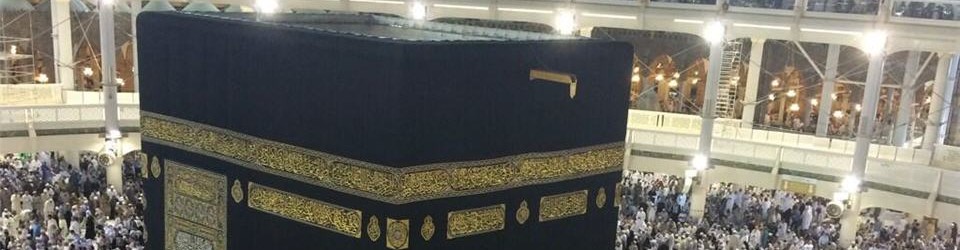
Masjid al-Haraam, Makkah e mukarramah, after ‘esha salah, Friday, 22 July 2011

Hazrat Shaikh db is in Haramain sharif

Sayyidi wa sanadi Shaikh Mufti Mohammad Taqi Usmani (Allah preserve him) is in Makkah e mukaramah these days. He will be delivering a lecture at the Muslim World League conference, inshaAllah.

Shaikh Mufti Rafi’ Usmani (Allah preserve him) is also here to attend this conference.

They will, inshaAllah, visit the Beloved Prophet (Allah bless him and give him peace) at Medinah e munawwarah and return to Pakistan in early Ramadan.

Hazrat’s Umrah, 19th Sha’ban 1432

Tasawwuf is totally subservient to Quran and Sunna

die-before-you-die

Shaikh Mawlana Shah Wasiullah Allahabadi (Allah have mercy on him) said,

‘I have made it essential to include in my speech and writings (about the path) the sayings of the scholars of the Divine law and Prophetic traditions ( that is, fuqaha and muhaditheen). This is in order to save Tasawwuf from becoming an independent discipline in itself and to keep it totally subservient to al Quran and al Sunna.

I am observing that in this era people want to make it an independent discipline. I consider this to be the source of (religious) calamities.

Therefore, in addition to my writings  I start my speeches with quotations from Quran and Sunna. Then to support them further  I mention the stories of pious precedent saints and their sayings. And this is the way Hakim al Umma (Mawlana Ashraf ‘Ali Thanawi, Allah have mercy on him)  did in his book ‘Masail e Sulook’.

………..

This approach has benefited me a lot and I hope that it will be beneficial for others to. The first benefit will be the awareness of knowledge of Quran and Sunna. Also, when it will be firmly established in minds that the real obedience is is that of the Prophet (Allah’s blessings and peace be upon him) the desire to traverse the path in accordance with Sunna will develop. The blessings (barakah) of this mode will be axiomatic.  Finally, knowledge of those things that are against Sunna and have crept into Tasawwuf will be acquired. This will save the masses from massive misguidance.’

Halaat e Muslih al-ummat ra, volume 3, page 319

Sayyidi wa sanadi Shaikh Mufti Taqi Usmani (Allah preserve him) has this same style.  In his weekly discourses for the seekers of islah he has given dars of Prophetic traditions from Riyadh us Saliheen of Imam Nawawi, Adabul Mufrad of Imam Bukhari, Kitab uz Zuhd of Imam Ibn al-Mubarak, Tasharuf of Hakim al Umma (Allah have mercy on all of them). MashaAllah!

Moulana Yunus Patel ra

Death is an inevitable reality.

There is no escape.

The beloved of Allah, our master Prophet (Allah bless him and grant him peace) tasted it to.

The news of the death of Shaikh Moulana Yunus Patel (Allah have mercy on him) is a big shock for all the spiritual aspirants. However, the circumstance under which it occurred  would make any Muslims desirous of such death. That is, in Holy city of Makkah, facing the kaba sharif, immediately after performing tawaf, etc.

May Allah make his complete magfirah and grant him jannat al-firdaus. Amin!

On 5th July 2011 he replied to an individuals request for dua and advice as follows;

‘Bismillahir Rahmaanir Raheem

Wa alaikumus Salaam wa Rahmatullahi wa Barakatuh

Making dua for you. Download and listen to the bayans and talks on the Internet www.yunuspatel.co.za

Inshallah it will suffice for Nasihat.  I am presently in Madinah Sharif and will not be able to respond immediately to emails. Nevertheless making a lot of dua that Allah Ta’ala bless me, bless you and the Ummat at large with complete reformation and change with Afiyyat and best of dunyah and akhirah.

Was Salaamu alaikum wa Rahmatullahi wa Barakatuh

Yunus Patel (Maulana)’

Please, try to make dua and esal-e-thawab for him.

JazakAllah.

Related: On Death of the Sheikh!

Time management


 – Go to sleep right after Isha salaat and wake up in tahajjud. Complete all your reading and writing tasks at that time. That has been the routine of our akaabireen.

– Never attend any gatherings after 9 pm. If there is a gathering at your place, make sure its ends before 9!

– He further said that nowadays most of the gatherings are not segregated so one can easily apologise the host beforehand for not being able to attend it. Secondly, one could very well visit earlier, give a present and politely inform the host why they needed to leave.

The biggest ‘calamity’ that has befallen the urbanites is this day and age is that they have stopped sleeping early, and the misfortune (be-barkati) this produces in one’s life, and time, is clearly evident in our messed up daily routines.’

musaafir-e dasht

Inna lillah: Shaikh Riffa’t Ahmad Khan

Shaikh Riffa’t Ahmad Khan a murid of Hakim al-Umma Mawlana Ashraf Ali Thanawi and khalifa of Arif billah Dr Abdul Hayy Arifi (Allah have mercy on all of them) passed away earlier this year.

He was in his nineties. Like all our precedent pious personalities he lived a low profile life.

May Allah make complete magfirah and shower His blessings on him. Amin!

He narrated a saying of Arif billah,

‘Gratitude and seeking forgiveness are the basis and key to (the desired level of) servitude (abdiyet).  Asking (Allah for) forgiveness leads to (increasing) servitude and thankfulness (of Allah) to (more) gnosis (marifah).’

Ta’mir e seerat, page 14

Madina al-munawwara

Archetype: Our akabir

Hafiz Mohammad Iqbal writes about his Shaikh Mawlana Manzur Nomani (Allah have mercy on him),

‘An overwhelming condition of negating his own self (i.e. good qualities and perfections) and veiling his states permeated his demeanor and spiritual tone. Till the very end of his life he firmly acknowledged himself to be from the juniors and completely deficient. It was for this reason that his spiritual grandeur was recognized by very few individuals.

However, ordinary people like us observed during his whole life the levels of servant-hood (abdiyet)  and slavery (bandegi) that engulfed him.’

Shajraat e Nomaniya, page 5

An important advice: How to be tolerant?

Shaikh Hafiz Hakim Fakhruddin Allahabadi (Allah have mercy on him) instructed his disciples,

‘Be steadfast on Religion (ad-Deen).

Do not create dissensions.

Hold fast to the principles (usool) and do not denigrate each other for the peripheral disagreements.

Consider this disagreement amongst the truthful scholars to be a mercy.

In regards to those who consider themselves to be mujtahid and disagree with the precedent Imams, scholars, pious saints and concoct meanings of the Holy Quran in a manner that was never done by the blessed Companions, their associates (taba’i & tab’ taba’i), well established scholars and Imams : consider them to be astray. It is essential to stay away from them. However, do not quarrel with them or call bad names. To answer and argue with them is the duty of the pious scholars. Not any or everyone can do this job.

It is essential for an individual to be always cognizant of his actions. Stay away from sins and transgressing your Lord. If by chance a sin is committed immediately repent in front of Allah. This will wipe away the sin.’

Majmua’h award wa wazaif, page 4

Dealing with marital conflicts

Shaikh Mawlana Yusuf Ludhyanawi shaheed (Allah have mercy on him) said,

‘A pious man wrote to his Shaikh the complaints about her wife in detail and requested advice on how to deal with this situation.

The Shaikh replied that, how can an individual who can not be patient on the (mental & emotional) afflictions caused by his wife claim to be superior to her?’

Narrating an incident of a friend Shaikh said,

One day I became fed up of this continuous bickering between my wife and myself and approached Shaikh Arif-billah Dr. Abdul Hayy Arifi (Allah have mercy on him). I told him that I am tired of this situation. I am short tempered and my wife is more short tempered than me. Patience and forbearance is totally lacking in both of us.  Please, guide what should I do?’

Shaikh Arif-billah used to be very succinct in his replies. He avoided lengthy talks. He listened carefully and recommended,

‘Make the traffic one-way.’

That is, let her speak and you remain quiet.

I did as instructed and the situation became better.’#

‘….. In summary in regards to the eccentricities of their spouses men should have forbearance. They should try to improve (islah) them as much as possible and leave the rest to Allah.’*

Momin aurat, # page 43, * 42

Sufi sama’

Shaikh Fakhruddin Zarradi a senior khalifa of Mehboob e Ilahi Shaikh Nizamuddin Dehlawi (Allah have mercy on them, d. 725Hijri/1325CE) writes,

‘Few of the spiritually overwhelmed (maglub) Shuyukh may have listened to the audition (sama’) accompanied with musical instruments in their state of overpowering desire (shauq). However, our mashaikh (may Allah be pleased with them) are free of this. It is an allegation. Their audition was purely vocal rendition of verses by a reciter (qawwal) describing the perfections of Allah’s creation.’

Usool e sama’, page 21-2

Guidance

The pious Gnostic (‘arif)  swear by Allah that acceptance of guidance is neither achieved by intelligent argumentation nor via thorough research. Neither can one thrust it forcefully nor passionately upon another.

It is the light of guidance itself from Allah that illuminates the heart. The doubts cease and truth is manifested. It is an act of mercy, kindness and benevolence from Almighty Allah.

Supplications play a vital role in facilitation of this. Therefore, one should not be neglectful of making excessive dua. This is asking, showing one’s need, reliance and humility to Allah.

Setting priorities


The initial instruction given to the seekers by the khalifa of Hakim al-Umma Shaikh Mawlana Shah Asadullah (Allah have mercy on them) have been published in ‘Asa’ad ut-Talibeen’.  

They include;

Completion of qaza salah and fasts, performance of the fardh Hajj and emphasis on payment of zakah.

Moreover, abstaining completely from back-biting (ghiba), foul language, loose talking and purposeless interminlgling with others.

Reading the books of Hakim al-Umma Mawlana Ashraf Ali Thanawi (Allah have mercy on him).

Performing each salah meticluously in first row with the opening takbir along the Imam’s.

The following issues were especially instructed,

1. Keep the dealings (with others) very clear.

2. Do not cause any discomfort and harm to others

3. Do not interfere in the matters of others unnecessarily.

4. Take account of yourself (nafs) daily. Be thankful for the good deeds and repent on the mistakes.

5. Never ever be satisifed with yourself (nafs). Always watch over your outward and inner actions.

6. Follow the instructions given and the ma’amolaat.

7. Keep (the Shaikh) updated about your state and condition.’

Akse-Jameel ra, page 201-2

Reading classic text without Shaykh’s permission

Shaikh Abdul Qudoos Gangohi [d. 944 Hijri/1537 CE] (Allah have mercy on him) said,

‘Qutub e ‘Alam Sultan al-Mashaikh Khawaja Nizamuddin Awliya came to know that Shaikh Naseer uddin Chirag Dehlavi (Allah have mercy on them) is reading a book authored by Shaikh Dhunun Misri (Allah have mercy on him). He called him and informed him that this had come to his knowledge and it was his instruction not to do so. The reason being that when you read about the pious predecessors and do not find some of their attributes in your Shaikh the Satan finds a way to sow the seed of contention. Moreover, he creates doubts about your Shaikh in your heart (and mind). This dissipates the effort (of islah & sulook).

The point to pay attention attention in this incident is that he forbade reading such text for Qutub e ‘Alam Shaikh Naseer uddin Chirag Dehlavi (Allah have mercy on them) in spite the fact that he was perfect (kamil) and truthful (sadiq), and truthful can not be misguided by Satan. This forbidding was an admonition for the others.’

Maktubat e Qudusiya, # 89, page 331