Category Archives: S. Sunna

Beware of imposters

Unfortunately we live in an era where the distinction between real and fake is sometimes very difficult to make. Even in religious issues. Marketing tactics, boastful false claims, slick presentation skills and mass propaganda can be misleading.

We often fall prey to these schemes. This is mainly because we are not aware of the gold standard to assess these issues. Making the correct decision is almost impossible.

Similar is the case in selecting a Shaikh for spiritual improvement.

Hakim al Umma Mawlana Ashraf Ali Thanawi (Allah have mercy on him) said,

‘I can not claim any perfections for myself.

All praise is to Allah. I have seen the real perfect men (the pious predecessors Shuyukh and scholars). No imposter can fool me by claiming to be human whereas in reality he is a buffalo.’

Malfuzat e Ashrafiya

The gold standard to make this distinction is the meticulous following of Sunna. This following should be comprehensive and perpetual in outward appearance, morals, behavior and dealings.

Achieving real prosperity

Mawlana Qamar uz Zaman Allahabadi (Allah preserve him) said,

‘To achieve real prosperity (sa’adet) three things are required,

1. To protect one’s heart from involvement in things that result in wasting time and corruption of the heart itself.

2. Following Sunna meticulously in all matters.

3. To acquire the ‘nur‘ of ‘following the Sunna’.

——The initial two are achievable by effort (ikhteyari), whereas the last one can not be achieved by effort alone (ghair ikhteyari). It is a gift bestowed by Allah.’

Al-Ifadat al-Ahsaniya, page 254

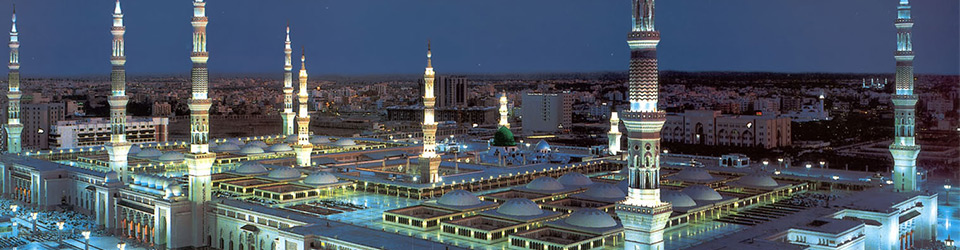
*P.S. Photo:The mata’af expansion 2012.

حضرت تھانوی قدس سرہ کا انداز تربیت اور تقوی کا حصول

سیدی و سندی حضرت مولانا مفتی محمد تقی عثمانی صاحب مدظلھم العالی

وعظ

حضرت تھانوی قدس سرہ کا انداز تربیت اور تقوی کا حصول

Karamah

Sayyidi wa sanadi Shaikh Mufti Mohammad Taqi Usmani (Allah preserve him) wrote in the obituary of Shaikh Nawab Eshrat Ali Khan Qaiser (Allah have mercy on him),

‘Recently (prior to his death) he confided in me and said, all praise is for Allah, I do not recall leaving a salah with jama’ah (congregation) for the previous fifty two years.’

Al Balagh, March 2012, Rabi II 1433, page 5

(Akabir occasionally disclose information like this to motivate their disciples.)

Signs of opening of heart

Once Prophet (Allah bless him and give him peace) read the verse of Holy Quran:

“So, whomsoever Allah wills to guide, He makes his heart wide open for Islam,….”

[Surah- An’aam : [6:125]

Thereafter, Prophet (Allah bless him and give him peace) said: “When the Light of Islam enters a person’s heart, it opens up for it.”

Someone said: “O Prophet! Is there a sign which indicates this opening of the heart?”

Prophet (Allah bless him and give him peace) said:

‘The aversion of this pretentious worldly life,

the fondness of the everlasting life (Here-after) and

preparation before the coming of death.”‘

[Mishkaat] Maut ki Yaad Hazrat Shaikhul Hadith ra

O spiritual aspirant: Be a mullah!

و الذ کر اسم ربک و تبتل الیہ تبتیلا۔مزمل۔۸

Hakim al-Umma Shaikh Mawlana Ashraf Ali Thanawi (Allah have mercy on him) said,

‘In brief it is essential to disassociate completely from all that is created and focus towards the Creator.

It is clear that thorough disassociation is not at all possible without limiting the relations (with others) (Obviously non-wajib).

The Shuyukh and salikeen should be vigilant in decreasing these associations. They should be perturbed by the gathering of people around them and the respect they show, etc..

Develop this disposition, because the achievement of perfect state of harmony (with the Divine:wusool) is not possible without it.

Based on experience my opinion is that one must live like a blunt mullah. There should not be expression of overwhelming emotions or distribution of amulets & charms (ta’weez, ganday). Do not emulate the lifestyle of the (contemporary) dervishes. All these thing lead to gathering of people.

Live like a mullah, so that others get an impression that you are a vapid mullah.

Instruct your associated to do the same. Bestow them spiritually whatever you want to confidentially in such a manner that none is suspicious that you possess something (spiritual wealth). Keep the external means afar and hide yourself as much as possible.’

Waaz: al-wasal al-fasal,Tasleem o raza, Khutbaat e Hakimul Ummat ra, volume 15, page 203

Differentiate between needs & desires


Allah (Most Exalted) says;

‘whereas for the one who feared to stand before his Lord,

and restrained his self from the (evil) desire,[79:40]

the Paradise will be the abode.[79:41]

So, have you seen him who has taken his desires as his god, and

Allah has let him go astray, despite having knowledge, and has sealed his ear and his heart, and put a cover on his eye?

Now who will guide him after Allah? Still, do you not take lesson? (45:23)

———————————————————————-

A need is something that is necessary for an individual to live a healthy life.

Needs are distinguished from desires because a deficiency would cause a clear negative outcome, such as dysfunction or death.

Desire is a sense of longing for a person or object or hoping for an outcome.

—————————————————————————

These desires may be permissible or impermissible.

The Shariah decides these limits and their rulings. The way of Sunna delineates how to safeguard these limits. Finally, the tariqat ensures how these limits are effectively implemented in one’s life practically.  Hence, a faithful believer is ensured salvation from the above mentioned Quranic admonition.


Three basic rights of every Muslim

‘It is essential that you provide the following three things to every Muslim;

1. If you can not provide any benefit to him, do not harm him.

2. If you can not make him happy, do not make him sad.

3. If you can not praise him, do not condemn him.

Ahzab tahzib un nafusMunajat e maqbool, (zamimajat, Saeedi), page 312

Silence

The blessed Companion Jabir bin Samrah (Allah be pleased with him) narrated that,

The Prophet (Allah bless him and grant him peace) used to remain silent most of the time.

It means that talking less was a prominent feature of his character. If something important and beneficial was needed only then he would speak otherwise he remained silent.

It is reported in Shahih al-Bukhari, al-Muslim and other books of Hadith: ‘Whoever believes in in Allah and the Here-after he should either speak good or remain quite.’

Our master the leader of the believers Abu Bakr Siddiq ( Allah be pleased with him) said,

‘I wish I was (partially) inarticulate and only had the power of speech to make remembrance of Allah.’

Mazahir al-Haq, sharh Mishkat, volume 5, page 352

Related

Be merciful!

Sayyidi wa sanadi Hadhrat Mawlana Mohammad Taqi Usmani (Allah preserve him) was approached by two scholars who requested for permission to narrate the Prophetic sayings (sanad e hadith). Both were graduates of Nadwat ul Ulama, Lucknow. They had brought the canonical books of the blessed Prophetic sayings (Hadith) with them and wanted to recite the initial hadith from all of them and then get the permission.

Hadhrat sayyid wa sandi told them that it is better to start with hadith musalsal bil awaliya. He narrated it to them through his Shuyukh, particularly Shaikh Hasan Mashat al-Maliki, al-Makki and Shaikh Yaseen Fadani (Allah have mercy on them):

The Prophet (Allah bless and give him peace) said, “The merciful are shown mercy by the All-Merciful, تبارك و تعالى. Be merciful to those on earth and the Lord of the Heavens will be merciful to you.”

Then they read the first hadith from each of the Hadith text. Sayyidi corrected their reading for any mispronunciations. When they read from Musnad e Ahmad he clarified that he has ijaza of it by permission and not via studying it with a Shaykh (darsan).

Afterwards they requested for some advice.

Sayyidi wa sanadi pointed out to them that traditionally the first lesson a student of Islamic sciences gets from his teacher is this Prophetic saying, musalsal bil awaliya.

Why is it like this?

The authors’ of the books of hadith have initiated their works by various different Prophetic sayings, as you read earlier in this session.

Imam Bukhari (Allah have mercy on him) considering the utmost importance of sincerity started with rectifying the ‘intention’: “The reward of deeds depends upon the intentions and every person will get the reward according to what he has intended. So whoever emigrated for worldly benefits or for a woman to marry, his emigration was for what he emigrated for.

Imam Muslim (Allah have mercy on him) started with the basic believes: One day we were sitting in the company of Allah’s Apostle (peace be upon him) when there appeared before us a man dressed in pure white clothes, his hair extraordinarily black. There were no signs of travel on him. None amongst us recognized him. At last he sat with the Apostle (peace be upon him) He knelt before him placed his palms on his thighs and said: Muhammad, inform me about al-Islam. The Messenger of Allah (peace be upon him) said: Al-Islam implies that you testify that there is no god but Allah and that Muhammad is the messenger of Allah, and you establish prayer, pay Zakat, observe the fast of Ramadan, and perform pilgrimage to the (House) if you are solvent enough (to bear the expense of) the journey. He (the inquirer) said: You have told the truth. He (Umar ibn al-Khattab) said: It amazed us that he would put the question and then he would himself verify the truth. He (the inquirer) said: Inform me about Iman (faith). He (the Holy Prophet) replied: That you affirm your faith in Allah, in His angels, in His Books, in His Apostles, in the Day of Judgment, and you affirm your faith in the Divine Decree about good and evil. He (the inquirer) said: You have told the truth. He (the inquirer) again said: Inform me about al-Ihsan (performance of good deeds). He (the Holy Prophet) said: That you worship Allah as if you are seeing Him, for though you don’t see Him, He, verily, sees you. He (the enquirer) again said: Inform me about the hour (of the Doom). He (the Holy Prophet) remarked: One who is asked knows no more than the one who is inquiring (about it). He (the inquirer) said: Tell me some of its indications. He (the Holy Prophet) said: That the slave-girl will give birth to her mistress and master, that you will find barefooted, destitute goat-herds vying with one another in the construction of magnificent buildings. He (the narrator, Umar ibn al-Khattab) said: Then he (the inquirer) went on his way but I stayed with him (the Holy Prophet) for a long while. He then, said to me: Umar, do you know who this inquirer was? I replied: Allah and His Apostle knows best. He (the Holy Prophet) remarked: He was Gabriel (the angel). He came to you in order to instruct you in matters of religion.

Whereas the authors of Sunan (Allah have mercy on them started with cleanliness and purity (tahara).

Imam Malik (Allah have mercy on him) thinking that the rulings of tahara will only be applied when the time of salah arrives started Muwatta with the timimgs of the prayers: Don’t you know that the angel Jibril came down and prayed and the Messenger of Allah, may Allah bless him and grant him peace, prayed.’ Then he prayed again, and the Messenger of Allah, may Allah bless him and grant him peace, prayed. Then he prayed again, and the Messenger of Allah, may Allah bless him and grant him peace, prayed. Then he prayed again, and the Messenger of Allah, may Allah bless him and grant him peace, prayed. Then he prayed again, and the Messenger of Allah, may Allah bless him and grant him peace, prayed. Then Jibril said, ‘This is what you have been ordered to do.

The reason to select this specific hadith is, most likely, to remind us that Allah’s attribute of mercy predominates and surpasses His attribute of wrath. The Holy Quran starts with ‘With the name of Allah, the All-Merciful, the Very-Merciful’[1:1]. Then comes,’Praise belongs to Allah, the Lord of all the worlds [1:2] the All-Merciful, the Very Merciful[1:3].

The message that is being conveyed here to the novice student of Deen is that the characteristic of mercy should predominate in your character. This should be the moto of your life. Be merciful to all the humans on the face of the Earth, including the Muslims and the Non-Muslims. However, the modes and manifestation of this mercy may differ for each of them.

We should be merciful even to Non-Muslims. This means that we should have a burning desire in our heart that Allah guides them to truth. And they receive salvation, enter Paradise and are saved from Hell-fire. We should invite them to Islam with love and compassion.

We restrict this mercy to Muslims alone. However, in reality it should be on Non-Muslims to.  The hatred is not for any Non-Muslim individual but for his devious beliefs (kufr & shirk). As person we should have compassion for him like we have for a person afflicted with a disease.

Hence, the reason why our pious predecessor teachers selected this hadith for the very first lesson was to sow the seed of mercy in an aspirants heart. To make him realize its importance so that he becomes a manifestation of this mercy for the whole mankind.  Following our Master the ‘Mercy to the universe’ (rehmatul-il-‘alameen) Prophet Muhammad (Allah bless him and grant him peace) he brings the creation closer to Allah.

May Allah make us understand this fully and facilitate acting according to it. Amin!’

Qari Rafiq’s residence, Jeddah, al-Safa distt. 14th January 2012, after maghrib

___________________________________________________________________________________

Main Entry:
mercy  [mur-see]
Part of Speech: noun
Definition: kindness, compassion
Synonyms: benevolence, benignancy, blessing, boon, charity, clemency, commiseration, favor, forbearance, forgiveness, generosity, gentleness, godsend, goodwill, grace, humanity, kindliness, lenience, leniency, lenity, lifesaver, luck, mildness, pity, quarter, relief, ruth, softheartedness, sympathy, tenderness, tolerance
Antonyms: cruelty, intolerance, meanness, uncompassion

Tackling eccentric opinions

Mention was made about the stream of publications written recently against the eccentric views of a contemporary scholar.

Sayyidi wa sanadi Shaikh Mufti Mohammad Taqi Usmani (Allah preserve him) said,

‘Indeed we live in a era where holding individualistic views are common. Anyone with an attentive audience feels free to do it. It is one of the signs of the end of time as mentioned in a Prophetic sayings.

فإذا رأيت دنيا مؤثرة وشحا مطاعا وإعجاب كل ذي رأي برأيه، فعليك نفسك

However, the tactics used to bring this to their attention and correct them should be with utmost wisdom, thorough knowledge and in a heartfelt manner. It should be in private. This is so that they are not humiliated and alienated.

Publishing these sorts of books is usually not useful. It will lead to the publication of a rebuttal and then another answer to it will be written. This process will be repeated multiple times without any benefit. Moreover, all this argumentation and infighting adds to the armamentarium of the enemies of Islam.

These issues were referred to us at Darul ifta in Darul Uloom, Karachi also many years ago. We wrote in detail about them and send it directly to the highest authorities in charge of the movement this scholar is associated with. All praise to Allah, it was received well by them and significant improvements were made according to our recommendations.’

Makkah Towers # 2, 3rd January 2012, after esha

Kindness

Definition: compassion, generosity
Synonyms: affection, altruism, amiability, beneficence, benevolence, charity, clemency, consideration, cordiality, courtesy, decency, delicacy, fellow feeling, forbearance, gentleness, good intention, good will, goodness, grace, graciousness, heart, helpfulness, hospitality, humanity, indulgence, kindliness, magnanimity, mildness, patience, philanthropy, serviceability, solicitousness, solicitude, sweetness, sympathy, tact, tenderness, thoughtfulness, tolerance, understanding, unselfishness
Antonyms: cruelty, harshness, meanness


Our master the holy Prophet, may Allah bless him and grant him peace, said,

إن الله يحب الرفق في الأمر كله (رواه البخاری)۔

“Allah is kind and loves kindness in every matter.”

إن الرفق لا يكون في شيء إلا زانه . ولا ينزع من شيء إلا شانه ( رواه مسلم) ۔

“Whenever kindness is in a thing it adorns it, and whenever it is removed from anything, it disfigures it.” [Muslim]

——————————————

Sayyidi wa sanadi Shaikh Mufti Mohammad Taqi Usmani (Allah preserve him) often says that Arabic is a very unique and rich language. It has a huge vocabulary. Sometimes it is quite difficult to convey the meaning of a word when translating it into another language. This is specially so with the languages like English.