

عشق

——————————-
وصل ہو یا فراق ہو، دونوں ہیں ایک ایک ادا
عشق ہو جس کو اے جمیل ہجر میں تلملاۓ کیوں
مفتی جمیل احمد تھانوی رح
Benefitting from Shaykh’s letter

Shaykh Ahmad Ali Lahori (Allah have mercy on him) said,
‘The spiritual effulgent blessings (faiz) that a disciple attains by being in the company of a perfect Shaykh can also be effectively accquired from the letter of the Shaykh. This is because when the seeker shakes hand with the Shaykh he derives blessings (tawajjuhat) through touch, when Shaykh observes him he derives benefit from the sight. And when the Shaykh responds to the disciple’s letter, the blessings from his hand, sight and mind all are concentrated in that writing.
Therefore, it is essential that the murid not only reads the letter with full concentration but he should show perfect reverence and full devotion to it in order to benefit from the three fold spiritual blessings.’
Shaykh al-Tafsir kay hairet angez waqeyat, page 277
Developing congeniality with this path

Shaykh Nawab Eshrat ‘Ali Khan Qaiser (Allah preserve him) instructed,
‘To develop perfect congeniality of this path (tareeq) it essential that senior murid reads the biography of Hakim al-Umma, Ashraf us-Sawanih volume 2, Maasir e Hakim al Ummat and Tarbiyet us Salik. The intention should be to act on the information for his own reformation (islah).
Halaat e Eshrat wa Maktubat e Masih al-ummat ra, page 80
Taking sides

Hakim al-Umma Mawlana Ashraf Ali Thanawi (Allah have mercy on him) wrote supporting the ban on Darul Uloom Deoband’s student involvement in political activities,
‘Assume three friends are traveling. At a certain point in their path they found that three or four wolves are attacking a lion.This is blocking the road. These people did not have any weapons. However, around them there are stones and rocks. These three individuals differed in opinion and hence acted differently.
One opted that he must help the lion. If he is victorious then being affected by my favor he would not bother me and allow me to pass forward.
The second thought that lion is alone and wolves outnumber him. Most likely the wolves will be victorious in the fight. If I help them they will repay my favor by not bothering me and allow me to walk on the path peacefully. Hence, he started to attack the lion with the stones and rocks.
The thrid individual decided that attacking with stones and rocks is neither enough to help the lion nor the wolves. In case if the one I helped is defeated the opponent will unnecessarily become my enemy with this futile effort. Even if he is victorious then what guarantee is there that his animal instinct will not overwhelm his intelligence. And he may harm me whenever he gets a chance. Therefore, until I have satisfactory means to defend myself it is best not to help anyone. Moreover I must ensure my own safety to the best of my ability. Then let whomever be victorious. It is possible that due to the lack of my involvement in this fight none will bother me. And even if he does bother me I would not be troubled that I myself made him an enemy.
Therefore, this third person parted from the other two and got involved in in his own safety measures. He used all his effort to avoid their reach. With calmness and serenity he made a long detour to reach the path ahead. Now it is his bad luck if the lion and wolves follow him there.
These are three disnticnt methodolgies taken by the three individuals. If these individuals did not oppose the established rules of intelligence and their intention was also not corrupt ( to reach their decision) then no one can rationally rebuke them.
However, if it is conveyed to an individual with explicit proof that your decision is dangerous and he can not defend it appropriately but continues to persist on his opinion then it is essential to rebuke him.’
Naqoosh wa tasurat Hakim al-Ummat ra, by Mawlana Abdul-Majid Daryabadi ra, page 272-3
Muslim mindset!

Mawlana Kalim Siddiqui (Allah preserve him) said,
‘It is essential for us Muslims to develop a positive mindset. This is especially required in dealing with non-Muslims.
Always being suspicious of non-Muslims and cooking conspiracy-theories is not from the teachings of Islam.
The way of the the Prophet (Allah bless him and grant him peace): Sunna, is to have a strong yearning and heartfelt effort to benefit them. We need to remind ourselves about the Prophet’s trial in Taif. He was asked to supplicate for the destruction of those who caused him harm. However, he denied that and passionately prayed for them and their future generations’ guidance and salvation.
It is hypocritical that we are benefiting from all the technological advances designed by these non-Muslims and we do pay them back in kind. Moreover, we desire harm to them. This is explicitly un-Islamic.
The best kindness and gift we can present to them is Islam. A pure, dignified and simple life style. To save them from eternal hellfire.’
Waaz, after esha, Jeddah, 22 November 2010
What to ask Shaykh?

Hakim al-Umma Mawlana Ashraf Ali Thanawi (Allah have mercy on him) said,
‘One should keep the Shaykh constantly informed about his spiritual diseases & states and follow whatever he recommends. Just continue with these two things for your whole life.
Inform Shaykh explicitly about your condition. People hide their ailments from the Shaykh. How is it possible that without telling the he will be informed of your condition?
Even if you intend initiating a new worldly endeavor ask the Shaykh would it be detrimental for your spirituality. For example, I intend doing this trade, is it appropriate for me to indulge in it. However, this should not be with the intention that by doing so the trade will be profitable. As though the Shaykh will consult Allah and confirm the success. This should not be the intention at all. This is an extremely corrupt intention.
The method should be like this; I intend to do this business, or I want to be transfered to such a position or I want to study English or medicine would it be detrimental for my spirituality.
These are the things to be asked from the Shaykh.
Nowadays people do whatever they desire. They do not inform the Shaykh. Hence, they corrupt their spirituality. They make excuse that these are worldly issue and it is not essential to inform the Shaykh about them. Whereas in reality these things have major effect on one’s spirituality.
Therefore, whenever you intend to initiate a new worldly endeavor inform the Shaykh in advance and get his advice regrading it.’
Waaz Rahat al-Quloob, page 263-4
اکابر دیوبند کی خصوصیت: تواضع،فنائیت اور للہیت

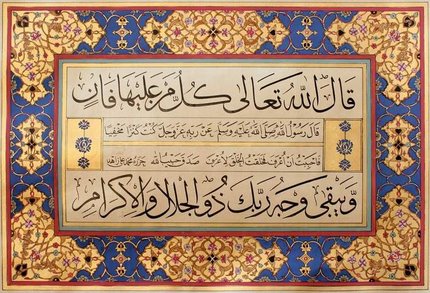
————————————
سیدی و سندی حضرت مولانا محمد تقی عثمانی صاحب مدظلہم العالی نے فرمایا
اگر صرف وسعت مطالعہ، قوتِ استعداد اور کثرتِ معلومات کا نام علم ہوتو یہ صفت آج بھی ایسی کمیاب نہیں لیکن اکابر دیوبند کی خصوصیت یہ ہے کہ علم وفضل کے سمندر سینے میں جذب کرلینے کے باوجود اُن کی تواضع،فنائیت اور للہیت انتہا کو پہنچی ہوئی تھی۔ یہ محاورہ زبان زدِ عام ہے کہ ”پھلوں سے لدی ہوئی شاخ ہمیشہ جھکتی ہے“ لیکن ہمارے زمانے میں اس محاورے کا عملی مظاہرہ جتنا اکابر دیوبند کی زندگی میں نظر آتا ہے اور کہیں نہیں ملتا۔
———————————
The Takbeerat of Tashriq


-It is essential (wajib) for every adult Muslim to recite the Takbeeraat of Tashriq after every obligatory (fardh) salah, which is performed with congregation (jamah), from the Fajr of the 9th of Zil Hijjah until after the Asr of the 13th Zil Hijjah
-They should be recited (at least) once in an audible tone.
-It is desirable for those who perform their salah alone (men or women) and travellers, to recite them.
بنا كر فقيروں كا بهيس

بنا كر فقيروں كا بهيس هم غالب
تماشئہ اهل كرم ديكهتے ہیں
Whom to follow?

_____________________

Imam al-Ghazali and the signs of the ‘Ulama
____________________
A considerable confusion exists among the Muslims regarding the religious leadership.
This is compounded by the plethora of religious information and instructors online.
Some people endorse scholars from a particular lineage, others from a particular ethnicity, fiqh following or no fiqh following and others look up to some families that their forefathers have been following from centuries. Many recommend any scholar with a continuous teacher-student lineage (sanad) reaching up to our master Prophet Muhammad (Allah bless him and grant him peace.)
However, the confusion remains.
The most beneficial information in this regards is the one being presented in the above article. It expounds on the qualities a true scholar must have.
Shaykh al-Hadith Mawlana Zakariyyah (Allah have mercy on him) quoted this in Fazail -e-Sadaqat, from ‘Proof-of-Islam’ Imam Ghazali’s (Allah have mercy on him) epic work Ihya al-Uloom ad-Deen, volume 1.
Realizing its benefit Mawlana Mazoor Nomani (Allah have mercy on him) published it in a seprate booklet (Ulama-e-Akhirat ki pehchan, (Urdu) Al-Furqan book depot,Nazeerabad, Lucknow).
It is fortunate that Mawlana Ismael Nakhuda khalifa of Shaykh Mawlana Abdul Hafeez Makki (Allah preserve them) translated and edited this for the benefit of English speaking masses. Allah reward him abundantly. Amin!
Following is a brief summary of the qualities. Careful and repeated readings of the full article in highly recommended to understand and apply this important information in our daily practical life.
1. An ‘alim is one who does not try to acquire wealth through his learning.
2. A true ‘alim is that there should be no contradiction between his knowledge and his practice of din.
3. He is always concerned with such branches of knowledge that are beneficial for the hereafter and which exhort one to perform good deeds.
4. He is least interested in the elegance of dress or delicacies of food.
5. He (without any necessity) keeps away from sultans and rulers, and never visits them.
6. He does not take hasty decisions when giving verdicts in religious law (fatwas) and is very careful in giving advice on religious matters.
7. He is seriously interested in the esoteric science, in other words Suluk.
8. His faith and belief in Allah Most High is ever increasing and they are always concerned about this — firm belief is [a believer’s] capital.
9. Under all conditions, he should wear a true expression of being inspired with the fear of Allah Most High.
10. He is more concerned about those regulations of Islamic law which pertain to religious practices; to what is lawful and unlawful.
11. He has studied, with deep insight, various branches of knowledge. He does not accept the opinions of others, for we are bound to follow the Messenger of Allah (may Allah bless him and grant him peace) and seek guidance from his sayings alone
12. He is strict and stringent in his avoidance of bid’ah (innovations).

Cancellation of khilafet
 __________________________________
Mawlana Shah Wasiullah Allahabadi (Allah have mercy on him) wrote the following to one of his deputies (khalifa),
‘You are aware of the vigilance in maintaining appropriate morals (ikhlaq) in my training. In spite of this what did you do? Mawlana XYZ (a very close murid and another khalifa) came to your town. Considering you to be a close friend (pir-bhai) he paid visit to you. However, you dealt with him coldly showing extreme indifference. Moreover you scolded him.
This (attitude) reveals that you are not capable of instructing and guiding others. Therefore, I cancel your permission (ijazat).
I inform you that should not instruct or guide anyone on my behalf. Neither should you correspond with me nor bother to visit me. Inform all other people (in your area) about this.’
Halaat e Muslih al Ummat, volume 2, page 104
———————————-
Absurd Hajj
____________________

________________________
A close murid residing in Saudi Arabia was coaxed to perform (nafil) Hajj by some friends without the permit (tasrih: the locals are allowed to perform Hajj every 5 years, provided they make arrangements with an agent and pay him for transportation, lodging, etc). Moreover, he did what the locals commonly do. They intentionally leave most of the Sunna, just focusing on the essentials (wajibat) and do whatever is most convenient to themselves. That is, no staying overnight in Mina, performing rami-e-jamarat after sunset, squatting on footpaths and roads for the time they are in Mina, hire small buses for transportation that increase traffic congestion, pitch their own tents or stay in others tent without rental payment, etc.
Sayyidi wa sanadi Shaykh Mawlana Mohammad Taqi Usmani (Allah preserve him) was obviously upset to know these details. He reprimanded the individual firmly and commented that’
‘This was an absurd (bay-tuka) Hajj.’
Alhudmdulillah, the tarbiyet worked.
The murid realized and acknowledged his mistakes. He asked forgiveness from Allah and made a firm decision not to repeat these mistakes. These included,
– disregard for the law set by government. (Permit is to ensure accountability, establish arrangements, ease overcrowding and plan for the future.)
– causing problem to other guest of Allah, who paid for their arrangements
– leaving Sunna intentionally, an explicitly sinful action
– acting on emotional desires and enthusiasm, in place of following the Shariah ruling
-acting against the Shaykh’s established viewpoint (sayyidi wa sanadiMufti Taqi Usmani sahib (Allah preserve him) strongly approves the permit system and encourages all to stick to it.
In short the virtuous actions, even a Hajj, has to been done in an proper manner for it to be accepted by Allah and be beneficial in our islah.
This requires tarbiyet (training under supervision).
wa ma tawfiqi illa billah!
______________
Ummah of Prophet Muhammad

Arif billah Dr. Abdul Hayy Arifi (Allah have mercy on him) said,
‘You are from the Ummah of Allah’s beloved Prophet Muhammad (Allah bless him and give him peace).
So, what rights of his  love and respect are you fulfilling?
How much is the desire and enthusiasm in your heart to follow him ?
Do you follow his Sunna in your appearance, clothing, daily living and dealings?’
Ahmeyet e ramadhan, page 33
Topic of islahi talks?

A senior associate of Shaykh Wasiullah Allahabadi (Allah have mercy on them) descibing the Shaykhs methodolgy in this regards said,
‘The Shaykh did a thorough study of the state of the common and elite (around him). Then according to it he started to advice them in the light of Quran and Sunna. The success of this method is clearly evident in all the sectors of population (that visited him).
It was not that the people required instructions in the basics and in front of them the superior states of the Holy Companions (Allah be pleased with them) were elaborated and no discussion was made about the spiritual diseases afflicting the audience. This would have confused them about their own spiritual state. (That is, by being ignorant of their own poor diseased state and falsely comapring it to the (healthy) believers state.) Then for obvious reasons how could they strive for islah ?’
Halaat e Muslih al-Ummat ra, volume 2, page 38-9