Monthly Archives: February 2007

Recitations after salah

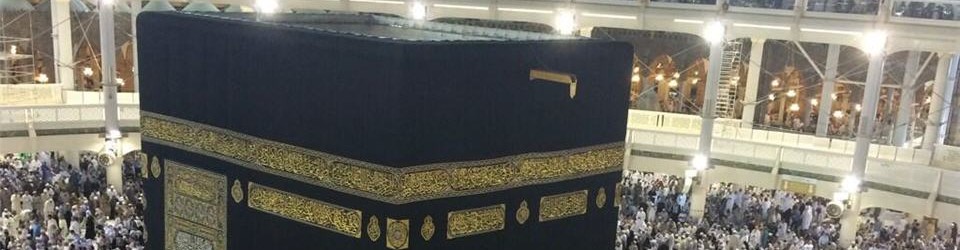
In the Holy Mosque at Makkah, after dohur salah Hadhrat Mawlana Mohammad Taqi Usmani (may Allah preserve him) inquired a close mureed, 

“What do you recite after each salah?”

Mureed mumbled something. 

Hadhrat told him,

“After each salah one should recite the following;

1.  Verse of the throne (ayat al-kursi: al-baqara 255)

2.  Ayah 18, 19, 26 & 27 of surah al-Imran

3.  The four quls (chapter 109, 112, 113 & 114)

4.  The opening chapter (al-fathiha)

5.  Tasbih Fatima (SubhanAllah 33, Alhumdulillah 33 and Allahuakbar 34 time) 

These are from the Sunna recitations. They can be done sitting or walking, like on returning back from salah. 

In addition, my Sheikh (‘Arif-billah Dr. Abdul Hayy ‘Arifi) used to instruct us to recite the Divine name “Ya Wudood” 22 times after each salah.” 

4th Safar 1428/22 February 2007

Serving mother-in-law

Hakim al umma Hadhra Mawlana Ashraf ‘Ali Thanawi (may Allah have mercy on him) said, 

“Understand this thoroughly; it is not essential (wajib) for the wife to serve her mother-in-law. If you are a caring son, provide service to her yourself or get a servant to do so.” 

Islah inqelab, volume 2, page 188, via Tohfa zojain page 24

How to bring a change?

Hadhrat Mawlana Mufti Mohammad Taqi Usmani (may Allah preserve him) speaking on the present condition of the Muslim Umma said,

“For the time being forget about others.

Focus on yourself.

Rectify and reform your condition.

Look at your own deficiencies, not at the faults of others.

Practice Islam completely. Do not limit it to worships (ibadaat) alone. Your social, financial dealings and moral characteristics should be in compliance with Shariah rulings.

To do so, select a guide. Inform him about your deficiencies and ask for guidance.

If each and every individuals starts doing like this the whole community and eventually the Ummah will improve.”

Talk at Masjid Abu Bakar Siddiq ra, Jeddah 25th Feb 2007

News: Dr Mohammad Sabir ra passes away

Homeopathic doctor Hadhrat Muhammad Sabir, of Sukkar, Pakistan, the most dear khalifa of Haji Mawlana Farooq (may Allah have mercy on him) passed away on 5th Safar 1428. He was a very young, energetic and enthusiastic Sheikh of Ashrafiya tareeqa.

May Allah most high have mercy on him, raise his status manifolds in paradise and give exemplary patience to the bereaved family and mureedeen. Ameen.

Please, remember him in your prayers and try to make esal e thawab.

Irregularity in wird!

Hazrat Mawlana Mohammad Taqi Usmani (may Allah preserve him)
told us (while replying to the letter of spiritual aspirants),
“A person has asked me that he is not able to complete his daily recitations (wird) regularly”,
I am replying to him that,
“Unless you have importance of a task in your heart you can not do it properly.”
Meraj us Salikeen: malfozat Ramadhan 1427

A unique way of self reform

Hadhrat Hakim al-Umma Mawlana Ashraf Ali Thanawi (may Allah have mercy on him said,

“Whenever I find the need of reforming myself, I speak on that specific shortcoming of mine (in a public lecture). This is a very beneficial.  My speech entitled Ghadab (Anger) is an example of this.”

The Path to Perfection, page 147

Remedies for spiritual ailments

Hadhrat Mufti Mohammad Taqi Usmani (may Allah preserve him) said,

“Hakim al-Umma laid great stress on prescribing proper remedies for the spiritual ailments of people. This cure was not to give them some sort of medicinal syrup or to engage in (recitation of) some formulas (wazifas), but his prescribed remedy comprised action (either physical or via thought).”

Irshadat-e akabir 25, The Path to Perfection, page 142

Love for Allah

Hadhrat Mufti Muhammad Taqi Usmani (may Allah preserve him) writes;  

“To love for the sake of Allah” means loving someone, not for any worldly gain, but because he is more religious and pious or he is very learned in Deen or is busy in serving the cause of Deen or because loving him or her is commanded by Allah, e.g. one’s parents.”

  “Easy Good Deeds”

Source: An excellent blog:at-Tazkirah: التذكرة

حاضری حرم شریف

رفتم چو بمکہ ھوس کوۓ تو کردم

دیدم رخ کعبہ ھوس روۓ تو کردم

محراب حرم گرچہ بہ پیش نظرم شد

من سجدہ ولے در خم ابرو‎ۓ تو کردم

در سعی و طواف و بحطیم بمقامے

ھر سمت تمناۓ رخ نیکوۓ تو کردم

شیخ العرب و العجم حضرت حاجی امداد اللہ صاحب مہاجر مکی رح

Salik’s social relationships

Hadhrat Mawlana Mohammad Taqi Usmani (may Allah preserve him) instructed an individual who complained of very few social relationships:

“This is a good thing. In the initial phase (of traversing the path) social relationships should be few. Abundance of such acquaintances results in involvement in futile activities.”

Islahi khutoot

Committing A Sin Doesn’t Decrease Desire for It

Hakim al-Umma Mawlana Ashraf ‘Ali Thanawi (may Allah have mercy on him) said:

“Committing a sin thinking it will decrease [or eliminate] the desire for that sin [in the future] is a deception of Satan.

Yes, the desire will decrease temporarily, but the faculty and power of committing sin will be strengthened [in the long term], resulting in the eradication of sin becoming (difficult) beyond one’s power and strength.”


Source: An excellent new blog;
at-Talib
Resources for the Seeker of Knowledge

Avoid causing inconvenience to others

Hakim al-Umma Hadhrat Mawlana Ashraf ‘Ali Thanawi (may Allah have mercy on him) once said:

The sum total of good character is to avoid causing inconvenience to anyone.

The Messenger of Allah sallahu ‘alayhi wasallam forbade anyone from lifting (hiding) the stick (such as a walking stick) of his Muslim brother even if it is out of jest, for this would cause him distress.

Making people laugh at the expense of others is also prohibited due to the embarrassment and inconvenience it may cause.

Source:

Pearls of the Elders:an excellent blog. Excerpts from the biographies, sayings and writings of the ‘Ulama of Deoband


Informing Sheikh regularly is essential

Hadhrat Hakim al-Umma Mawlana Ashraf ‘Ali Thanawi (may Allah have mercy on him) confirmed a senior seeker’s comment that, it is true in most of the cases that if a seeker does not report his spiritual condition to his mentor regularly all further progress is impeded and moreover things already accomplished become obscure.

Tarbiyat us Salik, volume 1, page 98

Seeker’s tasks

Hakim al-Umma Hadhrat Mawlana Ashraf ‘Ali Thanawi (may Allah have mercy on him) said in response to an irrelevant question of a spiritual aspirant;

“To ask such question is against the etiquette (adab).

Seeker (talib) has two commitments to fulfill (in regards to self reformation (islahi) correspondence with the Sheikh).

First, is to inform (the Sheikh) of his spiritual condition.

The other is to inquire about the actions to be performed.”

Tarbiyat us Salik, volume 1, page 99