 Sunna: Prior to entering the mosque remove the left shoe first and place the foot on it (or on any clean surface), then remove the right shoe and step inside the mosque with right foot first.
(al-Targhib)
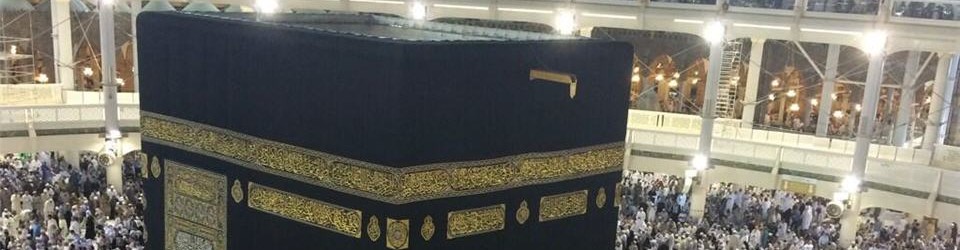
Sunna: Prior to entering the mosque remove the left shoe first and place the foot on it (or on any clean surface), then remove the right shoe and step inside the mosque with right foot first.
(al-Targhib)
The grand-mufti of Pakistan, Hadhrat Mufti Mohammad Shafi’ a senior khalifa of Hakim al-Umma Hadhrat Mawlana Ashraf ‘Ali Thanawi (may Allah have mercy on them) said, “There are numerous minor (sagerah) sins.
All actions performed against the Sunna method are minor (sagerah) sins.
For example, one drinks water without reciting ‘bismillah’, this is a minor sin. Also, if one eats or drinks using the left hand, this is a minor sin.”
(Majalis Mufti-e-azam Albalagh J1,1410 pg 294)
Sunna: To proceed towards the mosque in a dignified manner taking small steps. All these steps are recorded as good deeds, earning merit (thawab). (al-Targhib)
Sunna: To recite the following prayers (dua) when procceding to the mosque for salah,

Abu Idris Khulani (may Allah have mercy on him), one of the most famous student of Companions (a tabi’i) says that once I visited Ma’adh ibn Jabal in the mosque of Damascus and told him that,
“By Allah I love you for the sake of Allah.”
He repeatedly asked me to swear if it was so and when I answered in affirmative every time, he pulled me by my garment (shawl) and said,
“Hear the good news!
I have heard the exalted and blessed Messenger of Allah saying that “Allah says, My love shall certainly be for those who love each other for My sake, who sit in each other’s company for My sake, who visit each other for My sake and spend money on each other for My sake.”
Muwatta Imam Malik, Kitab-al-Shi’r quoted in ‘Easy Good Deeds’ by Sayyidi wa sanadi Mufti Taqi Usmani (may Allah preserve him), page 48
A mureed wrote,
“I perform dhikr of the Supreme Name (is’m dhat: Allah! Allah!) 1000 times daily after noon (dhuhur) prayers. Will it be appropriate if I increase it to 3000 times?”
Hadhrat Mufti Mohammad Taqi Usmani (may Allah preserve him) replied,
“It will be most appropriate to do so, if you can ensure to be steadfast.”
Islahi khutoot
20th Ramadhan 1427
(Before going for Asr)
On my first day, when Hadhrat Mufti Mohammad Taqi Usmani (may Allah preserve him) was going for asr prayer, I asked Hadhrat what should I do while being there (staying in Darul Uloom to be in the company of the Sheikh)?
Hadhrat db told me to do the following:
1. Excessive recitation of the Holy Quran
2. Performance of Tahajjud salah
3. Dhikir of dowazdah tasbeeh (zikir of our tareeqa)
Meraj us Salikeen: Malfoozat Ramadhan 1427
Sunna: When exiting the home recite,
بسم الله ، توكلت على الله ، لاحول ولاقوة إلا بالله
Enumerating the six things that are ruinuous for a seeker Shaykh Masihullah Khan (may Allah have mercy on him) said,
One of them is,
“To abstain from the Sunna of the Messenger of Allah (Allah bless him and give him peace) because of obidience to the desires of the lower self (nafs).”
The Path to Perfection, page 130
Sunna: To proceed to mosque for each prayers (salah) after making wudu at home.
Sunna: To make an intention to go for salah when leaving the home.
Sunna: To leave all the worldly activities and start preparing for salah once the call (adhan) for prayers is anounced.
Sunna: To offer every salah with congregation (jama’a), joining it at the initial opening takbir (takbir-e-ula).
Hadhrat Shaykh Masihullah Khan (may Allah have mercy on him) said,
“Those treading the Path should strive to follow the method of Messenger of Allah (Allah bless him and give him peace) in everything.
Following the Sunna creates much light (nur) in the heart.
The Path to Perfection, page 121
This light (nur) makes it possible to differentiate between virtuous and sinful easy. It also facilitates performance of virtuous and abstinence from sin.
 Sunna of ablution (wudu):
1. To make intention (niyya). That is, remind yourself that I am making wudu for salat, etc.
2. To recite bismilla,
بسم الله الرحمن الرحيم
or
بسم الله العظيم و الحمدلله على دين السلام
3. To wash both hands till wrist three times
4. To use a tooth stick (miswak) to clean the teeth and mouth. If it is not available use finger to rub the teeth.
5. To rinse the mouth three times
6. To rinse the nose thrice
7. To blow and clear the nose three times
8. To wash all the wudu parts thrice
9. For men, to pass wet fingers (khilal) through their beard hairs while washing the face
10. To rub in between the fingers and toes while washing hands and feets.
11. To wipe on the whole head once (masah)
12. To wipe on the ears along with the head
13. To rub the part being wahsed
14. To complete the wudu in one go
15. To wash the body parts in sequence prescribed
16. To start washing the right side parts first
17. To recite the following after completion of wudu
اشهدان لا اله الا الله و اشهدان محمد رسول عبده و رسوله
18. To make wudu thoroughly even at times when one does not feel like making one.
(Nurul Idhah, Tirmizi)
Sunna: To perform ablution (wudu) at home and then proceed to mosque (for salah).
(Bukhari)
Sunna method of bath (ghusul):
1. Wash hands (including the wrists) three times.
2. Wash away semen and other filthy secretions on the body carefully three times.
3. Clean the private parts as described before, both front and back area.
4. Perform ablution (wudu) as per sunna. However, if the water is stagnating at the feet postpone washing feets till the end, otherwise wash them.
5. Pour water on the head first.
6. Then pour water on right shoulder and then on left, in a manner that it washes that side of the body completely.
7. Rub the body with the hands while pouring water making sure that it reaches everywhere and no place remains dry.
8. Repeat the steps 5, 6 and 7 twice more.
(Tirmizi)

Hadhrat Mawlana Mohammad Taqi Usmani (may Allah preserve him) instructs the spiritual aspirants to read Holy Quran daily. One juz (part) is usually recommended. However, if someone is unable to do this because of his busy schedule he may read half or quarter juz after consultation with the Sheikh.
If at times when even that is not possible then as per ‘Arif billah Dr. Abdul Hayy (may Allah have mercy on him) one should recite sura ikhlas (chapter 112) two hundred times in between or while busy in these activities.