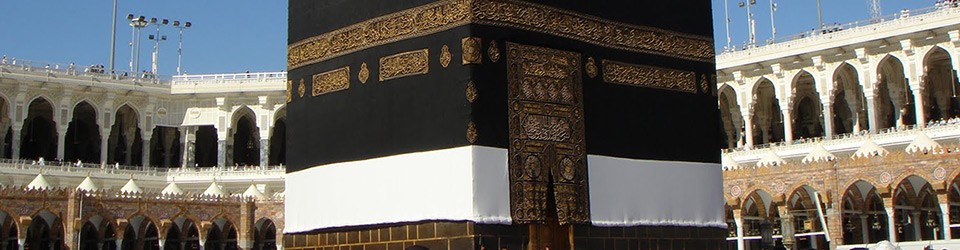
عشق آں شعلہ است کوچوں برفروخت
ہر چہ جز معشوق باقی جملہ سوخت
طریق ہی منزل ھے
قدم ھیں راہ الفت میں تو منزل کی ھوس کیسی
یہاں تو عین منزل ھے تھکن سے چور ھو جانا
یہاں تو عین منزل ھے تھکن سے چور ھو جانا
سیدی و سندی مدظلہم العالی
حاصل تصوف
حکیم الامت حضرت مولانااشرف علی تھانوی قدس سرہ نے
فرمایا
وہ زرا سی بات جو حاصل ھے تصوف کا یہ ھے کہ
جس طاعت میں سستی محسوس ھو
سستی کا مقابلہ کر کے اس طاعت کو کرے
اور جس گناہ کا تقاضا ھو تقاضے کا مقابلہ کر کے اس گناہ سے بچے۔
جس کو یہ بات حاصل ھوگئ اس کو پھر کچھ بھی ضرورت نہیں،
اور جس گناہ کا تقاضا ھو تقاضے کا مقابلہ کر کے اس گناہ سے بچے۔
جس کو یہ بات حاصل ھوگئ اس کو پھر کچھ بھی ضرورت نہیں،
کیونکہ یہی بات تعلق مع اللہ پیدا کرنے والی ھے اور یہی اس کی محافظ ھے۔
اور یہی اس کو بڑھانے والی ھے۔
بصائر حکیم الامت ص 99
Being thankful for the bounties of Allah swt.
At the same time reflecting on our attitude in regards to them
Hakeemul-Ummat qaddas sirrahu says that reasons for loving someone are four;
Beauty (jamal)
Perfections (kamal)
Generosity (nawal)
Wealth (maal)
They are present to their maximum in Allah swt.
Here we are focusing on His generosity.
A cursory glance on the bounties that He is showering on us is a proof of this generosity.
Let’s take a look;
1. Being alive
2. Being a human
3. Having complete and normal anatomical and physiological functioning of this human body that is, being free of all diseases. Healthy.
4. Life.
5. Time. Hours, minutes and seconds.
6. Being a Muslim
7. Being in the Ummah of our Master Prophet Mohammed salallaho alehey wa a’lihi wasalam
8. Association with Ulama-e-Haqq (Ahle Sunnah wal Jammah, Deoband)
9. Having the importance of following the religion
10. Aspiration of improving our self
11. Traversing the Path (sulook)
12. Being under the guidance of a perfect Sheikh (sheikh-e-kamil)
13. Education. Both religious and professional.
14. Job. Source of halal income.
15. Loving relatives; parents, spouse, children and others.
16. Well being of ourselves and these relatives
17. Housing & shelter
18. Means of transportation
19. Being free of worries
20. Opportunities of good actions
21. Being ashamed of our short comings and repenting
22. Basic necessities of living and moreover lots of luxuries
23. Wealth and savings
The list goes on and on.
What did we do to deserve these bounties in the first place?
By His infinite mercy Allah swt gave us these gifts. We did not deserve them at all. There are many individuals far better then us who are deprived of these bounties.
What is our attitude in regards to them?
Most of us do not reflect on being the elite and gifted. We take these bounties for granted. We are usually not thankful & appreciative for them. And on the contrary we complain for minor deficits and worries. Majority of us in our ignorance are using these bounties to disobey Allah swt.
We have to allot few minutes each day for reflection (muraqaba). Sit down after fajir or eisha and enumerate the blessings we have, one by one. Thanking Allah swt for each of them, (allahuma lakal hamd wa lakash shukkur). At the same time reflecting that we were unworthy of such gifts and it’s by His generosity and kindness that He bestowed them. And He has the power to take them away any time. This is the fist step towards real thankfulness.
The real thankfulness (shukkur) is not to use any of the bounties in disobeying Allah swt, as confirmed by Hazrat Junaid ra.
Har mooay badan bihi jo zaban ban kay karay shukkar
Kum hay bakhuda unki einayat say kum hay( Mufti Sha’fi ra)
تقوی پیداکرنے کا طریقہ
عارف باللہ حضرت ڈاکٹرعبدالحئ عارفی رحمہ اللہ علیہ نے فرمایا؛
تقوی پیدا ہو تا ہے خدا تعالی کے حضور عجز و نیاز کرنے سے
جتنا عجز و نیاز بڑھتا چلا جاۓ گا، جتنی شکستگی بڑھتی چلی جاۓ گی،
جتنی ندامت بڑھتی چلی جاۓ گی۔ اتنا ہی تقوی بڑھتا چلا جاۓ گا۔
اور تقوی سے ایمان میں ترقی ہوتی رہے گی۔
ملفوظات عارفی ر ح223
متقی بننا
عارف باللہ حضرت ڈاکٹرعبدالحئ عارفی رحمہ اللہ علیہ نے فرمایا؛
متقی بننا اچھی بات ہے
اس کی تمنا رکھو۔
لیکن خبردار یوں نہ سمجھنا کہ کبھی تم متقی بن بھی جاؤ گے۔
متقی ہو جانے کا احساس کبھی نہ ہونے پاۓ۔
متقی ہو جانے کا احساس کبھی نہ ہونے پاۓ۔
(البتہ)
تقوی پیدا کرنے کے طریقے اختیار کرتے رہو۔
تقوی پیدا کرنے کے طریقے اختیار کرتے رہو۔
ملفوظات عارفی ر ح 223
اپنے دین کی حفاظت مقدم ہے
حکیم الامت مجدد ملت حضرت شاہ اشرف علی تھانوی قدس سرہ نے فرمایا
اگر دوسرے کے دين کی حفاظت میں اپنے دین کا اندیشہ ہو, تو اپنے دین کی حفاظت مقدم ہے۔
If there is potential of harming one’s own religion(deen) while saving someone else’s deen then it is a priority to safe one’s own deen.
حسن العزیز 1/109
Spiritual Progress
Hakeemul Ummat Hazrat Moulana Ashraf Ali Thanwi ra said,
“Do you observe how a child grows?
If he is measured everyday, it will not be perceptible and the day to day growth would not be noticed. In reality, however, he keeps growing. Soon he reaches puberty. He grows a beard and turns into a full-grown man.
In the same way, if one follows this path (tariq) with sincerity and steadfastness and does not become careless, he will progress gradually and reach spiritual puberty (attain Love of Allah swt/t’aluq m’aAllah).”
“The Spiritual Discourses” by Qutubul Irshad Sidi wa sanadi Hazrat Moulana Mufti Taqi Usmani sahib db
Signs of Spiritual Puberty
Arifbillah Hazrat Dr. Abdul Hayy Arifi ra said:
The signs of attaining spiritual maturity/puberty are;
-All actions are done purely for the pleasure of Allah swt
-Having tasleem (total surrender to the commands of Shariah) and raza (whole hearted acceptance of Allah swt’s decisions).
-If a mistake is committed, one humbly repents immediately and makes amendments
-Being incessantly motivated for all of this
-When the capabilities of heart will be rectified and the state of the spirit are eventually developed, at that time automatically an urge of compassion and kindheartedness arises. That is, one considers that this information I became aware of is very good and beneficial, if I pass it on to someone it will be excellent. This instinctive feeling or urge tells that this is the time of spiritual puberty.
Malfoozate Arifi ra 165
Spiritual Puberty
Arif-billah Hazrat Dr. Abdul Hayy Arifi ra said:
There is a physical puberty and similarly there is a spiritual puberty.
It is difficult to realize the exact timing of the physical puberty. However, it is the natural human phenomenon that a time comes when this stage is reached and functions associated with it start appearing. Similar is case with spiritual puberty.
Body needs food and nutrition for growth and development to reach the physical puberty.
In the same way spirit needs nutrition for its growth and eventual puberty.
What is this food & nutrition for the spirit?
It is being thoroughly steadfast on mustahabbat (recommendable), nawafil (optional extra) works and excessive zikir (rememberance) (i.e. after fulfilling faraiz, wajibat, sunun and abstaining from all sins to the best of one’s ability).
If these are provided, the spirit (batin) continues to nourish and grow. Eventually a stage is reached when the capabilities of heart and spirit are so developed that the Salik (traveler on the path of sulook) attains spiritual puberty. In other words it can be expressed as nisbat-e-batini (t’aluq ma’ Allah/Love of Allah swt) is achieved.
This bounty is a pure gift from Allah swt and is not dependent on salik’s own effort.
Shirkat e bazam munhasir un kay karam per hay magar
Meri jabeen to ho chuki waqaf e neyaz e sang e dar
Why focus on Contemporary or recent-past Shuyukh?
Some people find it strange that we put emphasis on the teachings of the present day or recent past Shuyukh only and appear to avoid the great luminaries, the founding saints of our tariq. They question: why no translations of maktoobat of Hazrat Shah Abdul-Qudoos Gangohi ra or malfoozat of Khawaja Moinuddin Chisti Ajmeri ra or Hazrat Baba Fareed Shakarganj ra.
You only find teachings of Hazrat Hakeemul Ummat ra and his successors here.
This is a very relevant and good question.
There is no doubt that the works of the great luminaries, the founding members of the tariq are very important and indispensable.
However, one has to acknowledge that their settings, era in history, audience, addressees’ life style, cultural and social standards, education and level of piety etc., etc were completely unlike our times. They presented the teachings of Tasawwuf in a style suitable and more understandable to that specific audience.
Present day and recent past Shuyuk do the same. Being contemporary, they are aware of our social norms, economic constraints, educational limitations and cultural issues, etc. They descend to our level of intellect to present the very same teachings in more understandable and attractive style. Therefore, practically their teachings are more effective in bringing about the self-reformation (islah) in people like us.
Whereas, advanced level mureeds can benefit from the works of senior saints also.
‘aalum mein roshni shams o qamar sey ho to kiya
Mujh ko to tum pasand ho apni nazar ko kiya karoun
Dunya?
Sidi wa sanadi Hazrat Moulana Mohammad Taqi Usmani sahib db said;
“These worldly goods, wealth, property and resourses are not duyna, per se. But, everything which causes you to be forgetful of Allah swt’s command and commit sin is dunya (blameworthy worldly).”
Islahi Majalis pg193/vol4
One has to get rid of this dunya to attain any t’aluq with Allah swt. As it has been mentioned in hadith, ‘the love of dunya is the source of all sins.’
To treat this disease effectively one has to undergo therapy under the supervision of a Sheikh.
The Sheikh usually advices the mureed to actively reflect about the temporality of this life, the everlasting life to come, death, conditions leading to it, the state of a sinner in the grave, the accountability to the angels Munkar & Nakeer, the situation of standing before the Allah swt and answering His questions on the day of jugment and the hell-fire. This is to be done daily for 3-5 minutes. After doing this for a while one has to get back to Sheikh, especially if one notices persistence of this dunya in his/her actions, so that the therapy may be maximized etc.
May Allah swt save us all from this reprehensible dunya. Ameen.
Sidi wa Sanadi db’s Majlis
Sidi wa sanadi Hazrat Moulana Taqi Usmani sahib db usually has a gathering (majlis) on Sunday between ‘asr and maghrib at the mosque of Darul Uloom, Karachi.
This is totally regarding tasawwuf.
Those who are interested in traversing the path (tariq) must attend it.
For those incapable of doing so can get its recordings from Memom or Hiraa recording centers.
Also some of the very initial ones have been published as Islahi mawaiz and Islahi majalis.
These suhba and majlis are an essential part of keeping the company of the Sheikh. That is a must major corner stone in Tasawwuf.
New York, USA
For those Intending to Travel
An essential reading for all interested in Tasawwuf.
http://www.islahi-nefs.net/axes_of_truth/Qesdussebiyl_1.htm
Sidi wa sanadi Hazrat Moulana Mohammad Taqi Usmani sahib db usually instructs spiritual aspirants to read this and/or its simplified version, done by his father, Hazrat Mufti Mohammad Shafi’i ra, before starting on the path of Tasawwuf.
This small primer of Tasawwuf clears all the misconceptions and makes clear what the real objective is and how it can be achieved.
Must reading for all of us.
Following the desires is not Deen!
Sidi wa sanadi hazrat Moulana Mohammad Taqi Usmani sahib db said;
Religion (Deen) is following the commandments of Allah swt and His messenger sallalaho alehey wa alehi wasallem in one’s everyday life.
People prefer doing those religious acts which are pleasing to their desires. Irrespective, if they are the call of the moment from Shariah. For example, some youngsters develop a desire to become an ‘alim(religious scholar) or go for jihad. They pursue this aim regardless of their parent’s genuine needs and instructions. Similarly, some people develop a taste for tabligh missions and are ever ready to go out for 3,10 or 40 days trip. Earning a halal livelihood, taking care of the family and other moral obligations becomes secondary to them. Some are ever ready to perform nafil Hajj and Umrah, with thousands of qaza salat outstanding. Etcetera, etc.
This is not deen.
This is following one’s own desires undercover of deen.
Acknowledge what the call of the moment is from Shariah and act accordingly.
This is Deen.
Initially this is quite difficult for a novice. Hence, the help and guidance froma Sheikh is essential to do this.”