Category Archives: B. Praise worthy morals

The good moral characteristics that are to be developed within one’s self

Involvement in sinful and feeling of hopelessness

20120712-152346.jpg

Our master Shaikh Ibn e Ata-Allah al Iskanderi (Allah have mercy on him) said in al Hikam,

‘Commitment of a sinful act must not make you feel hopeless in acquiring a steadfast state with your Lord. Maybe this is the last sin destined for you.’

Shaikh Mawlana Abdullah al Gangohi (Allah have mercy on him) wrote in his explanation of this;

‘This is because involvement in sinful acts due to human nature (of being weak and forgetful) is not against steadfastness on Deen. However, persisting on sinful actions, not repenting and having an intention of committing it again are against steadfastness.’

Ikmal ush Shiyam, page 55


Warning regarding Sufism

Speaking in United Kingdom sayyidi wa sanadi Shaikh Mufti Mohammad Taqi Usmani (Allah preserve him) said,

I would warn the younger Muslim generation about the wrong interpretation of Sufism.

It has been widely propagated in the Western world by non-Muslims. They coined the term Sufism. They praise Sufism. They preach sufism. They propagate Sufism. One may think that they do this in service to Islam. However, the reality is that the Sufism propagated by Western writers is quite contradictory to the Shariah. It is quite contradictory to the real essence of Tasawwuf and tariqat.

A high ranking western offical visited the Darul Uloom, Karachi. After having a detailed tour observing the teaching activities he commented that he did not see anything about Sufism being taught.

It was inquired that what did he mean by Sufism.

He replied that Sufism is something related to one’s soul and what pleases one’s soul. For example, playing music, dancing, having ectasy (wajd) and qawwali,etc..

The poor individual restricted Sufism to these kinds of activities.

The real problem is that when Western world speaks of soul as against the physical life they assume that they are speaking of the spirit or spiritual things. There is a big difference between soul and spirit.
In fact soul is what is called the nafs in Tasawwuf. That is the (lower) desires of the heart. Tasawwuf does not have realtion to soul in that meaning.

Tasawwuf realtes to the spiritual qualities- the human instincts (reforma tion of the moral characteristics – thus becoming a better human being & Real Muslim).

Turath lecture, 23rd June 2012

Dubai, UAE

Leaving what does not concern us

“The Messenger of Allah (Allah bless him and give him peace) said,

“From the excellence of a man’s Islam is leaving that which does not concern him.”

“That is, to leave that which is not important or befitting of him, whether in speech, actions, or thought.

Thus, ‘the excellence of a man’s Islam’ is its perfection, such that one remains steadfast in the submission to the commands and prohibitions of Allah, and surrenders to His rulings in accordance to His destiny and decree (qada wa qadr). This is the sign of the heart having been expanded by the light of its Lord, and the descent of quietude (sakina) into the heart. The reality of ‘that which does not concern him’ is that which is not needed for a worldly or next-worldly necessity, and does not aid in attaining his Lord’s good pleasure, such that it is possible to live without it…

This includes excess acts and unnecessary speech… This hadith may well be taken from Allah Most High’s saying,

“And who shun all vain things.” (Qur’an, 23: 3)

Mulla Ali al-Qari (Allah have mercy on him) mentioned this in his commentary on Mishkat al-Masabih.

Riyadh,KSA

Following the Sunna

Grand Mufti of Pakistan, Hadhrat Mufti Mohammad Shafi’i (may Allah have mercy on him) said,

In the presence of Prophet (may Allah bless him and grant him peace) while visiting the Holy mosque at Medinah e munawwara, I felt as though the Prophet (may Allah bless him and grant him peace) is saying,

“Being nearer to me is in following my sunna. It is not in coming here.

As much you follow me the nearer you come (to me).”

Ahsan us Sawanih, page 157

Improve our salah

One of the attendees requested for a premature departure  Shaikh Haji Shakeel Ahmed (Allah preserve him) humbly asked him to wait few minutes to listen to what he had to say. Then he briefly advised,

‘It should be crystal clear that if we do not improve our salah we will not be able to improve our (spiritual) life.

On the Day of Judgment Allah will not question us about the time spent in Tableegh, or Khanqah or education (madersa). The very first question will be regarding the salah. The foremost thing we will be accountable for will be our salah.

If we are questioned about our salah now, we will be dissatisfied ourselves. Then how could this salah please Allah.’

11/8, MC1, KKNGH, Jeddah, 02 June 2012,  after esha

Tazkiyah & Tabligh

In the Name of Allah, the Most Gracious, the Most Merciful.

As-salāmu `alaykum wa-rahmatullāhi wa-barakātuh.

Muhtaram,

Tabligh is an Arabic word literally meaning “to convey”.

Contextually it refers to conveying the message of Islam. The word Tableegh is commonly used to refer to the Tableegh Jamaat movement in which people spend 3 days or 40 days or 4 months or 1 year in Tableegh.

Alhamdulillah, the Tabligh effort has been proven to be beneficial in conscientising people about their religious duties and reforming the lives of many people.

I fully support the noble effort of Tableegh.

However, it is important to note that the specific form and way of the Tabligh effort is not specifically mentioned in the Shariah. It is recommended. The actual mission of Rasullullah (Sallallahu Alayhi Wa Sallam) was Da’wah with Ta’leem (educating) and Tazkiyah (purification of the soul). The present form of Tableegh is one form of Da’wah. It is not the only way of Da’wah. To confine the obligation of Da’wah to the Tableegh movement is erroneous.

There are innumerable ways of Da’wah and all forms of Da’wah practiced within the confines of Shariah should be supported and complimented. It is therefore incorrect for some ardent supporters of Tabligh to claim an absolute right of Da’wah through Tabligh. Such an attitude is a great injustice to the broader concept of Da’wah and is an extremist attitude.

It is even worse to claim that Tabligh is more important than Tazkiyah. Tazkiyah is Fardh. The specific form and way of Tabligh is not Fardh. It is merely recommended. How can a recommended form of Da’wah be preferred over a Fardh act?

To reform oneself and cleanse oneself from the evil instincts within ourselves is Fardh.

It is also very unfortunate that we hear of reports from some elders of Tabligh Jamaat referring to Tazkiyah as a secondary issue, not so important, e.t.c.

How can a Fardh act not be of any importance at all? Such statements are incorrect and misleading. It is expected of the Ulama engaged in Tabligh and Tazkiyah to encourage people to do both, Tazkiyah and Tabligh.

If one does not go out for 3 days, 40 days or 4 months in Jamaat, he is not sinful and will not be answerable in the court of Allah (Subhanahu Wa Ta’ala). However, if one does not reform himself from pride, jealousy, ostentation, e.t.c, he will be sinful and answerable to Allah (Subhanahu Wa Ta’ala).

People actively engaged in Tabligh should realize this and adjust accordingly. One can never attain the Maqam (position) of Ihsaan by merely going out in Tabligh without reforming oneself. The singular approach of Tabligh whilst sidestepping the importance of Tazkiyah is an incorrect view and erroneous. It is misleading.

Tazkiyah is Fardh. The specific form of Tabligh is not Fardh. It is recommended. It is an effort we too support.

And Allah knows best.

Mufti Ebrahim Desai

Dar al- Mahmood

Source : http://tasawwuf.daralmahmood.org/muf…tabligh-jamaat
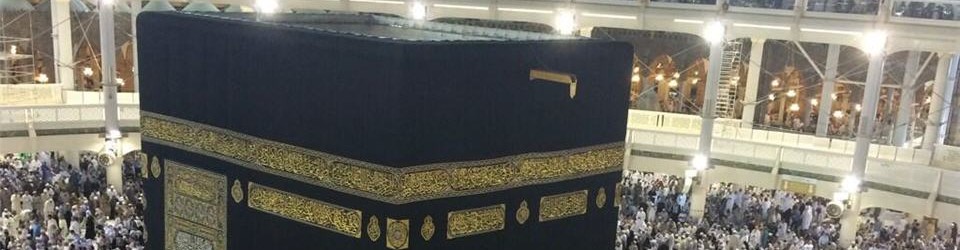
Advice to the graduating scholars: Necessity of moral discipline

Addressing the final session of the Hadith text Sahih al Bukhari sayyidi wa sanadi Shaikh Mufti Mohammad Taqi Usmani (Allah preserve him) emphasized on the necessity of moral discipline. This is essential to make our actions worthy of reward as Imam Bukhari (Allah have mercy on him) has alluded to in the closing chapter on his book. He said,

‘The acquistion of the fine equilibrium required for moral characteristics of an individual as recommended by the standards of Quran and Sunna is possible (only) by being in the company of the pious (ahlul Allah) (for this specific purpose) and effacing one’s self (nafs, eccentric ideas, impermissible desires, boastful expectations, etc.)  in front of them.’

Khatam e Bukhari sharif 1433, Darul Uloom Karachi approx 43mins onwards

Ijazah

Shaikh Haji Shakeel Ahmed (Allah preserve him) very humbly acknowledged that he has ijazah from five shuyukh to accept and instruct spiritual seekers. However, initially he was very reluctant to accept this responsibility. He even held the feet of one of his Shaikh crying and begging him to be exempted from this responsibility. He was absolutely sure that he was incapable and unqualified for this position. Moreover, he was afraid that his popularity as Shaikh will only bring bad opinion of the Tasawwuf and (this specific) silsila from the public.

The shuyukh insisted and instructed him to do as he was told.

Later he admitted to his Shaikh, ‘May Allah reward you abundantly. The bestowal of ijazah has benefited me immensely.‘

The Shaikh asked for an explanation.

Haji sahib replied, ‘Acknowledgement of it acts as a deterrent for involvement in sinful activities. At those moments I address myself and ask:

Even now!

Are you going to be involved in these kind of activities?’

The Shaikh was very much  pleased with the reply.

11/8, MC1, KKNGH, Jeddah, 02 June 2012,  after esha

A tip to improve salah!

Shaikh Haji Shakeel Ahmed (Allah preserve him) said in regards to praying with concentration that Allah is watching me,

‘A tip to improve one’s salah is to offer two rakat daily with intention of forwarding its reward (esal e thawab) to our master Prophet Muhammed (Allah bless him and grant him peace).

This noble association (nisbet) will make one strive more for perfection in salah.

All praise is to Allah. Many individuals have tried this and found it to be very beneficial in improving their salah.’

Madarsa Sayyidena Maaz bin Jabal (Allah be pleased with him), Jeddah, 07 June 2012,  after maghrib

Improving salah

Shaikh Haji Shakeel Ahmed (Allah preserve him) said,

‘A very senior pious individual instructed me that if I was seriously interested in becoming religious than I should be vigilant about improving my salah. That is, praying salah as per Sunna with contemplation that Allah is watching me. He added that if I did not do this than in spite of praying punctually I will be simultaneously doing all the undesirable worldly stuff.

Haji sahib instructed to those present to not to take this lightly. Improving salah should be our topmost priority.

Moreover, he emphasized reading the booklet ‘Namazain Sunnat kay mutabeq parhyay’ by sayyidi wa sanadi Mufti Mohammad Taqi Usmani (Allah preserve him) carefully and meticulously implementing each and every step as instructed. ’

11/8, MC1, KKNGH, Jeddah, 02 June 2012,  after esha

Dai’i

Shaikh Haji Shakeel Ahmed (Allah preserve him) said,

‘We must be compassionate in calling others to the Islamic ways.

We should address ourselves first and then the others.

Please, remember the principle that a dai’i (one who invites others) never insults, criticizes, denigrates, humiliates or mocks the audience.’

Jeddah, al-Azizia 30th May 2012, bayan after maghrib

Reminder: Allah is watching me!

Shaikh Haji Shakeel Ahmed (Allah preserve him) said,

‘Develop the habit of reminding yourself every now and then that Allah is watching me.  Say in an audible voice ‘Allah! Allah! Allah!’.

It is to firmly establish and cultivate this state that Allah made it essential (wajib) for us to visit His house (masjid) five times a day and practice it in salah.

We should strife to establish this in our daily life. An easy way is to set a reminder in our mobile phone that alerts us every 15 minutes that Allah is watching me.’

Jeddah, al-Azizia 30th May 2012, bayan after maghrib

Shrewd & peaceful

Enumerating the qualities required for a mureed Shaikh Najamuddin Kubra (Allah have mercy on him) said,

‘He must be shrewd. Traversing this path requires cleverness and dexterity. This is to deal with perils that he will face in this journey.

He must keep peace with all the creation of Allah and only battle with his own lower self (nafs).’

Mirsad al-Abad, page 169

Stop watering it!

In Mathnawi Mawlana Jalal uddin Rumi (Allah have mercy on him) gives an excellent example to encourage us to give up all that is sinful right now.

The sinful desires are like seeds of a humongous, foul smelling, full of thorns and fruitless tree. If one follows them and commits the sin it is like watering the seed. It germinates and grows in the middle of a path. If one continues to follow his desires the seedling gets nutrition. It becomes a sapling and eventually a tree.

The leaves, branches and roots spread.  And the tree is firmly ‘rooted’.

Being in the middle of a path it is a major obstacle.

Removing it now is not easy. It requires special equipment and expertise.

It  would have been very easy to remove the seedling.The  roots sink deep in to the ground. They engulf or entrap the things around making the removal even more difficult and messy.

Similarly, by giving into sinful desires we nurtures the lower self (nafs) and it becomes stronger each day. We may fool himself ourselves with lame excuses, like it is lesser of the two evils, or it is a norm to do these things nowadays, or it is a phase it will pass, or I will give it up after I graduate or get married or have children, etc.

We procrastinate.

With each passing day the tree of sinful desires (nafs) grows strong, whereas as the sinful individual gets older, loosing the mental sharpness, the emotional vigor and the physical strength as part of the natural aging process..

We have to be wise and not delay.  It is easier to give up sins right now.

Beneifts of reading the sayings of the pious

Shaikh Iqbal Quraishi (Allah preserve him) said,

‘Following benefits are derived from reading the sayings (malfuzat) of the pious;

1. Awareness of the blame worthy morals.

2. Knowledge of the deceptions of the lower self (nafs) and Shaytan.

3. Being able to recognize mistakes.

4. Riddance of lots of incorrect thoughts.

5. Clarification of many perplexities of knowledge and (execution of) actions.

6. Knowledge of the path (tareeq) and how to practically walk on it.

7. Acquiring knowledge and marifah.

Ma’arif al-Akabir, page 48