ما پروریم دشمن و ما می کشیم دوست
کس را چرا و چوں نہ رسد در قضاء ما
مولانا رومی رح

مولانا رومی رح

Arif billah Dr. Abdul Hayy Arifi (Allah have mercy on him) said,
‘Wasting time in the hobby of reading newspaper & unimportant books, attending ceremonious gatherings, or participating in useless entertainments results in failure to accomplish the essential things to be done. This (eventually) creates commotion and anxiety in one’s mind.’
Talemaat e Arifi ki roshini mein: Islah e haal aur Sukoon e qalb, page 41

Unfortunately we live in an era where the distinction between real and fake is sometimes very difficult to make. Even in religious issues. Marketing tactics, boastful false claims, slick presentation skills and mass propaganda can be misleading.
We often fall prey to these schemes. This is mainly because we are not aware of the gold standard to assess these issues. Making the correct decision is almost impossible.
Similar is the case in selecting a Shaikh for spiritual improvement.
Hakim al Umma Mawlana Ashraf Ali Thanawi (Allah have mercy on him) said,
‘I can not claim any perfections for myself.
All praise is to Allah. I have seen the real perfect men (the pious predecessors Shuyukh and scholars). No imposter can fool me by claiming to be human whereas in reality he is a buffalo.’
Malfuzat e Ashrafiya
The gold standard to make this distinction is the meticulous following of Sunna. This following should be comprehensive and perpetual in outward appearance, morals, behavior and dealings.

‘Arif-billah Dr Abdul Hayy ‘Arifi (Allah Have mercy on him) said,
‘People wrongly assume that by observance of excessive worship, like supererogatory salah, excessive remembrance or recitation of Holy Quran, they will gain pleasure and proximity of Allah.
In our everyday life the pleasure and proximity of Allah is obtained by being patient and responding with humility and good character when unexpected comes from those who are dear and near.
The real examination is when the curt comments and the sarcastic attitude of friends and family break your heart or make your blood boil.
Being patient, controlling one’s anger and responding with humility and good character will make you move closer to pleasure of Allah.
Only an individual who is cognizant that he/she will be accountable before Allah for his/her actions can do this.
This is taqwa.’
Audio:Mp3 CD # 2

A seeker was under treatment for inappropriate use of sight. That is, looking at the unlawful things lustfully. A short duration into this treatment he consulted for treatment of another blameworthy moral.
Hakim al Umma Mawlana Ashraf Ali Thanawi (Allah have mercy on him) inquired,
‘Has the spiritual aliment of inappropriate use of sight been successfully treated?’
The seeker replied, ‘Yes. At most occasions I am able to control myself and abstain from lustful glances, however, rarely there are few slips.’
Hakim al Umma replied,
‘This is similar to a person claiming sobriety from alcohol but admitting few rare sips.’
Malfuzat

Shaikh Dhunun al Misri (Allah have mercy on him) said,
Three things are sign of having a (special & close) relationship with Allah. They are;
1.Turning to Him all the matters
2. Asking everything from Him
3. Trying to get close to Him all the time.
Urdu translation of al Kaukab al duriyu fi manaqib Dhunun al Misri, by Ibn al Arabi (Allah have mercy on them), page 79
 Mawlana Qamar uz Zaman Allahabadi (Allah preserve him) said,
‘To achieve real prosperity (sa’adet) three things are required,
1. To protect one’s heart from involvement in things that result in wasting time and corruption of the heart itself.
2. Following Sunna meticulously in all matters.
3. To acquire the ‘nur‘ of ‘following the Sunna’.
——The initial two are achievable by effort (ikhteyari), whereas the last one can not be achieved by effort alone (ghair ikhteyari). It is a gift bestowed by Allah.’
Al-Ifadat al-Ahsaniya, page 254
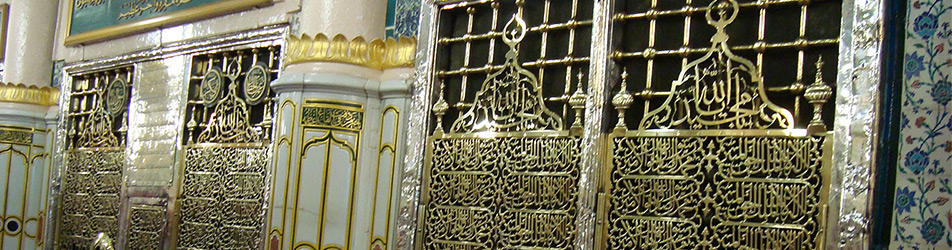
*P.S. Photo:The mata’af expansion 2012.

Then why do we see otherwise in ourselves?
That is, in spite of performing religious actions ( e.g. salah, tilawat, dhikr, etc) for so many years the same mistakes are repeated, the outward beauty and inward concentration does not increase. Perfection remains a mirage.
Shah Wasiullah Allahabadi (Allah have mercy on him) said,
‘An action has to be done properly to be beneficial in this world and in hereafter.’
Majmua’ talefat e Mulih al-Ummat ra, volume 2, Sa’adet e haqiqi, page 323,
Foremost , what is going to be practiced must be established properly. The method must be correct.
It is futile to expect perfection when the thing initiated is done incorrectly and then repeated similarly manifolds. The obvious result of this mistake would be perfection in repeating the the mistake itself.
It for this reason our shuyukh stress on learning the basic religious (fiqhi) text (Bashishti Zewar/Thamar) thoroughly upfront on the path of sulook.
Arif billah Dr Abdul Hayy Arifi (Allah have mercy on him) said,
‘Read the book: Uswa e Rasool e Akram (sallalaho aleh e wasalam). It is a manual for your daily life.’
Sayyidi wa sanadi Mufti Mohammad Taqi Usmani (Allah preserve him) reinforces this in his instruction to the spiritual seekers.


Once Prophet (Allah bless him and give him peace) read the verse of Holy Quran:
“So, whomsoever Allah wills to guide, He makes his heart wide open for Islam,….”
[Surah- An’aam : [6:125]
Thereafter, Prophet (Allah bless him and give him peace) said: “When the Light of Islam enters a person’s heart, it opens up for it.”
Someone said: “O Prophet! Is there a sign which indicates this opening of the heart?”
Prophet (Allah bless him and give him peace) said:
‘The aversion of this pretentious worldly life,
the fondness of the everlasting life (Here-after) and
preparation before the coming of death.”‘
[Mishkaat] Maut ki Yaad Hazrat Shaikhul Hadith ra

Shaikh Qari Amir Hasan (Allah have mercy on him) said,
Nowadays we do not listen to and obey anyone. Neither to our father nor mother nor our spiritual mentor.
We only listen to and obey our nafs who is our biggest enemy.
Shaikh Haji Imdadullah muhajir Makki (Allah have mercy on him) used to say,
‘The thing I fear the most is my nafs.’

و الذ کر اسم ربک و تبتل الیہ تبتیلا۔مزمل۔۸
Hakim al-Umma Shaikh Mawlana Ashraf Ali Thanawi (Allah have mercy on him) said,
‘In brief it is essential to disassociate completely from all that is created and focus towards the Creator.
It is clear that thorough disassociation is not at all possible without limiting the relations (with others) (Obviously non-wajib).
The Shuyukh and salikeen should be vigilant in decreasing these associations. They should be perturbed by the gathering of people around them and the respect they show, etc..
Develop this disposition, because the achievement of perfect state of harmony (with the Divine:wusool) is not possible without it.
Based on experience my opinion is that one must live like a blunt mullah. There should not be expression of overwhelming emotions or distribution of amulets & charms (ta’weez, ganday). Do not emulate the lifestyle of the (contemporary) dervishes. All these thing lead to gathering of people.
Live like a mullah, so that others get an impression that you are a vapid mullah.
Instruct your associated to do the same. Bestow them spiritually whatever you want to confidentially in such a manner that none is suspicious that you possess something (spiritual wealth). Keep the external means afar and hide yourself as much as possible.’
Waaz: al-wasal al-fasal,Tasleem o raza, Khutbaat e Hakimul Ummat ra, volume 15, page 203

سرمد گلے شکوے کو مختصر کر دے اور

Allah (Most Exalted) says;
‘whereas for the one who feared to stand before his Lord,
and restrained his self from the (evil) desire,[79:40]
the Paradise will be the abode.[79:41]
So, have you seen him who has taken his desires as his god, and
Allah has let him go astray, despite having knowledge, and has sealed his ear and his heart, and put a cover on his eye?
Now who will guide him after Allah? Still, do you not take lesson? (45:23)
———————————————————————-
A need is something that is necessary for an individual to live a healthy life.
Needs are distinguished from desires because a deficiency would cause a clear negative outcome, such as dysfunction or death.
Desire is a sense of longing for a person or object or hoping for an outcome.
—————————————————————————
These desires may be permissible or impermissible.
The Shariah decides these limits and their rulings. The way of Sunna delineates how to safeguard these limits. Finally, the tariqat ensures how these limits are effectively implemented in one’s life practically. Hence, a faithful believer is ensured salvation from the above mentioned Quranic admonition.
 –
–
‘It is essential that you provide the following three things to every Muslim;
1. If you can not provide any benefit to him, do not harm him.
2. If you can not make him happy, do not make him sad.
3. If you can not praise him, do not condemn him.
Ahzab tahzib un nafus, Munajat e maqbool, (zamimajat, Saeedi), page 312